| OCR Text |
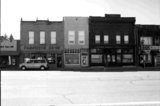
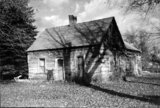
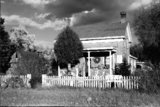
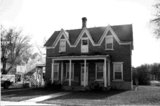
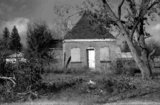
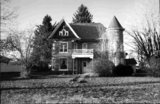
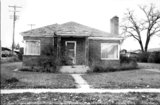
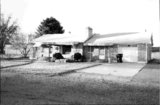
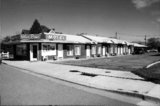
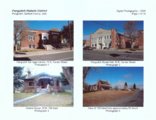
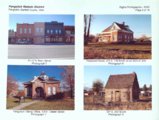
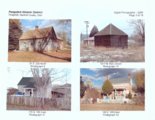
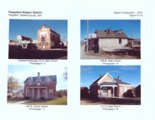
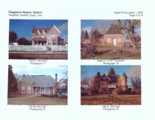
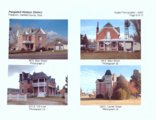
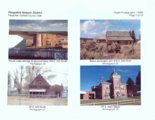
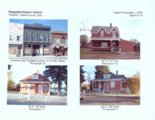
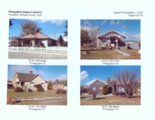
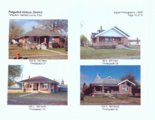
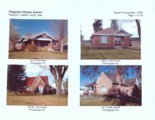
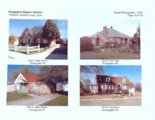
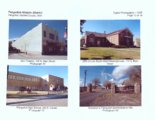
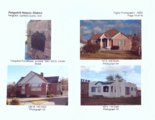
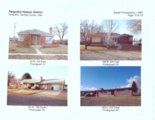
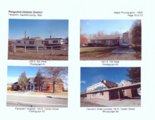
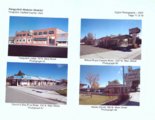
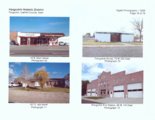
Show OMB No. 1024-0018, NPS Form United States Department of the Interior National Park Service National Register of Historic Places Continuation Sheet Section No. 7 Page 6 Panguitch Historic District, Panguitch, Garfield County, UT is possible that some of the town's extant log cabins date from the first settlement period, but no documentation has proven any buildings from that date. Log cabins were the first semi-permanent homes; however, they were considered temporary structures and most were converted to outbuildings or later demolished. As is the case for many Utah communities, there is a possibility that more in-depth research may identify early log buildings as portions of enlarged or altered buildings within the historic district.8 The survey identified five extant log buildings. Most are similar to the building at 389 E. 200 South (built circa 1870), which is a single cell dwelling with classical symmetry [Photograph 8]. A slightly later example is at 91 E. 200 North (built circa 1875), which has more defined features and a rear ell [Photograph 9]. Other early wood buildings and outbuildings may date from this period. An interesting example is the first Panguitch jail, built circa 1880, which is a square building of stacked lumber topped with a pyramidal roof [Photograph 10]. According to Panguitch historians, adobe bricks were made in Panguitch, but due to the relative lateness of the settlement, fired bricks were available within a few years. While no adobe buildings were identified during the survey, some may exist under stucco and other veneers, for example, the house at 275 S. 100 East (built circa 1875) [Photograph 11]. Adobe was frequently used as an insulation material, typically as part of the inner lining of early brick houses or between the studs of a frame house. The first Panguitch brickyard was established by 1875 in the southeast corner of the historic town site. The Prince House at 185 S. 300 East is locally accepted as the town's first house built of fired brick in 1875 [Photograph 12]. These early brick houses are mostly symmetrical hall-parlor or central-passage type dwellings with modest Classical, Greek Revival, or Early Gothic Revival ornamentation. One of the oldest surviving commercial buildings on Main Street, the Garfield Exchange, was built at the end of this period in 1882 and is an unusual example of a temple-front commercial building [Photograph 13]. The Richards-Judd House at 506 N. Main Street, is a rare stone building (circa 1871), and was built before the brickyards were in operation [Photograph 14]. Agriculture. Ranching and Commerce Period. 1883-1914 Approximately thirty-eight percent of contributing buildings were constructed during this period, including many of the largest and most ornate buildings in Panguitch. The majority of buildings from this period are residential with a handful of commercial and institutional examples. Many of the homes are similar to those built in the previous period, but the asymmetrical types and eclectic styles of the Victorian period dominate the domestic architecture of Panguitch in this period. During this period, red brick residences became ubiquitous in Panguitch. There are a few exceptions, but the vast majority of contributing buildings are of brick masonry. For a few years, the classical house types and styles were built in Panguitch. The Cameron House at 95 W. Center is a Victorian Gothic example (built circa 1890) [Photograph 15]. However, most of the buildings of the period can be stylistically classified as Victorian Eclectic, which was popular in Utah between 1885 and 1910. Victorian-era dwellings are characterized by asymmetrical facades, irregular massing, segmental arched window hoods and patterned wood shingles on the gable ends. New house types such as the cross wing and central block with projecting bays were introduced 8 There are log cabins reportedly inside houses at 295 S. 200 East and 385 N. 100 West; but currently, neither residence resembles a historic building and both were evaluated as non-contributing. |