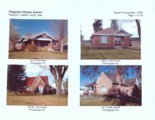
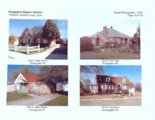
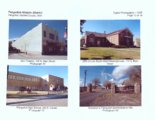
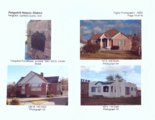
| OCR Text |
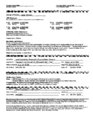
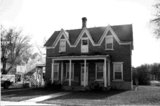
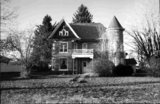
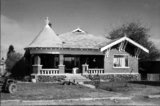
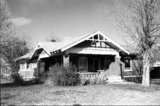
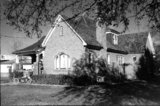
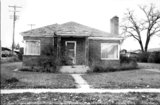
Show 0MB No. 1024-0018, NPS Form United States Department of the Interior National Park Service National Register of Historic Places Continuation Sheet Section No. 8 Page 7 Panguitch Historic District, Panguitch, Garfield County, UT had a homestead near Bryce and in 1919 began to offer food and accommodations to canyon visitors. On June 1, 1925, residents of Panguitch played host to Governor Dern and hundreds of visitors at a opening ceremony for the Utah National Park. Bryce Canyon was officially renamed Bryce Canyon National Park on February 25, 1928. Many Panguitch businesses benefited from the park's opening, for example, the Bryce Canyon Cafe (57 N. Main), which opened the day Bryce Canyon did. Beginning in the early 1920s, Panguitch businesses regularly featured Bryce Canyon in promotional materials. The 1922-1923 state gazetteers included a half-page advertisement for the Bryce Canyon Garage and Service Station in Panguitch featuring a photograph of a Bryce Canyon rock formation. On August 22, 1933, Cedar Breaks, 30 miles south of Panguitch, was designated a National Monument. The architecture of this period is distinctive. The Carnegie Library was built in 1918. In the 1920s, the LDS Church built the North and South Ward buildings (North Ward demolished, South at 110 S. Main Street). The Gem Theater was built in 1930. The school had been built in 1915 and destroyed by fire in 1932. High school was held in various locations until a new high school was built as a PWA project in 1938 at 250 E. Center Street. This building became a natural history museum after the new high school was constructed. The museum recently moved closer to Bryce Canyon and the building is currently empty. The Panguitch Hospital at 145 E. Center Street, was started as a WPA project, but not completed until 1946 with donations from the citizens of Panguitch and the LDS Church. During this period, the distinctive Panguitch house emerged and numerous examples were built between 1925 and 1939. The older ornate homes did not lose their value. The 1896 Hatch House at 329 E. Center Street was the highest valued ($6,000) residence on the 1930 census. The census also notes that 90 percent of Panguitch residents were home owners, and half of the residents had radios. World War II and Post-War Development. 1940-1964: The population of Panguitch reached a twentieth-century peak of 1,979 in 1940. However, during World War II, many residents left to work in war-related industries in more heavily-populated parts of Utah. War-time restriction meant little economic growth and few new buildings. Gasoline rations meant fewer tourists on the roads to the nearby recreation areas. The population remained fairly steady between 1950 at 1,501 and 1960 at 1,435. With the end of the war, tourism returned to full vigor. Twelve new motels were built in Panguitch between 1940 and 1964: four in the 1940s, five in the 1950s, and three in the early 1960s. There were also ten service stations, three garages, and five cafes constructed during this era. At least two of the current motels evolved during this period from earlier incarnations, the Cameron and Church's. Others were new ventures based on the popular motel court models. Two of the most successful cafes that were founded in the period are the Flying M, which handles large crowds at the north end of town, and Foy's Corner Cafe, located on the spot where the Martin Foy ran his freight and merchandise company. The importance of the tourism industry to Panguitch can not be understated, particularly during this period. Also at this time, a trend in agriculture in Panguitch transitioned from growing hay and grains to row crops such as lettuce, carrots, and peas. The decline in hay and grain production coincided with the first noticeable decline in ranching and a marked reduction in the number of sheep with a slight increase in cattle. Starting in 1964 grazing was prohibited in the Bryce Canyon area. A few new industries came to Panguitch. For example, the |