| OCR Text |
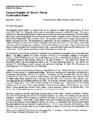
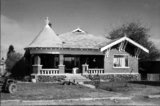
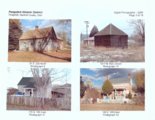
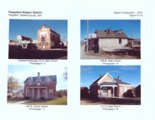
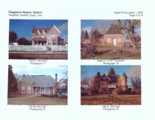
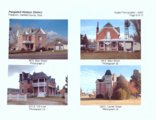
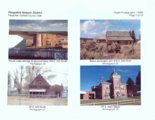
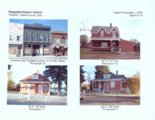
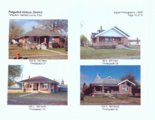
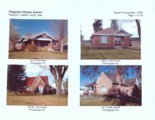
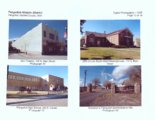
Show 0MB No, 1024-0018, NFS Fomi United States Department of the Interior National Park Service National Register of Historic Places Continuation Sheet Section No. 7 Page 5 Panguitch Historic District, Panguitch, Garfield County, UT this section. While the development of the town site was fairly steady, the extant historic building stock suggests a construction boom coinciding with the rapid development of the town after its designation as the county seat in 1882. Two more peaks occurred during economic expansion due to area tourism in the early twentieth century and again after World War II. The first of these building phases continued through the depression years, and Panguitch has numerous houses dating from the mid-to-late 1930s when most of Utah's towns were experiencing little construction due to the depression. The second phase began just after World War II. It is remarkable for the eleven motel courts built on Main and Center Streets. There was also a corresponding rise in domestic construction in the residential blocks. The last of the motel courts was built in 1964, just as the work on the Interstate 15 corridor began to divert traffic from Highway 89. For this reason, the period of significance has been extended to 1964. The historic architecture of Panguitch is distinctive in two respects: the first is the ubiquity of red brick in Panguitch generally, and the second is the development of a distinct type of brick and brick house in the 1920s and 1930s. Locally-made red brick dominates the architecture of Panguitch brick between 1875 and 1940, where the soil was ideally suited to the firing of clay brick. During the Victorian era, the second contextual period, local red brick was used to build nearly all of the residences and a number of public and commercial buildings. During this period, the brick is similar to other Utah communities and remarkable mostly for its ubiquity, especially during the settlement period when the architecture of other Utah towns was dominated by adobe brick and stone construction. Panguitch red brick tends to be darker than in other Utah communities, where the brick is usually light red-orange or nearly pink. The type and styles of this period are also similar to other Utah towns. In contrast, during the third contextual period, the local brick was rounded at the edges and slightly darker than the previous period, and exclusive to the Panguitch community. Panguitch brick was used to build several noteworthy Arts & Crafts^style bungalows. However, in the 1920s and 1930s, the brick was also used in the construction of numerous examples of a unique Panguitch residential style/type. Although found in various forms, the Panguitch house of the 1920s and 1930s is large with a square footprint under a pyramidal-withprojecting-bays roof. These houses feature an eclectic mix of Victorian, Bungalow and Period Revival stylistic elements. The inspiration for this distinctly Panguitch house type may have been the Panguitch LDS Church Tithing Office, built in 1907 [Photograph 7]. The proliferation of these distinctly Panguitch residences is one of the defining characteristics of the historic district. The fourth contextual period includes a boom of construction between the mid-1950s and early 1960s, where numerous ranch houses and motel courts were added to the landscape. Settlement and Resettlement Period. 1864-1882: The extant architecture of Panguitch's settlement period is distinguished by the use of locally available materials and a pioneer builder's vernacular. Fourteen contributing buildings were built in the settlement period. Although the first families lived in wagon boxes, tents, or crude dugouts, a few cabins were built within the town plat between 1864 and 1866. The residents were forced to leave due to conflicts with Native Americans in the area. When settlers returned to Panguitch in 1871, the dwellings had not been disturbed and it |