| OCR Text |
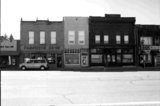
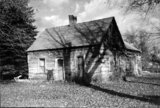
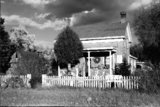
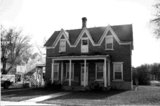
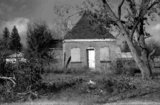
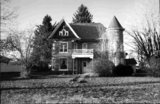
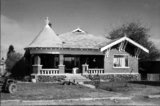
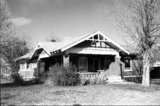
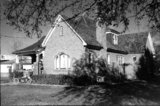
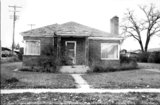
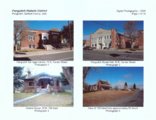
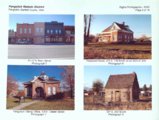
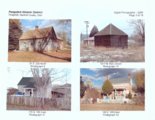
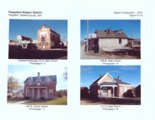
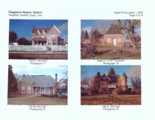
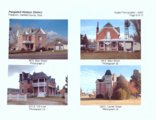
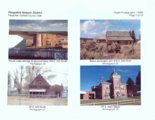
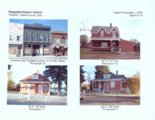
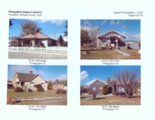
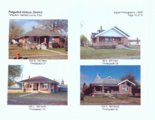
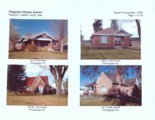
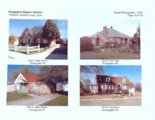
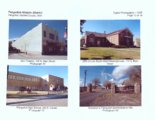
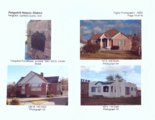
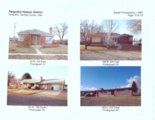
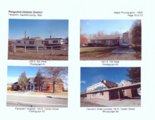
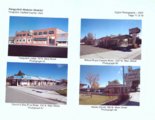
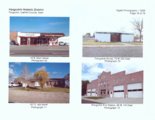
Show 0MB No. 1024-0018, NPS Form United States Department of the Interior National Park Service National Register of Historic Places Continuation Sheet Section No. 7 Page 7 Panguitch Historic District, Panguitch, Garfield County, UT during this era. The Delong House at 117 S. Main is a modest example of Victorian-era asymmetry, which was popular in Panguitch after 1890 [Photograph 16]. The Haycock House at 109 W. 100 North is an example of a central-passage house that became a Victorian cross wing (built in 1887) [Photograph 17]. The Haycock property includes a brick outbuilding with a pyramidal roof. The Panguitch landscape includes several examples of these unusual outbuildings. While a few were probably granaries, the presence of Victorian-era segmental arched window hoods indicates at least three may have been used as summer kitchens with granaries attached and then later converted to residences. Across the street from the Haycock House is another example with fewer modifications [Photograph 18]. Through the 1890s, the brick houses of Panguitch became increasingly more elaborate as residents became more prosperous. The Sargeant House at 220 N. 200 East (built circa 1890) is an early example of the Queen Anne style [Photograph 19]. A more elaborate example is the 21/2-story Henrie house at 182 S. 200 East (built circa 1905), which features a prominent round tower [Photograph 20].9 The last and most ornate example of the Victorian Gothic is the Steele House at 210 S. 100 East, built in 1897 and nicknamed "nine gables" [Photograph 23]. The most prominent residence in town is the Hatch House, built in 1896, and located on a full acre at 329 E. Center. The Hatch House is a 2V£-story brick central-block-with-projecting-wings house type with a mix of Victorian Eclectic and Queen Anne elements such as the square tower [Photograph 24]. Associated with many of these buildings are extant outbuildings from the period. One unique outbuilding is the round water tower, constructed of brick circa 1890, for the Henrie family at approximately 390 E. 300 South [Photograph 25]. 10 More typical are several English dairy and hay barns, such as those associated with a non-contributing house at 418 S. 200 West [Photograph 26]. There are several other outbuilding types, including brick summer kitchens, granaries, creameries and smokehouses [Photograph 18], stacked lumber granaries similar to the old jail [Photograph 10], and the traditional granary of the Mormon landscape, the "inside-out" version [Photograph 27]. One of the most important institutional buildings of the period was the Garfield County Courthouse, a Victorian Romanesque Revival building constructed in 1908 [Photograph 28]. n The Panguitch Social Hall was built in 1906 and the fa9ade rebuilt after a fire in 1924 [Photograph 2; NR 1998-11-12]. The extant building features elements of the Victorian-era with a nod to the Prairie School, and thus straddles two historic periods. Another transitional building, the Panguitch Tithing Office has been described as the "one of the finest and most flamboyant [buildings] built by the LDS Church" [Photograph 7] 12 The Victorian Eclectic building was constructed in 1907 and was one of the first buildings constructed of the softer, darker Panguitch brick. The two-part commercial block at 45 N. Main Street is a typical commercial building of the period [Photograph 5], 9 Sources say it was used as a water tower, but the structure currently appears to be used as a granary. 10 Whether this structure was originally used as a water tower or a granary is unknown. Since nearly all granaries in Utah are of wood frame construction with square footprints, why someone would go to the trouble of heavy brick construction with a round food print is not known, lending credence to the water tower theory. It now has a small square opening on the east side, which could have been a later retrofit for a granary. Nonetheless, it is a unique structure. 11 A one-story addition was built to the north in 1982, but does not detract from the character of the original building. 12 Panguitch Architectural Survey, May/July 1977. The Panguitch Tithing Office was determined eligible for the National Register in the 1980s, but was not listed at the time due to an owner objection. It is now a museum. |