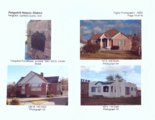
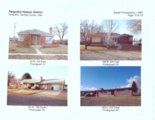
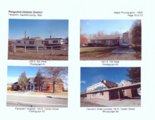
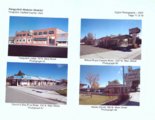
| OCR Text |
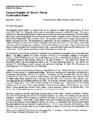
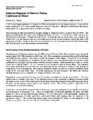
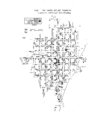
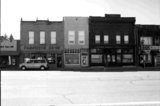
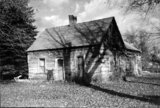
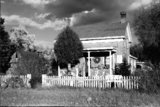
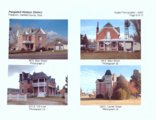
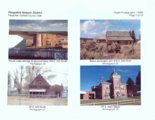
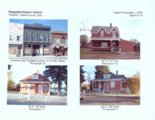
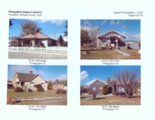
Show 0MB No. 1024-0018, NFS Fonti United States Department of the Interior National Park Service National Register of Historic Places Continuation Sheet Section No. 7 Page 1 Panguitch Historic District, Panguitch, Garfield County, UT Narrative Description The Panguitch Historic District is located in the city of Panguitch in central Utah, approximately 245 miles south of Salt Lake City. Panguitch is the county seat and largest community in Garfield County. The town is located at the south end of the Panguitch Valley near the north slope of the nearby mountains. The Sevier River runs south to north approximately one mile from the center of town. Panguitch Creek, a tributary, crosses the historic district diagonally at the northwest corner. The boundary of the district is roughly equivalent to the original Panguitch town site. The boundaries also extend along the major transportation corridor, Highway 89. Highway 89 becomes Main Street as it enters Panguitch at the north end of town. At Center Street, Highway 89 turns west, and after leaving town, continues south toward the Utah-Arizona border. Highway 89 is the main tourist corridor for access to Bryce Canyon National Park. Panguitch's Main Street turns into State Road 143 at Center Street. SR 143 leads to Cedar Breaks National Monument and Cedar City. The Panguitch Historic District is primarily residential with commercial development along Main and Center Streets. The district includes 642 primary resources, of which 379 (60 percent) contribute to its historic character. Of the 258 (40 percent) are non-contributing resources, 79 are altered historic buildings, and 179 are out-of-period resources (See summary statistics at the end of Section 7). The totals above include one contributing object, two non-contributing objects, and two non-contributing structures. The district also includes 255 outbuildings, primarily garages and agricultural buildings, of which 154 (60 percent) are contributing and 101 (40 percent) are non-contributing. Eighty-three percent of contributing buildings are single-family dwellings. Multiple-family housing and motels account for three percent of contributing buildings. The historic housing stock ranges from log dwellings to ranch houses and ramblers. However, the majority of residences was built between 1890 and 1930, and is mostly of brick. Prior to 1915, most of the brick residences were built of traditional fired brick. Between 1915 and 1940, local builders frequently used a soft-edge, deep red brick, which is unique to the Panguitch area. 1 Forty-eight percent of contributing buildings are brick. There are also a number of brick outbuildings (summer kitchen's and granaries). Brick is the dominant material for all building types. Twelve percent of contributing buildings are log or wood frame, mostly sheathed with drop-novelty siding. Sixteen percent have stucco veneer. Fifteen percent are covered in other veneers, such as aluminum, asbestos, and asphalt siding. Five percent of contributing buildings are concrete block, and four percent are stone. The other original uses for the contributing buildings include twenty-eight (7 percent) commercial buildings, four government buildings, two schools, two religious buildings, one hospital, two theaters, one jail, and one monument, hi addition, fifteen (4 percent) agricultural buildings of note (barns and granaries) were evaluated as primary resources. Three brick summer kitchens were also evaluated as primary resources. Most of the commercial buildings are located along the Highway 89 corridor, i.e. north Main Street and east Center Street. The other building types are scattered throughout the district. Prior to this nomination, three buildings within the district were individually listed on the National Register of Historic Places (these are not included in the 1 Residences constructed of "Panguitch brick" are documented Fern H. and Jasper L Crawford's Red Brick Homes and Other Buildings of Panguitch, ([Panguitch, Utah: n.p.], 1997). |