| Title |
Environmental Impact Statement for Bonneville Unit, Central Utah Project |
| Description |
Documents primarily concerning environmental impacts of the Bonneville Unit of the Central Utah Project; from the The Dorothy Harvey papers (1902-2005), a collection of materials focusing on the Central Utah Project (CUP), a water resource development program to use Utah's alloted share of the Colorado River. Includes correspondence, Harvey's writing drafts and notes for an unpublished book on the CUP, federal documents, project litigation materials, subject files, news clippings, newsletters, programs, brochures, and maps. |
| Subject |
Central Utah Project. Bonneville Unit; Colorado River Storage Project (U.S.); Ute Indians--Claims; Water resources development--Environmental aspects--Utah; Water-supply--Utah--Salt Lake County; Water-power--Environmental aspects--Utah; Natural resources--Environmental aspects--Utah; Natural resources--Management--Utah; Strawberry Aqueduct; Dams--Environmental aspects--Utah; Environmental impact analysis; Environmental impact statements--Utah |
| Contributor |
Raskin, David C.; United States. Dept. of the Interior. Bureau of Land Management; Fuchs, Everett; Cain, Donald R.; Lynn, Laurence E.; Citizens for a Responsible Central Utah Project; Nagel, Nan; Reece, Joelle; Merson, Alan; Lindsay, William W. |
| Additional Information |
Includes: Comments on Final Environmental Statement, Bonneville Unit, Central Utah Project, on Behalf of Uinta Chapter, Sierra Club; Guidelines for Conducting an Environmental Impact Assessment; Environmental Impact Statement for Bonneville Unit, Central Utah Project; Water Log newsletter; Letter from the EPA about the Bonneville Municipal and Industrial System Draft Environmental Statement; Response to Letter from the Environmental Protection Agency, Commenting on the Municipal and Industrial System Draft Environmental Statement; Letter from Office of Electric Power Regulation; Background Information on the Dewatering and Destruction of High Quality Mountain Streams on the Uinta Mountains, Northeast Utah, from the Central Utah Water Project; Environmental Assessment Partnership Investments of Colorado, Inc. Parkwest Water Users Association |
| Spatial Coverage |
Great Salt Lake (Utah); Colorado River Watershed (Colo.-Mexico); Colorado River (Colo.-Mexico); Salt Lake City (Utah); Salt Lake County (Utah); Utah Lake (Utah); Provo River (Utah); Strawberry Reservoir (Utah); Strawberry River (Utah); Rock Creek (Utah); Jordanelle Reservoir (Utah); Starvation Reservoir (Utah); Jordan River (Utah); Weber River (Utah); Bear River (Utah-Idaho); Bonneville Basin (Utah); Uinta Basin (Utah and Colo.); Ashley National Forest (Utah and Wyo.); Uinta National Forest (Utah); Duchesne River (Utah); Deer Creek Reservoir (Utah); Heber (Utah); Currant Creek (Utah); Park City (Utah) |
| Collection Number and Name |
Accn2232 Bx 118 Fd 5; Dorothy Harvey papers |
| Rights Management |
Digital Image © 2010 University of Utah. All Rights Reserved. |
| Holding Institution |
J. Willard Marriott Library, University of Utah |
| Date |
1973; 1978; 1979; 1981 |
| Digitization Specifications |
Original scanned on Epson Expression 10000 XL and saved as 400 ppi TIFF. Display image generated in Contentdm. |
| Publisher |
Digitized by J. Willard Marriott Library, University of Utah |
| Type |
Text |
| ARK |
ark:/87278/s68051kx |
| Setname |
wwdl_neh |
| ID |
1155536 |
| Reference URL |
https://collections.lib.utah.edu/ark:/87278/s68051kx |
| Title |
Page 92 |
| Setname |
wwdl_neh |
| ID |
1155493 |
| OCR Text |
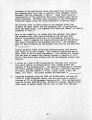
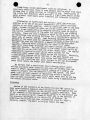
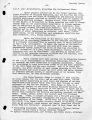
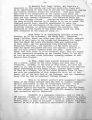
Show Response: This subject is discussed in the response to comments 6 and 10 above. >, ' 21. Comment: i:, The water-quality analysis is inadequate. It does not include an ? adequate data base to justify the conclusions that are made regarding ; the heavy metals and eutrophicat ion problems. The analysis was done |{, using out-of-date state water quality standards, and it did not account ^ for Utah's antidegradation policy. The analysis of various minimum )A streamflows and their impacts which was recently completed, but not 0 made available to the public, should have been included in the impact J statement. The discussion of salinity impacts should reflect current £f conditions and information. £& Response: W: Section C-6 of the FES presents additional water quality data collected by the Bureau of Reclamation and contains an expanded discussion on the potential problems at Jordanelle Reservoir. Water quality analysis is continuing. The Environmental Protection Agency has been contacted concerning the water quality analysis, and a draft water quality appendix is available for use by the agency. Existing water quality was compared with all applicable standards.. These included the State's Class C and new standards, EPA's National Interim and Primary Drinking Water Standards, and EPA's 1976 Quality Criteria for Water. Recommended levels presented in the water quality tables in Attachment I to the FES are the most stringent applicable standard. State Class CC standards were given as only a general indication of overall quality. The new State standards were not specifically referred to because they are no more strict than Class C and EPA standards, and to date they have not been approved by EPA. The initial water quality analysis for the Municipal and Industrial System was made before the new standards were adopted by the State. The earlier standards were compared with the adopted standards, and it was determined that the changes were insignificant and the work involved to change the printed tables and text was not justified. The Bureau will refer to and use the new State standards in all new analyses when those standards are approved or changed by EPA. No segments of the Provo River are designated as antidegradation segments under Utah's new water-quality standards. Even if Provo River had been designated as such, construction of the Jordanelle Dam would not be precluded. The State's antidegradation policy is designed to protect waters of exceptionally high quality (better than State standards). According to State regulations: "Projects such as, but not limited to construction of dams or roads will be considered in antidegradation segments on a case-by-case basis where pollution will result only during the actual construction activity, and where best management practices will be employed to minimize pollution effects." 39 |
| Reference URL |
https://collections.lib.utah.edu/ark:/87278/s68051kx/1155493 |