| Title |
Environmental Impact Statement for Bonneville Unit, Central Utah Project |
| Description |
Documents primarily concerning environmental impacts of the Bonneville Unit of the Central Utah Project; from the The Dorothy Harvey papers (1902-2005), a collection of materials focusing on the Central Utah Project (CUP), a water resource development program to use Utah's alloted share of the Colorado River. Includes correspondence, Harvey's writing drafts and notes for an unpublished book on the CUP, federal documents, project litigation materials, subject files, news clippings, newsletters, programs, brochures, and maps. |
| Subject |
Central Utah Project. Bonneville Unit; Colorado River Storage Project (U.S.); Ute Indians--Claims; Water resources development--Environmental aspects--Utah; Water-supply--Utah--Salt Lake County; Water-power--Environmental aspects--Utah; Natural resources--Environmental aspects--Utah; Natural resources--Management--Utah; Strawberry Aqueduct; Dams--Environmental aspects--Utah; Environmental impact analysis; Environmental impact statements--Utah |
| Contributor |
Raskin, David C.; United States. Dept. of the Interior. Bureau of Land Management; Fuchs, Everett; Cain, Donald R.; Lynn, Laurence E.; Citizens for a Responsible Central Utah Project; Nagel, Nan; Reece, Joelle; Merson, Alan; Lindsay, William W. |
| Additional Information |
Includes: Comments on Final Environmental Statement, Bonneville Unit, Central Utah Project, on Behalf of Uinta Chapter, Sierra Club; Guidelines for Conducting an Environmental Impact Assessment; Environmental Impact Statement for Bonneville Unit, Central Utah Project; Water Log newsletter; Letter from the EPA about the Bonneville Municipal and Industrial System Draft Environmental Statement; Response to Letter from the Environmental Protection Agency, Commenting on the Municipal and Industrial System Draft Environmental Statement; Letter from Office of Electric Power Regulation; Background Information on the Dewatering and Destruction of High Quality Mountain Streams on the Uinta Mountains, Northeast Utah, from the Central Utah Water Project; Environmental Assessment Partnership Investments of Colorado, Inc. Parkwest Water Users Association |
| Spatial Coverage |
Great Salt Lake (Utah); Colorado River Watershed (Colo.-Mexico); Colorado River (Colo.-Mexico); Salt Lake City (Utah); Salt Lake County (Utah); Utah Lake (Utah); Provo River (Utah); Strawberry Reservoir (Utah); Strawberry River (Utah); Rock Creek (Utah); Jordanelle Reservoir (Utah); Starvation Reservoir (Utah); Jordan River (Utah); Weber River (Utah); Bear River (Utah-Idaho); Bonneville Basin (Utah); Uinta Basin (Utah and Colo.); Ashley National Forest (Utah and Wyo.); Uinta National Forest (Utah); Duchesne River (Utah); Deer Creek Reservoir (Utah); Heber (Utah); Currant Creek (Utah); Park City (Utah) |
| Collection Number and Name |
Accn2232 Bx 118 Fd 5; Dorothy Harvey papers |
| Rights Management |
Digital Image © 2010 University of Utah. All Rights Reserved. |
| Holding Institution |
J. Willard Marriott Library, University of Utah |
| Date |
1973; 1978; 1979; 1981 |
| Digitization Specifications |
Original scanned on Epson Expression 10000 XL and saved as 400 ppi TIFF. Display image generated in Contentdm. |
| Publisher |
Digitized by J. Willard Marriott Library, University of Utah |
| Type |
Text |
| ARK |
ark:/87278/s68051kx |
| Setname |
wwdl_neh |
| ID |
1155536 |
| Reference URL |
https://collections.lib.utah.edu/ark:/87278/s68051kx |
| Title |
Page 49 |
| Setname |
wwdl_neh |
| ID |
1155450 |
| OCR Text |
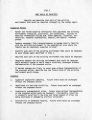
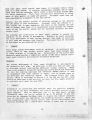
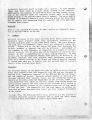
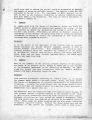
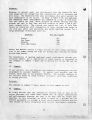
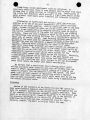
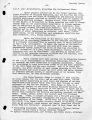
Show STEP 13 WHAT ARE THE ALTERNATIVES? describe appropriate courses of action in • unresolved conflicts of available resource." Section 102 (2) (D) of the National Environmental Policy Act of 1969 requires that the responsible agency "study, develop, and alternatives to recommended any proposal which involves concerning alternative uses Guidelines for the Preparation of Environmental Impact Statements published by the Council on Environmental Quality (FR August 1, 1973) further state that "A rigorous exploration and objective evaluation of the environmental impacts of all reasonable alternative actions, particularly those that might enhance environmental quality or avoid some or all of the adverse effects, is essential." The primary reasons for developing alternatives are to achieve full disclosure, present a comparative assessment to present trade-offs, and facilitate choices in the decision-making process. Suggested Method Cooperate with the team leader and other team members to develop suitable alternatives. The description of the proposal and the previous steps are sources of information that may lead to the development of alternatives. Alternatives should be technologically possible and reasonably available. Consider alternative ways, means, methods, designs, time frames, and locations to achieve all or part of the objectives of the proposal. Consider alternatives that would effectively reduce or eliminate the unavoidable adverse impacts that would be caused by the proposed action. Consider alternatives that would further enhance beneficial impacts. Consider the "No Action" alternative. Contact other Federal, State, and local agencies with authorizing actions to implement the proposed action, to consider alternatives they may have formulated. Seek the assistance of the team leader in accomplishing this coordination. Alternatives need not be within the existing authority of the Bureau of Land Management or the Department of Interior. The environmental impact assessment of alternatives would follow the same steps as assessment of the proposed action. 33 |
| Reference URL |
https://collections.lib.utah.edu/ark:/87278/s68051kx/1155450 |