| Title |
Environmental Impact Statement for Bonneville Unit, Central Utah Project |
| Description |
Documents primarily concerning environmental impacts of the Bonneville Unit of the Central Utah Project; from the The Dorothy Harvey papers (1902-2005), a collection of materials focusing on the Central Utah Project (CUP), a water resource development program to use Utah's alloted share of the Colorado River. Includes correspondence, Harvey's writing drafts and notes for an unpublished book on the CUP, federal documents, project litigation materials, subject files, news clippings, newsletters, programs, brochures, and maps. |
| Subject |
Central Utah Project. Bonneville Unit; Colorado River Storage Project (U.S.); Ute Indians--Claims; Water resources development--Environmental aspects--Utah; Water-supply--Utah--Salt Lake County; Water-power--Environmental aspects--Utah; Natural resources--Environmental aspects--Utah; Natural resources--Management--Utah; Strawberry Aqueduct; Dams--Environmental aspects--Utah; Environmental impact analysis; Environmental impact statements--Utah |
| Contributor |
Raskin, David C.; United States. Dept. of the Interior. Bureau of Land Management; Fuchs, Everett; Cain, Donald R.; Lynn, Laurence E.; Citizens for a Responsible Central Utah Project; Nagel, Nan; Reece, Joelle; Merson, Alan; Lindsay, William W. |
| Additional Information |
Includes: Comments on Final Environmental Statement, Bonneville Unit, Central Utah Project, on Behalf of Uinta Chapter, Sierra Club; Guidelines for Conducting an Environmental Impact Assessment; Environmental Impact Statement for Bonneville Unit, Central Utah Project; Water Log newsletter; Letter from the EPA about the Bonneville Municipal and Industrial System Draft Environmental Statement; Response to Letter from the Environmental Protection Agency, Commenting on the Municipal and Industrial System Draft Environmental Statement; Letter from Office of Electric Power Regulation; Background Information on the Dewatering and Destruction of High Quality Mountain Streams on the Uinta Mountains, Northeast Utah, from the Central Utah Water Project; Environmental Assessment Partnership Investments of Colorado, Inc. Parkwest Water Users Association |
| Spatial Coverage |
Great Salt Lake (Utah); Colorado River Watershed (Colo.-Mexico); Colorado River (Colo.-Mexico); Salt Lake City (Utah); Salt Lake County (Utah); Utah Lake (Utah); Provo River (Utah); Strawberry Reservoir (Utah); Strawberry River (Utah); Rock Creek (Utah); Jordanelle Reservoir (Utah); Starvation Reservoir (Utah); Jordan River (Utah); Weber River (Utah); Bear River (Utah-Idaho); Bonneville Basin (Utah); Uinta Basin (Utah and Colo.); Ashley National Forest (Utah and Wyo.); Uinta National Forest (Utah); Duchesne River (Utah); Deer Creek Reservoir (Utah); Heber (Utah); Currant Creek (Utah); Park City (Utah) |
| Collection Number and Name |
Accn2232 Bx 118 Fd 5; Dorothy Harvey papers |
| Rights Management |
Digital Image © 2010 University of Utah. All Rights Reserved. |
| Holding Institution |
J. Willard Marriott Library, University of Utah |
| Date |
1973; 1978; 1979; 1981 |
| Digitization Specifications |
Original scanned on Epson Expression 10000 XL and saved as 400 ppi TIFF. Display image generated in Contentdm. |
| Publisher |
Digitized by J. Willard Marriott Library, University of Utah |
| Type |
Text |
| ARK |
ark:/87278/s68051kx |
| Setname |
wwdl_neh |
| ID |
1155536 |
| Reference URL |
https://collections.lib.utah.edu/ark:/87278/s68051kx |
| Title |
Page 10 |
| Setname |
wwdl_neh |
| ID |
1155411 |
| OCR Text |
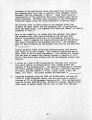
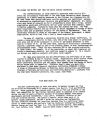
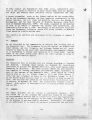
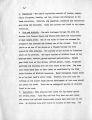
Show -9- lity than most Wasatch Front streams. These should be dealt with properly and honestly and could provide a great deal of additional supply. Also, the statement that development of Wasatch Front streams would decrease ground water recharge is not true, since almost all recharge occurs above the intake points for the treatment plants and additional recharge can be constructed. *K Desalination-This is given brief and misleading treatment. The statement indicates 1 million af consumption for desalination without any documentation. The discussion of reducing the level of Great Salt Lake ignores the problems discussed in I-A above and the low consumption by M&I users. This alternative should be developed using realistic analyses and prices. 5.cPhreatophyte Control-This alternative is dismissed without making any definite statements about feasibility, costs, total amount that could be salvaged, etc. The real potential along the Jordan River, which will occur with the authorized Jordan River Parkway, is simply ignored. 6. Recycling and Re-use-The potential is recognized, but not in any detail..There is little serious discussion of two-stage municipal- Industrial systems, and the potential for recycling is dismissed on the basis of out-moded public attitudes. As pointed out in II-A above, there will be a great deal of culinary quality water available in the near future, and it could be -used in a variety of ways. Public attitudes can be changed, especially if prices are increased to a realistic level and public money is used to educate the public rather than conducting a public relations campaign to sell the people the CUP which they don't need. 7- Better Management and Efficiency of Utilization-These developments are alluded to and promptly forgotten.vThe statement mentions 50$ loss in some communities due to leaking and defective systems. The same problem exists at the household and individual farmer level. If pricing reflected true cost and availability, then waste would rapidly iisappear and demand would drop. 8. Bear River and Weber River-Somehow the fact that excess water is available in these two systems disappears like underground water. The Weber Basin project has 56,000 af unsubscribed even though the taxpayers built it. We should use it first.,The |
| Reference URL |
https://collections.lib.utah.edu/ark:/87278/s68051kx/1155411 |