| OCR Text |
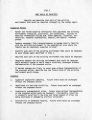
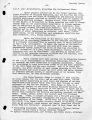
Show STEP 7 TO WHAT EXTENT CAN THE IMPACT BE QUANTIFIED? A full understanding of the magnitude, intensity, duration, and incidence of the impact requires quantification, when possible, relative to size, amount, area, length, time, numbers, concentrations, occurrence, frequency, etc. Suggested Method Review previous steps to identify where additional quantification is needed to fully understand the impact. Obtain additional quantification to the extent possible. Quantification must be based on known data or on reasonable assumptions and estimates. Document the sources of information for future reference in preparation of the Multiple-Use Analysis, ES or EAR. Use standard or accepted methods for calculating estimates whenever available. Consider developing methods for calculating estimates when none exist. Description and justification of a developed method are necessary. Compare the baseline projection (without implementation of the proposed project) and the projection with implementation of the proposal to established standards or benchmarks of environmental quality, e.g., air and water quality standards. Use carefully qualified descriptive terms to describe an impact when quantification is not possible. Examples a. Controlled burning would change the vegetative composition of 600 acres of sagebrush range!and. Estimates of the percentage composition of major species, as determined by range surveys during 1976, are presented in Table 1. Estimates of the expected changes in percentage composition of major species at , , and years following the controlled burn are presented in Table 2. These estimates, compiled by Burns (1950), are based on studies of controlled burning under similar vegetative, soil, and moisture conditions. b. The existing level of particulates at the proposed power plant site was monitored by the U.S. Environmental Protection Agency from September 1, 1975, to September 1, 1976. A summary of these data is presented in Table 1. The methods used are described in . 19 |