| Title |
Environmental Impact Statement for Bonneville Unit, Central Utah Project |
| Description |
Documents primarily concerning environmental impacts of the Bonneville Unit of the Central Utah Project; from the The Dorothy Harvey papers (1902-2005), a collection of materials focusing on the Central Utah Project (CUP), a water resource development program to use Utah's alloted share of the Colorado River. Includes correspondence, Harvey's writing drafts and notes for an unpublished book on the CUP, federal documents, project litigation materials, subject files, news clippings, newsletters, programs, brochures, and maps. |
| Subject |
Central Utah Project. Bonneville Unit; Colorado River Storage Project (U.S.); Ute Indians--Claims; Water resources development--Environmental aspects--Utah; Water-supply--Utah--Salt Lake County; Water-power--Environmental aspects--Utah; Natural resources--Environmental aspects--Utah; Natural resources--Management--Utah; Strawberry Aqueduct; Dams--Environmental aspects--Utah; Environmental impact analysis; Environmental impact statements--Utah |
| Contributor |
Raskin, David C.; United States. Dept. of the Interior. Bureau of Land Management; Fuchs, Everett; Cain, Donald R.; Lynn, Laurence E.; Citizens for a Responsible Central Utah Project; Nagel, Nan; Reece, Joelle; Merson, Alan; Lindsay, William W. |
| Additional Information |
Includes: Comments on Final Environmental Statement, Bonneville Unit, Central Utah Project, on Behalf of Uinta Chapter, Sierra Club; Guidelines for Conducting an Environmental Impact Assessment; Environmental Impact Statement for Bonneville Unit, Central Utah Project; Water Log newsletter; Letter from the EPA about the Bonneville Municipal and Industrial System Draft Environmental Statement; Response to Letter from the Environmental Protection Agency, Commenting on the Municipal and Industrial System Draft Environmental Statement; Letter from Office of Electric Power Regulation; Background Information on the Dewatering and Destruction of High Quality Mountain Streams on the Uinta Mountains, Northeast Utah, from the Central Utah Water Project; Environmental Assessment Partnership Investments of Colorado, Inc. Parkwest Water Users Association |
| Spatial Coverage |
Great Salt Lake (Utah); Colorado River Watershed (Colo.-Mexico); Colorado River (Colo.-Mexico); Salt Lake City (Utah); Salt Lake County (Utah); Utah Lake (Utah); Provo River (Utah); Strawberry Reservoir (Utah); Strawberry River (Utah); Rock Creek (Utah); Jordanelle Reservoir (Utah); Starvation Reservoir (Utah); Jordan River (Utah); Weber River (Utah); Bear River (Utah-Idaho); Bonneville Basin (Utah); Uinta Basin (Utah and Colo.); Ashley National Forest (Utah and Wyo.); Uinta National Forest (Utah); Duchesne River (Utah); Deer Creek Reservoir (Utah); Heber (Utah); Currant Creek (Utah); Park City (Utah) |
| Collection Number and Name |
Accn2232 Bx 118 Fd 5; Dorothy Harvey papers |
| Rights Management |
Digital Image © 2010 University of Utah. All Rights Reserved. |
| Holding Institution |
J. Willard Marriott Library, University of Utah |
| Date |
1973; 1978; 1979; 1981 |
| Digitization Specifications |
Original scanned on Epson Expression 10000 XL and saved as 400 ppi TIFF. Display image generated in Contentdm. |
| Publisher |
Digitized by J. Willard Marriott Library, University of Utah |
| Type |
Text |
| ARK |
ark:/87278/s68051kx |
| Setname |
wwdl_neh |
| ID |
1155536 |
| Reference URL |
https://collections.lib.utah.edu/ark:/87278/s68051kx |
| Title |
Page 36 |
| Setname |
wwdl_neh |
| ID |
1155437 |
| OCR Text |
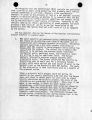
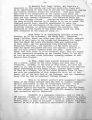
Show Estimates of the particulate levels that would have occurred had the proposed power plant been in operation from September 1975 to September 1976 are presented in Table 2. These levels would be representative of the conditions that would probably occur during normal operation. Estimates were calculated by the Environmental Protection Agency using the Valley atmospheric dispersion model. The existing level of particulates at the proposed plant site (without the power plant) and the projected level of particulates (with the power plant), are compared with State and Federal air quality standards in Table 3. Data on the visibility, as viewed from Zion National Park toward the proposed plant site, were collected by the National Park Service in conjunction with the U.S. Environmental Protection Agency. Table 4 compares the viewing distance a-gainst the particulate levels recorded at the proposed plant site. The procedures used for data collection by the National Park Service are described in . Studies by White (1976) correlated viewing distance with particulate levels in an arid climate. (No visibility reductions due to water vapor in the air were considered.) This theoretical information was used to compare the viewing distance (a measure of visibility) that would occur without and with the proposed project (see Table 5). c. A survey by a team of BLM archaeologists indicates that construction would destroy 10 archaeological sites located within the boundary of the proposed plant. The types of archaeological findings are lithic scatters (chipping areas) (7 sites), transient campsites (2 sites), and rock shelter (1 site), (Jones, Smith, Brown, and Adams, July 1976). The survey methods are described in . d. Projected estimates using the UPED and UPLAND models indicate the influx of 4,000 additional people into the region would create a shortage of 735 to 980 permanent housing units. This shortage would occur at Milford (600-700 units), Minersville (40-80), Beaver (5-10), other areas of Beaver County (30-70), and at Cedar City (60-120). 20 |
| Reference URL |
https://collections.lib.utah.edu/ark:/87278/s68051kx/1155437 |