| Title |
Environmental Impact Statement for Bonneville Unit, Central Utah Project |
| Description |
Documents primarily concerning environmental impacts of the Bonneville Unit of the Central Utah Project; from the The Dorothy Harvey papers (1902-2005), a collection of materials focusing on the Central Utah Project (CUP), a water resource development program to use Utah's alloted share of the Colorado River. Includes correspondence, Harvey's writing drafts and notes for an unpublished book on the CUP, federal documents, project litigation materials, subject files, news clippings, newsletters, programs, brochures, and maps. |
| Subject |
Central Utah Project. Bonneville Unit; Colorado River Storage Project (U.S.); Ute Indians--Claims; Water resources development--Environmental aspects--Utah; Water-supply--Utah--Salt Lake County; Water-power--Environmental aspects--Utah; Natural resources--Environmental aspects--Utah; Natural resources--Management--Utah; Strawberry Aqueduct; Dams--Environmental aspects--Utah; Environmental impact analysis; Environmental impact statements--Utah |
| Contributor |
Raskin, David C.; United States. Dept. of the Interior. Bureau of Land Management; Fuchs, Everett; Cain, Donald R.; Lynn, Laurence E.; Citizens for a Responsible Central Utah Project; Nagel, Nan; Reece, Joelle; Merson, Alan; Lindsay, William W. |
| Additional Information |
Includes: Comments on Final Environmental Statement, Bonneville Unit, Central Utah Project, on Behalf of Uinta Chapter, Sierra Club; Guidelines for Conducting an Environmental Impact Assessment; Environmental Impact Statement for Bonneville Unit, Central Utah Project; Water Log newsletter; Letter from the EPA about the Bonneville Municipal and Industrial System Draft Environmental Statement; Response to Letter from the Environmental Protection Agency, Commenting on the Municipal and Industrial System Draft Environmental Statement; Letter from Office of Electric Power Regulation; Background Information on the Dewatering and Destruction of High Quality Mountain Streams on the Uinta Mountains, Northeast Utah, from the Central Utah Water Project; Environmental Assessment Partnership Investments of Colorado, Inc. Parkwest Water Users Association |
| Spatial Coverage |
Great Salt Lake (Utah); Colorado River Watershed (Colo.-Mexico); Colorado River (Colo.-Mexico); Salt Lake City (Utah); Salt Lake County (Utah); Utah Lake (Utah); Provo River (Utah); Strawberry Reservoir (Utah); Strawberry River (Utah); Rock Creek (Utah); Jordanelle Reservoir (Utah); Starvation Reservoir (Utah); Jordan River (Utah); Weber River (Utah); Bear River (Utah-Idaho); Bonneville Basin (Utah); Uinta Basin (Utah and Colo.); Ashley National Forest (Utah and Wyo.); Uinta National Forest (Utah); Duchesne River (Utah); Deer Creek Reservoir (Utah); Heber (Utah); Currant Creek (Utah); Park City (Utah) |
| Collection Number and Name |
Accn2232 Bx 118 Fd 5; Dorothy Harvey papers |
| Rights Management |
Digital Image © 2010 University of Utah. All Rights Reserved. |
| Holding Institution |
J. Willard Marriott Library, University of Utah |
| Date |
1973; 1978; 1979; 1981 |
| Digitization Specifications |
Original scanned on Epson Expression 10000 XL and saved as 400 ppi TIFF. Display image generated in Contentdm. |
| Publisher |
Digitized by J. Willard Marriott Library, University of Utah |
| Type |
Text |
| ARK |
ark:/87278/s68051kx |
| Setname |
wwdl_neh |
| ID |
1155536 |
| Reference URL |
https://collections.lib.utah.edu/ark:/87278/s68051kx |
| Title |
Page 86 |
| Setname |
wwdl_neh |
| ID |
1155487 |
| OCR Text |
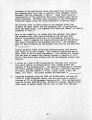
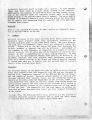
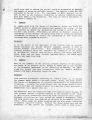
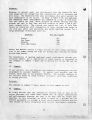
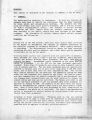
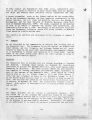
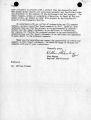
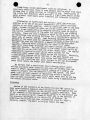
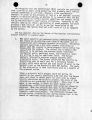
Show £•' 10. Comment: There would also be secondary growth impacts associated with the project. The assertion in the impact statement that the Salt Lake City metropolitan population would reach nearly 1.4 million by 2010 with or without the project is without foundation. Major infrastructure investments like water supply systems do affect growth rates and growth patterns. The alternative sources of water discussed previously can in all probability supply the 1.4 million population if it does come about. However, the water would be developed in an incremental, well-planned manner in coordination with overall development planning. As a result, growth patterns would tend to be more orderly and better planned. Providing a huge increment of water ail at once by the Bonneville Unit M&I System j?. would encourage haphazard growth patterns by reducing the necessity for ;.i more careful and coordinated planning for development. Information on p growth patterns and the effects of major infrastructure investments on growth can be found in the annual reports to the President prepared by the Council on Environmental Quality and in publications prepared by the Council such as The Growth Shapers and The Costs of Urban Sprawl. Response: The DES acknowledges the possible indirect effect of the proposed Municipal and Industrial System on growth in Salt Lake County. However, it also states that the Municipal and Industrial System is only one of many interacting factors influencing growth rates and growth patterns. As stated in Section C2 of the DES, studies by Field, Barron, and Long (1974) suggest that water resource projects are not a significant factor influencing growth in many areas. This conclusion is supported by others (Dietz, 1977). Throughout the Salt Lake Valley, growth would not be significantly influenced by the provision of a water supply, although the distribution of the supply could be a determinant of its location, rate, and pattern locally. An analysis of the secondary growth impacts of water supply based on a knowledge of sewer system impacts as suggested on page 58 of The Growth Shapers appears to be more applicable to municipal water distribution systems. The rapidly expanding population of Salt Lake County, caused primarily by a birth rate double the National average and a high level of in-migration is attributable mainly to social and economic factors. Job opportunites and the stable economy, along with the attractiveness of the location are very influential in drawing people to and keeping them in the area. A population figure of 1,382,000 was projected in the"" DES for Salt Lake and northern Utah Counties in the year 2010. There are no indications that growth trends will decrease. The growth situation in Salt Lake City is analagous to that in several other western cities, notably Denver and Phoenix. Growth in Salt Lake City has continued unabated, despite shortages like those that occurred in the summer of 1977 and threats of further drought. In the face of shortages, it appears that the public will respond to the need for 33 |
| Reference URL |
https://collections.lib.utah.edu/ark:/87278/s68051kx/1155487 |