| OCR Text |
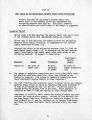
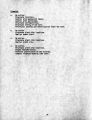
Show THE STATE OF THE CENTRAL UTAH PROJECT - CONFUSION REIGNS During the last year, several major developments have created uncertainty about how the Central Utah P r o j e c t ' s Bonneville Unit will eventually be constructed and operated. First, the Interior Department is in the midst of a major review of the Uintah Basin s t r e am impacts of the Central Utah Project (CUP). Second, in order to expedite the construction of the CUP's Jordanelle Dam which would serve Salt Lake County, the Bureau of Reclamation seems to be planning an interium version of the Bonneville Unit. Finally, the Ute Indians have come to question the sacrifices that they have made to help support the Central Utah Project. Together these factors create a Bonneville Unit that is radically different from the Bonneville Unit that was presented in the 1972 Environmental Impact Statement. The negotiations over s t r e am flows have been produced by a number of p r e s s u r e s . In finally approving the Bonneville Unit in 1973, Secretary of the Interior, Rodgers Morton stated that the problems of the CUP's s t r e am impacts would be resolved at a later time. Conservationists and the U.S. Fish and Wildlife Service have tried to insure that Morton's 1973 promise would not be forgotten. Both the U.S. Environmental Protection Agency and the Fish and Wildlife Service have tried to establish that under the Federal Water Pollution Control Act, the Army Corps of Engineers must include adequate minimum s t r e am flows as conditions for 404 Dredge and Fill permits in order to protect water quality. (A 404 Permit is necessary before any Dam or water diversion device may be built. ) In July of 1978, President Carter, stated very clearly, as part of his new federal water policy, that ongoing Bureau of Reclamation projects would be modified to protect s t r e am habitat. Finally, Governor Matheson initiated a review of the s t r e am impacts of the CUP, something that his predecessor had been unwilling to do. In recent weeks a major new element has been injected into this ongoing review, the Fish and Wildlife Service's Instream Flow Group's Habitat Computer Modeling Program has been used to examine these streams. This program makes use of streamside measurements to predict how much s t r e am habitat will be lost with any particular stream flow reduction. It further has the capacity to subdivide the flow requirements and show how flow reductions will decrease spawning habitat, rearing habitat, whiter survival, and habitat for adult fish. The results from this computer modeling have shown that as presently formulated the CUP will have a devastating effect on Utah's trout streams. It had been hoped by some that when the stream measurements were fed into the habitat program, that the computer would produce an easy compromise. It was hoped that the computer would produce stream flow requirements that would give the conservationists their trout streams, give the CUP d i r e c t o r s their water in Provo with only a modest reduction, and make the Bureau of Reclamation look like a magician stripping the excess water from the Uintah Mountain trout streams so carefully that you could never tell the difference. But the computer showed that no easy solutions were at hand. To preserve the four major streams on the Strawberry Collection System (the Strawberry River, the West Fork of the Duchesne, Rock Creek and Current Creek) with only a 25% reduction in habitat, would require between 60,000 to 70,000 acre feet of water as page 2 |