| OCR Text |
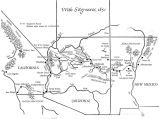
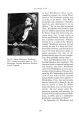
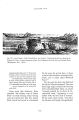
Show C H A P T E R FIVE Sweeny put it. Indeed, one day out of Yuma they had buried the flesh-stripped bones of four men recently killed by Indians. But the Indians made no attempt to assault the large, well armed force.73 On the morning of December 18, just as the Pacific mail steamer was leaving the harbor, Sitgreaves's little band reached San Diego-"the termination of our overland journey which to us has been . . . one of much anxiety and constant suspense."74 The sense of relief among the men was palpable. In the plaza of the old Mexican center of town, people gathered around the explorers, eager for news about the Indian country. Sitgreaves and his companions obliged, Dr. Woodhouse said, yet "nothing would do but that we must take a toddy with them." A few drinks later, "we went to the Post Office and enquired for letters but Mr. Kern was the only fortunate one amongst us." From the adobe old town section of San Diego, the explorers continued to nearby new town, with its wood-frame buildings. Here they dined with American officers and were quartered in a "very nice" two-story house while they awaited a vessel that would carry them back to the states. Thus, three years after starting west with Fremont, Richard Kern reached the Pacific. This last leg of the journey with Sitgreaves had been difficult, but Kern was apparently no worse for the wear. The day of his arrival in San Diego, he ran into George McKinstry, a friend of his brother. In a letter to Edward Kern, back in Philadelphia, McKinstry reported on Dick's health and made light of the arduous trip: "I will not go into a history of his agreeable trip over the desert," McKinstry wrote with irony. "Suffice it to say he came in fat and saucy having been well fed on mule beef and roasted Jack Ass."75 By their own reckoning, the members of the Sitgreaves expedition had covered 658 miles from Zuni to the Yuma post, where the expedition had officially ended. With considerable help from their guides, the topographers and the artist had made the first reconnaissance over much of what would soon become known as the 35 th parallel route to the Pacific. Two years later, another member of the U.S. Corps of Topographical Engineers, Amiel Weeks Whipple, surveyed much of the same route with an eye toward its use for a transcontinental railroad. Sitgreaves's report was not published in time to be of use, but Whipple took along a tracing of the map that Richard Kern had drawn of Sitgreaves's route.76 Kern, as we shall see, became a staunch advocate of the 35 th parallel route as the most satisfactory way to the Pacific. The first railroad to the Pacific did not, of course, follow the 35th parallel, but by the 1880s the Atlantic & Pacific Railroad, a subsidiary of the Atchison, Topeka, & Santa Fe Railway, had laid tracks across central Arizona, closely following Sitgreaves's route as far as Kingman. The highway that would enter American folklore as Route 66 (today's Interstate 40) would also parallel Sitgreaves's route, connecting towns that 184 |