| OCR Text |
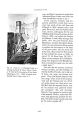
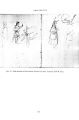
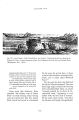
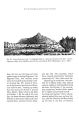
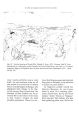
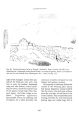
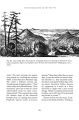
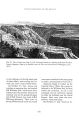
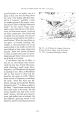
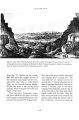
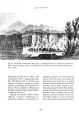
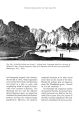
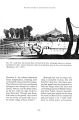
Show WITH SITGREAVES TO THE PACIFIC Two days west of Albuquerque, August 23, brought them to Laguna, where they camped for a few days to the east of the pueblo. While there, Kern took advantage of the opportunity to see and sketch 'one of the great sights in the Southwest, the nearby Pueblo of Acoma, then some 650 years old, partly hidden and nearly impregnable atop a 350-foot mesa.11 On August 25, a three-hour ride from Laguna brought Kern, Parke, Woodhouse, Maj. Henry Lane Ken-drick, and a small escort within sight of the mesa. They tried to ascend one side of the great rock, where the Aco-mans had cut foot holes, but hampered by boots and spurs, the Americans had to turn back after climbing 100 feet. The Acomans, who "travel over this way with the same facility as on level ground greeted our defeat . . . with a hearty laugh," Kern said.12 The Americans retreated and scrambled to the top of the mesa over an easier trail. With its huge church, orderly houses, and "air of oldness," the "Sky City" appealed to Kern. The Americans stayed at Acoma for only two hours, during which time Kern apparently made sketches that became the basis of three watercolors. One watercolor shows the Rock and Pueblo of Acoma as it is approached from the north-northeast (plate 11). In this watercolor, Kern captured the general contours of the mesa top and evoked the solid face that the three-story, thousand-foot-long apartment complex showed to the outside world. He failed, however, to suggest the height of the structure (three stories), and he exaggerated the size of the selenite windows that opened into rooms on the pueblo's upper floors. In the field sketch upon which the watercolor is based, Kern more accurately conveyed the size of the pueblo in relation to the mesa. Kern later recopied his field sketch for. Henry Schoolcraft, who published it in his monumental reference work on the American Indian (fig. 109).13 Another of Kern's watercolors of Acoma shows the trail that he probably climbed, known as Burro Trail, Horse Trail, or Padre's Trail. It begins on the west side and swings around the mesa, approaching the top from the south-southwest, through spectacular formations in the red sandstone caprock (plate 12). In Kern's day this was the most gradual ascent. Today a paved road leads to the mesa top, and the old Burro Trail is closed to outsiders because the Acomans regard the ground it occupies as sacred. Kern's third watercolor offers a handsome view through an archway in the red sandstone at the bottom of the west side of the mesa, where Burro Trail begins (plate 13). As he did so often, Kern placed a few people in the scene to add interest and to suggest the enormity of the rocks. Kern was not the first American artist to draw Acoma. Lt. J. W. Abert of the topographical engineers had sketched it in 1846, and lithographs based on his sketches had already appeared in a government report by 1848 (fig. 72). Kern was familiar with the Abert re- 147 |