| OCR Text |
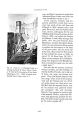
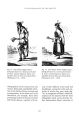
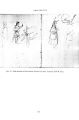
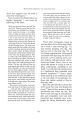
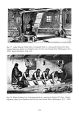
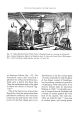
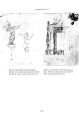
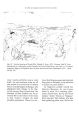
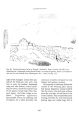
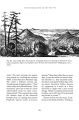
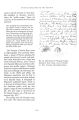
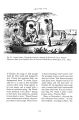
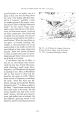
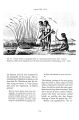
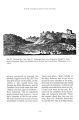
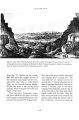
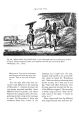
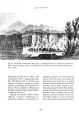
Show WITH SITGREAVES TO THE PACIFIC detail and suggests why his work is valued by ethnologists.21 Kern witnessed the Tablita Dance on Sunday, September 7, and wrote the following in his diary: Today the expected dances came off. The day of Col. Sumner's arrival they had the same dance, but as Pablo Pino, the governor, could not witness it, he ordered them to make the dance over for him, and this was the day solicited. There was a sort of east and west end rivalry, or rather a contest between that part of the Pueblo living in front of the church and that living in the rear. The former danced the San Domingo dance. The males were naked except from the middle to the knees and this covering consisted of scarfs and other woolen fabric of Moqui {Hopi] manufacture. Many of them had the skin of the silver fox dangling behind. Pine or cedar tufts were fastened about the waist, and above the elbow. The body & legs were smeared with yellow or pink earth. Some had hands impressed on the bodies. The hair was unbound from the usual queue and suffered to fall over the back & shoulders. It was most frequently cut into three ridges or layers-and yellow dyed feathers fastened to the crown of the head. Red and white beads were strung around the neck and different colored yarn also. In the right hand a gourd with seed or small stones was held, and' in the left some twigs of pine. The gourds were shaken briskly. . . . The women were dressed in their usual every day dress of the black woolen but . . . each one had a white tilma joined at[?J corners on the left breast, and allowed to fall as gracefully as it could over either arm. Corral [sic] beads and yarn were around the neck, whilst they had[?] to each wrist a bunch of yarn. Some wore moccasins & some were barefooted, but all had tops worked with porcupine quills. The head dress was the funniest of all and was called the tabla or board. It consisted of a thin plane piece of wood about a foot in height and 3 or 4 inches wider than the head with a circular place cut in the bottom for the head to fit on. It was painted all in colors but mostly blue, white & red & the tops hacked into different forms. Some had birds on top and some crosses!?] and spears cut out of the wood. Below this was a tuft of yellow feathers then[?] to this were a quantity of part{?] colored ribbons. Three other lithographs based on sketches Kern did at Zuni show Pueblos at work: a man weaving (fig. 77), four women grinding corn (fig. 78), and two men at the forge (fig. 79). In all of these representations, Kern seemed concerned with depicting the details of daily life, such as clothing styles, pottery, baskets, wall adornments, and architectural detail. Kern's view of two apron-clad smiths is unique in this regard, constituting, according to one study, "our only pictoral representation of a blacksmith shop furnished with Spanish equipment."24 Kern's blacksmith drawing is also of historical value as the sole piece of documentary evidence that smiths worked at Zuni at this early date. Kern did other sketches at Zuni that never found their way into Sitgreaves's report.25 Some of them remain in Kern's sketchbooks and others are lost, but Kern's wash drawings of anthropomorphic and zoomorphic water jars were preserved and rendered into lithographs for Henry Schoolcraft's report 153 |