| OCR Text |
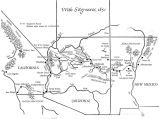
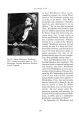
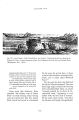
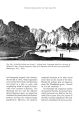
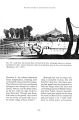
Show WITH SITGREAVES TO THE PACIFIC Joaquin Leroux probably knew the country west of Santa Fe as well as any white man. By 1846, when Philip St. George Cooke hired him to guide the Mormon Batallion to California, contemporaries already regarded Leroux as "one of the most famous mountain men."6 The Zuni River would not do, Leroux said, but he told Kern of a stream called Bill Williams Fork, whose headwaters he represented as not far from the Little Colorado and that flowed southwesterly into the "Big Colorado." 7 Following Leroux's advice, the Parke-Kern map of 185 1 showed a clear and seemingly easy route across Arizona by way of the Little Colorado and Williams Fork. Along these rivers, Kern had written: "Proposed Waggon Road from the Pueblo de Zuni to the Spanish Trail," crediting Simpson with the idea for such a road. In reality, neither the Little Colorado nor Williams Fork was as long as Leroux had led the map-makers to believe. Sitgreaves would encounter terrible, waterless stretches, but he would also have the dubious satisfaction of seeing Leroux acknowledge his errors, for he hired him to serve as guide for the expedition. Leroux, Parke, Kern, and Dr. Samuel Washington Woodhouse, who served as the expedition's "physician and naturalist," comprised the principle members of Sitgreaves's expedition. Sitgreaves also hired five American and ten Mexican arrieros, or muleteers, to take charge of supplies and equipment. When this small band set out from Santa Fe, on August 13, it had a more substantial military escort than planned. Col. Edwin Vose Sumner, a tough, abrasive, fifty-five-year-old veteran known to his men as "Bull-Head Sumner," had arrived in New Mexico in mid-July with orders to chastise troublesome Indians and to build military posts closer to them. Within a month after his arrival, Sumner was ready to march against the Navajos with the largest force since Col. John Washington had invaded the Navajo country in 1849. Sumner had ordered Sitgreaves to delay his own departure so that the two might travel together as far as their routes coincided. Sitgreaves had obliged. He had been convinced that he could not safely perform his mission without a military escort, but this military escort proved both an asset and a liability.8 "Everybody hates old Sumner and all are afraid of him," Richard Kern confided to his brother. "Old Bull," as Kern called Sumner, "does not seem to have too much sense."9 The topographers and the army moved slowly southward to Albuquerque where they left the Rio Grande and headed west. Colonel Sumner, who would apparently be following the map of the Navajo country that Parke and Kern had prepared the previous spring, sought Kern's advice: "Old Bull has had several talks with me," Dick told Ned, "and says he will be very thankful for any information I can impart. I told how he ought to march and when [to] camp and he seemed for a wonder to coincide with me."10 T45 |