| OCR Text |
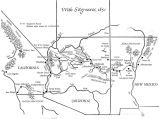
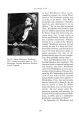
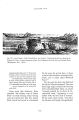
Show CHAPTER FIVE heading a team to survey the boundaries of the Creek nation in Indian territory. Kern's new boss, then, had ample field experience as well as the best available training.2 In Washington, D.C., in November 1850, Sitgreaves had received orders from J. J. Abert, head of the Topographical Bureau, to report to Santa Fe and organize an "exploring expedition." Abert had assigned Lieutenant Parke to assist Sitgreaves and had told Sitgreaves that "Mr. Kerns [sic], now at Santa Fe in the employ of Lieut. Parke, will be a valuable assistant from his experience on such expeditions, and from his talent in sketching." Following standard practice, whatever drawings Kern did would become the property of the federal government. Orders in hand, Sitgreaves had made his way to New Mexico by way of New Orleans, Galveston, San Antonio, and El Paso. By July 30, if not before, he was in Santa Fe where Parke and Kern went to work under his command.3 Sitgreaves's instructions were brief but clear. Abert had understood from "good authority" that the Zuni River flowed westward into the Colorado River. Sitgreaves was to pick up the Zuni River at Zuni Pueblo, to which point Lieutenant Simpson had already explored, then follow the Zuni to the Colorado and continue down that river to its mouth on the Gulf of California. In case Abert's good authority turned out to be wrong, and the Zuni did "not empty into the Colorado but into the Gila," Sitgreaves was to proceed overland and locate the "best and most direct way to the Colorado." This would take the expedition across what is now central Arizona (then part of New Mexico Territory), through an area that Spanish explorers knew, but which appeared as a void on most contemporary maps.4 Abert's good authority was almost certainly James H. Simpson. At the end of his 1849 journal, Simpson had urged that the Topographical Corps determine the feasibility of opening a wagon route from Zuni to Los Angeles or San Diego. A trail due west of Zuni, Simpson had argued, would be several hundred miles shorter than both the Gila River route, which Philip St. George Cooke had charted during the Mexican War, and the Old Spanish Trail, which looped north through southern Utah to skirt the Grand Canyon.5 Upon arrival at Santa Fe, Sitgreaves must have learned that although Simpson's general plan was sound, he was wrong in one particular. The Zuni River did not flow into the Colorado, as Simpson had supposed, but rather into the Rio Colorado Chiquito, or Little Colorado. In constructing their map of New Mexico Territory, completed that spring, Parke and Kern had learned of Simpson's error. One of the sources of the new information was Antoine Ler-oux, a former trapper whom Mexicans called Joaquin-a name that Americans twisted, somewhat phonetically, into Watkin. Born in St. Louis of French- Spanish parents, and a resident of New Mexico since at least as early as 1824, 144 |