| OCR Text |
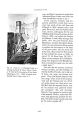
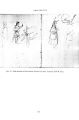
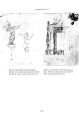
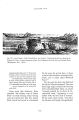
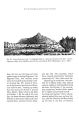
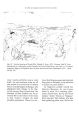
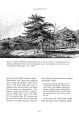
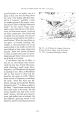
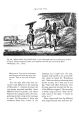
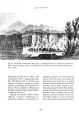
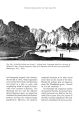
Show W I T H SITGREAVES TO T H E PACIFIC guard brought in an Indian, one of a party of four that was skulking about the camp." The Indian identified himself as a "Cosnino," probably a name for another group of Pai people, members of the Cerbat or Walapai Mountain band.54 As the captive began reluctantly to give information to the Americans, an altercation ensued, involving his three companions. One Indian was wounded, but all escaped. The fray left the Americans feeling less charitable toward Indians. When the expedition set out again, on Sunday morning, November 2, they butchered one of the mules killed in the scuffle and left the meat behind in their camp, along with biscuits. These had "plenty of arsenic in them in hopes that some of the Indians may get them," Kern noted mat-ter- of-factly in his diary. If the arsenic had any ill effect, it was not on the Indians they encountered the next day. A little after noon, while climbing a small range, Kern, Sitgreaves, and Woodhouse had stopped at a spring to rest. Then, as Woodhouse told it, they heard "a shrill yell followed by the report of a rifle." Wood-house turned to Sitgreaves to ask about the noise, "when Mr. Kern saw Mr. Leroux coming and exclaimed Watkin [Leroux] is shot."55 As Kern recalled in his diary, "I saw Leroux running down from some rocks to the north, his rifle on his shoulder and [an] arrow in his hand." Leroux, who had gone ahead to scout, had walked into an ambush. He had suffered a glancing wound to the head, but another arrow had penetrated ^j®W~~f Fig. 94. On El Rito de los Yampais. Sketch by Richard H. Kern. Diary, entry of October 31, 185 L Courtesy, Huntington Library. 173 |