| OCR Text |
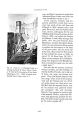
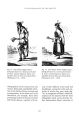
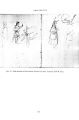
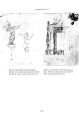
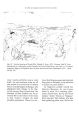
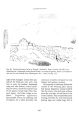
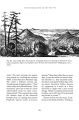
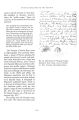
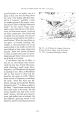
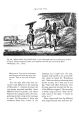
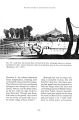
Show WITH SITGREAVES TO THE PACIFIC performed services very infrequently. In the intervals between those visits, the Zunis apparently maintained the chapel's interior,, apparently leaving a col- . orful cloth on the altar, unless Kern added it to his painting for artistic effect. Six years after Kern's visit to Zuni, Edward Fitzgerald Beale passed through the pueblo and found the church in ruins, "but a picture over the altar attracted our attention from the beauty of four small medallion paintings in each corner, which were very beautifully done. After much rubbing off the mud and dust we made out that it was painted by Miguel somebody in 1701."28 Kern's beautiful watercolor focuses on the carved and painted baroque wooden altar screen that frames the Virgin of Guadalupe, whose form he only suggests. Kern did not attempt to sketch the statues of the archangels Michael and Gabriel, which flanked the Virgin, although he did field sketches of them (fig. 80), as well as of the altar screen (fig. 81). Kern's heretofore unknown field sketches of the altar screen and the archangels are "of major documentary value,"according to a leading authority on the religious art of New Mexico. The statues of the archangels, carved by the celebrated Bernardo Miera y Pacheco, have survived, but have been damaged. Kern's field sketches show how they once looked. San Miguel is now missing the wings and arms that Kern depicts. Kern's watercolor field sketch of the altar screen, or retablo, is of interest for several reasons. It shows, for example, the archangel Gabriel standing free in front of the carved column, or estipite, rather than in a niche customarily constructed for that purpose. This suggests that the archangels were reused from an earlier retablo, and that the new altar screen was not designed to accommodate them.29 From what appears at first to be an improbable source in the roof, light bathes the altar in Kern's watercolor of the interior of the chapel at Zuni. The source of light was in fact a transverse clerestory window, located between two levels of the roof of the nave. According to one historian, nowhere was this feature developed so fully or used so effectively as in the missions of New Mexico . . . the effect was more than satisfactory. It was theatrical. Peering down the long tunnellike nave from the doorway, the viewer focused immediately on the stream of light descending like the Dove. . . .30 By September 20, the military escort of thirty artillerymen under Major Kendrick had returned from the Navajo country and the expedition could get underway, but an accident had befallen Dr. Woodhouse that caused further delay. 31 Woodhouse, who served as both naturalist and physician for the expedition, had been bitten on a finger of his left hand while trying to capture a rattlesnake a couple of miles from Zuni, on September 17. The physician tried to heal himself with the standard remedy. He applied a ligature, lacerated the wound, and sucked out the venom. Meanwhile, Kern had learned about the accident and had traveled out from Zuni 157 |