| OCR Text |
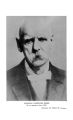
Show W. C. POWELL'S ACCOUNT OF THE HOPI TOWNS1 The United States survey of the Green and Colorado rivers, in charge of Prof. Powell and Thompson, is concluded as far as river-work is concerned. It now remains for the correspondent to finish his report. * * * * I have thought that an account of a very curious people, among whom we have been making recent studies, might be of interest and value. From the beginning of our voyage, evidences of earlier discoveries were abundant. If we climbed some towering cliff to make an observation, stone steps would often aid us. If we made a detour through the desert, and, overcome by dust and heat, sought with success some hidden spring, there would be seen the "pitcher broken at the fountain." If a mountain was scaled, remote, formidable, and the explorer indulged in any of those inspiring and sublime ideas that are suggested by standing where man never trod before, those high-born fancies would be shaken by a stumble over crumbling ruins. If we penetrated the shadowy labyrinths of some dangerous and intricate water-way, ever and anon our wandering eyes would trace a strange handwriting on the walls. When, moving slowly, in single file, the men entered a cave in the canons, we noted ceilings blackened by fires that burned ages since. As we journeyed down the Colorado further details of this "tragedy in stone" appeared. Perched upon the walls that frown above the river, are ruins of Kivas-temple of worship-and, at intervals, implements of stone, flint, and agate arrowheads. Some of the Indians whom we meet speak of a strange tribe that held these natural fortresses "many, many snows ago." These fragmentary suggestions excite our curiosity to know more of the persecuted people. Let us turn to the journal, and make their acquaintance. October.-Again in camp at Kanab. A party is ordered to start to the Moquis towns. Hillers, Hattan, Hamblin, and the writer promptly prepare, and, on the morning of the 9th inst., are off. Outfit consists of photographer's apparatus, rations, ammunition, and goods for gifts and barter among the "Lo" men of untutored minds. Followed the old trail to the mouth of the Pahria, via House Rock Valley. Hamblin, having received a dispatch to intercept a raiding band of Indians, left the second day out. He rejoined us at the Crossing, after a fruitless errand. The Uintah Utes, instead of the Navajos, had stolen 75 head of horses, and safely run off to their reservation. Thus far our This undated letter, printed in the Chicago Tribune. February 25, 1873, was Clem's last communication to that paper, and in many respects is the most valuable of all that he wrote. 480 UTAH HISTORICAL QUARTERLY stores had been carried in a wagon; it was here abandoned. We made a boat, and carried effects across the Colorado. Some one suggested that the mules' ears be cut off, and a raft made of them. With 12 animals, we struck southward into Central Arizona, following a zigzagging line of cliffs. We are upon an elevated plateau, seamed and fissured; the sandy levels covered with sage; the landscape broken by buttes and crags. The primeval curse rests upon the land. All that can be expressed by the word desolation is here found in a superlative degree. For nearly 250 miles, we painfully pursued our solitary way, meeting now and then scattered bands of Navajos on trading expeditions, bound to the white settlements. The fatigues of travel were increased by lack of water. Sometimes we had none; sometimes the springs were so strongly surcharged with alkali, we dared but moisten our parched lips with the delusive draught. "It is a long lane that has no turning." At one place, we climbed the cliffs in whose lee the pathway had long led. Traveling for a time through groves of cedars, we came to the Thousand Wells. There is half a section of gray sandstone, hollowed out into myriad cisterns, that, in the rainy season, hold fresh water sufficient to supply an army. Some of these natural wells, or pockets, extend under the rocks in caves of considerable capacity. The explanation of this singular phenomena is simple: The floods of rain and melted snows gathered on the cliffs above, spread out on this once-level formation of soft rock, and are lost at last in the sands beyond. The waters, rushing down steep declivities, bring with them to the plain detached rocks; these boulders are caught here and there in the narrow channels, turned round and round until a hole is hollowed by attrition, and the stone itself is worn into fragments and carried away. When Nature goes to well-digging, the plan is unique, but the work well done. The romantic valley of "Quitch-im-tu-weah," [Buffalo Land]2 and other places of note and interest, were passed. We follow the trail once more, in the shade of cedars, until the base of a line of cliffs is reached. Here are living remnants of the people whose wanderings we so far have traced. Halfway up a shapely [sharply?] -sloping hill of sand-rock, are shelves, or benches, worn by the elements, rising one above the other, like a massive flight of steps. Upon the uppermost tier is a spring. The Indians, by a system of grooves and ditches, distribute the water where needed, and manage to raise considerable crops upon these narrow ledges, varying in width from 10 to 20 a"Quitch-im-tu-weah" is a Paiute word and I doubt if it applied in that Navajo country. Hamblin may have applied it himself. It does not have anything to do with buffalo, since there were no buffalo in that section at any time. The literal translation probably applied, but cannot be used in polite society. -42.K. W. C. POWELL'S VISIT TO THE HOPI TOWNS 481 feet. Onions, beans, tomatoes, squashes, pumpkins, 6c, are cultivated. There are the terraced gardens of Oryba [Oraibi], or, in the native tongue, Hoterville.8 Saw the sole occupants and owners-an old Moquis, his squaw, and daughter. They live at Oryba, but tend the gardens in summer. Watered the horses, and ate some proffered fruit. Winding in and around the cliff, we toiled slowly to the top; thence, over a 5-mile waste of level sand; we halt to view the strange scene. From the edge of the plateau, a butte rises; its smooth sides are covered with queer pictures, rudely drawn, representing an attack by mounted men, and a successful defense by the natives. In the valley below, are cornfields and gardens-charming oases. Rounding an angle of the mesa, we suddenly see the Indian City of Oryba. The whole story is told by the situation. That the people were persecuted, plundered, pursued, is indicated by their living in a formidable desert, where death and desolation repel, and there is little to tempt greed and avarice. That even here they were followed by relentless foes, is shown by buildings strongly made, perched upon the rim of a plateau 500 feet above the valley. A wall, behind the town, closed the principal avenue of approach. The only other way of access is a narrow flight of steps, easily defended, cut in the rock. A huge reservoir, built of solid masonry, stands near. This is kept filled from the springs below, for use in case of an attack or other emergency. As we draw near, small, black, blanketed figures assemble on the housetops. These prove to be the women and children. It is 3:00 o'clock in the afternoon, and the men are all afield. Our train winds through narrow, crooked, filthy streets, past huddled masses of crumbling rock, with staring windows and falling walls. Although we seem to be objects of intense curiosity, there is no word of greeting, no groups at the corners, no cry of children, or noise of any kind. When any of the little people on the roofs chance to move, they walk with a certain grace of manner, very slowly, and in silence. Arrived at the house of Tuba; we pile our effects against the walls, and go into camp in the rear. The Moquis woman invited us to lunch, and serves a huge melon and a basket of "peke." An Indian took the animals, leading them down the rock to grass. When Maj. Powell first visited these towns, Tuba and wife returned with the party to Kanab, and there remained for a year, acquiring a knowledge of white customs and Yankee speech. Were met by Tulta [Tuleta?], one of the Chiefs. We were in some fear of Tulta. He started with Powell for Washington, 8Clem's statement is confusing. Hotevilla ^ was abandoned for many years but later reinhabited by a group of "hostile' or orthodox Hopis. 482 UTAH HISTORICAL QUARTERLY but lost his horse before reaching the settlements in New Mexico. (The Navajoes had stolen it.) One day was given to find the animals and rejoin his companions. Failing to arrive in that time, the Major pushed forward alone next morning. Tulta, meanwhile, procured another horse, and hastened after, reaching Santa Fe about an hour after Powell left by stage. An official at that place would have paid the Indian's passage to Denver, but doubted his story. Tulta therefore, returned, and had not since been seen by any member of our expedition. He received us kindly, and, in referring to the matter, simply said that the white man had waited as agreed, and there was no cause to complain. This Chief's special occupation is that of Town-Crier. Every evening, from his house-top he announces the programme for the following day. The Government consists of 3 persons, the principal Chief and 2 subordinates, who arrange the order of public festivals, ceremonies, and general affairs. Oryba contains 600 inhabitants, exclusive of vermin and such small deer. The houses are built about a central court, or plaza; the streets run parallel to the 4 sides thereof. There are no intersecting highways. The traveler must turn down lanes, alleys, and go around back-yards, in order to get from one street to another. As there are no wheeled vehicles of any kind, and few horses, and, moreover, there is no hurry, the citizens do not find this arrangement inconvenient. The houses are built in blocks, or continuous rows; they are all of stone, cemented with mortar, and from 2 to 3 stories in height. The roofs are flat, plastered over, and made to catch and hold what water passing clouds may drop. Reservoirs contain the surplus. The doors face the court; there are none in the rear walls. These apertures- and there is but one in each of the upper stories-are the only means of admission for the caller, and for light and air. They are sometimes closed by wooden bars, but generally by blankets. Each story recedes from the one below, leaving a landing, or platform, running along the house-fronts. Ladders lead from the ground to the first story; outside steps to the upper ones. The lower room is used for donkey-pens, and storage for corn, 6c; in each of the higher ones, a family lives. In the houses of the richer people, one family occupies an entire house. The rooms are sometimes subdivided; in some, weaving is carried on; others are used for sleeping apartments, storage, cooking, 6 c The floors are supported by wooden pillars; ceilings, walls, and floors are always smoothly plastered over. The Shinemos, as they call themselves, are great thieves. "Jack" [Hillers] had a handsome new revolver, that he carried, for safety, in a sack. An Indian saw the bright treasure; soon a dexterous hand opened the sack, a dusky hand was thrust inside, and, in a twinkling, the pistol was concealed in the ever W. C. POWELL'S VISIT TO THE HOPI TOWNS 483 ready blanket. "Jack," of course was wroth. Andy, more wise, drew a circle around the camp, and, in his vigorous manner, gave the crowding Indians to understand, that the first one to cross it would die. Hamblin and Hillers accepted Tulta's invitation to visit him; Hattan remained in charge of the stores; and your correspondent went forth on a sight-seeing tour. The effect of a naturally formidable appearance was heightened by a huge revolver slung to my side. One of the natives deferentially asked, "You, Chief?" Unannounced and uninvited, I entered several dwellings. Found 2 or 3 Indians who could speak English. I offered to trade horses for blankets, and described the animals in jockey terms. The Moquis answered, "Oh, yes! me want him! so much!" The people speak in low tones, and in a sing-song style. An indoor group of big and little folk chatter in musical murmurs, that contrast favorably with the cries and noise of a frontier household. About sunset, a clatter and jingle attracted attention. Winding up the mesa, in single file, came a long line of the young people returning from a frolic. All were mounted on donkeys- the brave driving; his "girl" behind him, sitting, erect, with folded arms. The women do not ride astride, but manage, without a saddle, to sit gracefully and well. All were tricked out in their most dazzling array. Blankets of bright colors, spangled moccasins, and shining ornaments, made quite a display. Added to all this was the sound of myriads of small bells. There were bells on the arms and ankles of the riders; bells on the feet of the donkeys, that kept up a tinkling chorus, filling all the streets with echoes. Although the people's voices are not shrill, Oryba is rarely free from noise. Wrapped in blankets, we were seeking repose from the labors of a long day. Suddenly a head, surmounted by 2 enormous ears, was thrust through an opening just above us. Then a startling sound was heard -a rattling, scraping, horrible wheeze. The cry had scarcely ceased when an answer came from across the court, and, in a few minutes, from every quarter of the town the din was kept up. At times it would die away, to be started again by the fiend at our heads; and so the clamor rose and fell unceasingly till dawn. A mule can make music wherever he goes; but an Oryba donkey can get up, on short notice, the most complete concert for a charivari the world affords. Early in the morning, all the women of the town march in procession to the spring at the foot of the rock. Each has an earthen jug, holding 3 or 4 gallons, strapped in a shawl. They go and return in regular order, talking among themselves, soft and low. The women are short and rotund. The men are of 484 UTAH HISTORICAL QUARTERLY medium height and build, with black hair and eyes. Their complexions are lighter, and their hair of finer texture, than is common among red men. The Moquis are affable in manner, peaceable in disposition, industrious in habits. The men are very much attached to their wives; generally have but one. Polygamy is allowed, but not often practised. Work is divided: men till the fields, weave blankets, and perform the severe tasks; women pack water, grind corn, and attend to domestic affairs. All seem to live happily together. In summer the crops receive attention. Weaving is the principal occupation in winter. The great requisites, wood and water, are scarce. Every stick of wood is carried, on the backs of men and donkeys, from 6 to 10 miles. The town is built on coal-beds, lying but a few feet below the surface, and cropping out in many places. Lieut. Ives, who visited the place some years ago, called the attention of the people to this cheaper fuel, and showed them how to use it. No attention was paid to the stranger's suggestion, as it was considered bad medicine. It is only by the greatest industry life can be supported in such a desert, and it seems a pity that the tribe fails to use all the stores offered. The Moquis mode of agriculture is original and unique. The plain below the town is a vast, sandy plateau. The Indian lays out thereon his little patch of ground, dividing it from his neighbor's by paths and ridges. Here he sows seeds and plants peach trees. We asked where the first peach-trees came from, and were told that their fathers brought the seed from the West-probably California/ The ground is cultivated with heavy hoes. These were formerly made by the natives from wood, but now are obtained from the Mexican settlements. Planting begins in March. Vegetables are gathered as they ripen through the year. Melons, beans, and onions thrive well. Peaches are of excellent flavor and quality. Corn is stunted; stalks are dwindling and dry. The ears shoot out of the ground, the stem connecting them with the main trunk being below the surface. In October, the corn ripens, and is husked from the stalk. Four varieties are raised, each of a different color. The industry and skill of these untaught tillers of the soil become more apparent when one reflects upon the obstacles to be overcome. Upon these dry, sandy plateaus, but little moisture falls. Occasionally a shower that has escaped the mountains wets the parched ground, but not often. The supply of water in the springs is only sufficient for drinking and domestic uses. White men have not yet succeeded in raising crops on such land without irrigat-tion. 'Father Kino brought peach stones to the Pimas, and bodi Hopis and Navajos probably obtained seeds from the Pimas. W. C. POWELL'S VISIT TO THE HOPI TOWNS 485 The Moquis have another important resource, in large flocks of coarse-wooled sheep. These feed on the plains during the day, living on the dry, but nutritious, bunch-grass-the favorite food of the buffalo. The herds are in charge of boys, who defend their wooly property with skill and pluck. Being on the boundaries of the Navajo and Apache range, raids from those marauders were frequent. Not long since, a mounted Navajo made a descent on a flock, thinking to make an easy capture, as there was but one boy watching. The little Indian stood his ground, letting fly an arrow through the wrist of the brave, and showing a disposition to shoot at a more vital point. The disabled Navajo turned and fled. At night, the sheep are driven up to stone corrals under the walls of the cities. In wandering about the town, I was treated with civility. One Moquis invited me to dine. With squaw and papooses, we sat down to an excellent meal of melon, peke, and soup. It was evening, and darkness and the chill night-air were gathering, rendering the light and warmth of the fire-place quite cheerful. We were seated upon blankets and skins of animals spread upon the floor. There is no useless furniture in a Moquis dwelling. Earthen dishes were placed upon the bare floor, from which each one helped him or herself. The soup is made from vegetables of many kinds, boiled with pieces of mutton. The Indians dip 3 fingers of the right hand in the bowl, and manage to convey liquid and solid food with great rapidity to their mouths. One bowl serves for several, and generally for an entire family. Peke is curiously made. The four kinds of corn-yellow, red, white, and blue- are kept carefully separated, and finely ground. The flour is made in a thin batter with water, and baked on a long, smooth stone slab, raised from the floor, and heated very hot by a fire beneath. The squaw takes a handful of the gruel, and, by a dexterous movement, throws it smoothly over the stone, which has been previously well greased. The thin material is done to a crisp in a moment and laid on a plate. These thin leaves, of different tints, are kept and sewed in bundles. This is pepe [sic]. Water being scarce, I went to camp and brought back a canteen full with coffee and sugar. The Moquis thought the cup of coffee, soon prepared, was "wano"-good-and drank, and smacked his lips, and drank again. About 9:00 o'clock Ham[b]lin appeared. As we walked through the dark and deserted streets, we heard some one singing. Creeping noiselessly up a ladder, and peering through a doorway, saw a woman grinding corn and chanting a sort of song. When she paused, the song was answered from the room, in a low and musical voice. The lover on the house-top was serenading the maiden below. Being of a practical turn of mind, the lady worked steadily as she sang-the firelight now lighting up, and 486 UTAH HISTORICAL QUARTERLY the darkness again obscuring, her dusky face. Hearing a slight noise, made by our nearer approach, she suddenly stopped- sitting erect, motionless, and watchful. The singer on the roof as quickly ceased his serenade, and quietly withdrew. The word Moquis means woman, cowardly-a term of reproach given by the surrounding tribes. The people call themselves the Shinemos-the Wise. Let us speak of them hereafter by their better name, for they are worthy of it. The children are nude until 8 or 10 years old. Women wear plain, blue blankets, carried on the right shoulder and under the left, fastened about the waist with a sash. Their mocassins and leggings are always white. The men are dressed in shirts of white cotton cloth; short breeches of the same material, slit at the knees, to show colored leggings. Moccasins are brightly dyed. Over all is thrown a square blanket of as fanciful coloring and fashion as the wearer can afford, or his taste suggest. When of marriageable age, the women dress their hair-hitherto worn loose-in huge spirals, in close imitation of ram's horns. The singular shape is preserved by some contrivance unknown to me. Some are very long, measuring from 18 to 20 inches from tip to tip. The married woman takes down these huge coils, and trains 2 curls instead, one on either side the neck, that are tied at the ends with colored strings. The hair is very long and thick. It is combed, well brushed, and washed with extract of the oose plant, which gives it a glossy, wavy appearance. The Aztec women, unlike those of most tribes, are chaste. The rare exceptions have their heads shaved, a sign of shame, and remain in disgrace until it grows out again. The men cut their hair square from the forehead; it hangs loose down the shoulders, and is tied at the back, in an old-fashioned knot, with colored yarn. An Indian came in with the report that our horses had got in the fields and destroyed vast quantities of corn. A large bill of damages was presented, which we refused to pay. The horses were subsequently found quietly feeding on bunch-grass, deserted by their keepers. Packed up, and, amid a curious crowd of the citizens of Oryba, we descended the stone steps leading to the valley, and took the trail for another town, some 15 miles away. There are 7 Shinemos cities in all in this part of Arizona. They are all built on high rocks arising abruptly from the plain-the first, Oryba, upon an isolated butte; the 3 next in a cluster upon another mesa; the 3 next upon still another eminence. Having heard of our arrival, the people from far and near came in scattered groups to see the strangers. All were driving donkeys laden with native wares and manufactures, which they desired to sell or exchange. We told them to meet us at Wallpy [ Walpi]. Petty jealousies exist between the towns. W. C. POWELL'S VISIT TO THE HOPI TOWNS 487 The Indians declared they would not go to Wallpy, nor would they trade with any one who first visited so degenerate a place. One company of 5 men, mounted on horses, pursued us some distance, jabbering and gesticulating. Disgusted, finally, at our repeated refusals to unpack there and then, they rode away to their own city. At last we came in sight of the mesa upon which the towns of Moquis [Sichomovi] Wallpy, and Tarwa [Hano] stand.8 When 2 miles distant, we pass the corn-fields. Rounding a point of rocks, we find ourselves in peach-orchards, and note a large reservoir filled with water. Cows were being driven up to shelter for the night. A broad, winding, gently-rising road, cut in the rock, leads to the level of the streets. Narrow spaces, a few rods wide, divide the towns. We halted at the central one, Wallpy. A son of Mr. Crothers, the Government Agent for this tribe, lives here. The only other white man is Wallace, the Spanish interpreter; saw the Chief-Chena-who procured us a room. Hired 2 herders for the horses, and unpacked our effects. The room was soon crowded with Indians, talking, peering about, and greeting Hamblin, whom they knew. Some remembered Majoi; Powell; One, who could speak a few words of English, told me about his party. He scratched his head so persistently, someone asked if he "had a bite." He knowingly replied, "Oh, yes, him plenty bite!" We begged the privilege of buying wood, and succeeded in purchasing 3 small sticks, which served for supper. Wallace informed us that giving or selling ammunition to the Shinemos was not allowed, as they, in turn, traded it to the Apaches. This seemed like a ruse to prevent new-comers from obtaining Indian goods, as W. was probably in the interest of some trader at Fort Defiance. Being a Government expedition in quest of Aztec wares, implements, and manufactures, we proposed going ahead. When the time arrived to shut up shop, we invited our numerous guests to depart. Words did not suffice, and force was used. One obstinate fellow showed fight, and got soundly thrashed. This created some disturbance, but an appeal to the Chief quelled the uprising. Trading next day was lively; room thronged as usual. The aboriginal methods of cleanliness and ventilation are not yet perfected. When clustering thickly in a small house, "their offense is rank; it smells to Heaven." A P[a]iute appeared, who has something of a tale. He was stolen when a child by the Navajos, and traded to the Shinemos. He has lived and married among the latter people. Hamblin knew his family, living on the Pahria, and gave him an account of them. On being asked if he did not want to return to his former home, the Ute shook "See footnote 160 to Clem's journal. 488 UTAH HISTORICAL QUARTERLY his head negatively. One Indian offered to trade, who claimed to have traveled extensively, and spoke 5 or 6 languages. Hamblin exchanged beads, indigo, knives, mirrors, 6 c , for blankets, clothing, pottery and peltry. Among our stores was a quantity of raw cotton, bought from John D. Lee, of Mountain Meadow Massacre fame. This sold readily, but some ornamental buttons were most eagerly taken. The braves fixed them in their ears, and were delighted with the effect. The excitement grew as trading progressed. Indians were hurrying through the streets, laden with every conceivable "trap" that could be disposed of. The men alone appeared, and transacted all the business. The barter on the part of the United States was rather sharp. We got up a corner on beads, and readily obtained a bear-skin for a 5- cent bunch of the shining glass. White, black, and blue beads were preferred. These colors are interwoven in their blankets. Some 40 pieces of pottery, and many skins of black and cinnamon bear, wild-cat, deer, 6 c , were procured that day. The western town in this trio is called Moquis City [Sichomovi], because its inhabitants never fight. Exasperated at last by Navajo raids among their fields and flocks, the people resolved upon revenge. A treaty of peace was proposed, and guests invited to a feast in commemoration of the event. Thirty-five unsuspecting and unarmed Navajos accepted, and were admitted to the town, surrounded, over-powered, and thrown from the edge of the cliff upon the rocks below. Moquis City is built upon a peninsular cliff jutting out from the main mesa. Upon the narrow rock, or isthmus, the luckless Navajos were crowded, and were unable to defend themselves or escape. We saw their bleaching bones and shreds of blankets. This event took place in 1866. Taaw, or the city of the strangers, is upon the eastern wall. During the Spanish conquest, begun by Cortez, its citizens lived upon the Rio Grande. As one Aztec town after another fell before the mailed and mounted warriors of the Cross, these people saw that they also must yield, and gladly accepted an invitation to build and dwell among the Shinemos of the desert. Although of the same race, the strangers differ somewhat in customs and habits from those of the original six cities. The principal manufacturers of this nation are weaving and pottery. The wool is cut from the sheep with knives. Every thread is drawn out, by twisting and spinning, in the fingers of the men. It is dyed with paint collected from the rocks, juices of plants, and indigo obtained from the whites. Colors are permanent and bright. They are now obtaining some knowledge of aniline dyes. The yarn, wound on reels, is woven into cloth, blankets, and wearing apparel of many patterns. The looms are similar in operation to those of modern carpet-weavers, but are of much W. C, POWELL'S VISIT TO THE HOPI TOWNS 489 simpler construction, being made of 3 sticks. The blankets are warm, water-proof, and exceedingly durable; are always finished in the centre. Best blankets of Moquis-make sell from $25 to $50 in coin in the settlements. Cotton is grown to some extent. Early frosts generally nip the sensitive plant, injuring the fibre. White cloth, however, is made from this material, that wears well. Strings and sashes are woven in small and simple hand-looms. Pottery is manufactured by the women only. It is made from common clay, moulded by hand, and burned in the fire. Jars, jugs, dishes, cups, spoons, and every variety of kitchen-utensils and table-wares, are skillfully fashioned, and often handsomely colored. Much of this ware breaks in burning. Acres of fragments lie scattered over the country occupied by this tribe. The Aztecs are worshipers of the Sun, believing that it is the home of the Great Spirit. Everything that is mysterious or capable of doing them good or evil, is deified. The gods are represented by wooden images, placed in all the houses in each of the cities. The lesser deities take rank in proportion to the power they exert. Every morning, before dawn, the people can be seen sitting upon the house-tops, with faces turned to the East. When the sun rises, they bow reverently toward it, and then the business of the day begins. Dancing is their creed and ritual. In all their prayers, in all their fasts and feasts, joys and sorrows, dancing goes on, inducing and keeping up the mental excitement. Their places of worship, or kivas, are large rooms hollowed out in the rock. Descending by a ladder, we find ourselves in a cistern-shaped apartment. Around the walls are benches, whereon spectators sit. The narrow opening through which we have entered gives little light. One man keeps a few sticks burning in a hollow in the ceiling. Another beats a large drum, made by cutting out the centre of a huge pine block, and covering the ends with sheepskin, tightly stretched. A row of men, nearly naked, dance for hours together, shaking gourds with peas inside, and chanting monotonously. The old men, seated on the ground, tell of the former greatness and prosperity of the people, and tears flow freely as their present condition is held up in contrast. These are the living remnants of a nation that will pass soon into history. Theirs is the earliest civilization known upon the Continent of North America. Their traditions run back for centuries before the time of Columbus. In the year 1532 [1540], the Spaniards found these same cities very ancient. As herein indicated, they possess a knowledge of the peaceful arts that fills the traveler with astonishment. They have a written history" "None of the Indian tribes had a written language. Possibly this statement refers to some pictographs painted on hides. 490 UTAH HISTORICAL QUARTERLY running back from current events through countless years. Tulta dined with us. We treated him with all the kindness and consideration in our power. The Chief did not fail to observe it. Standing erect, as he was about leaving, he acknowledged our courtesy in smooth and stately Spanish. He told us that our coming was noted upon the canon-walls; that his God would repay the debt he could not, for he would make an account of it. When this Chief dies, another dusky historian will take up, and probably complete, the story of his race. The Shinemos see their future fate, now near at hand. From small-pox; from an unequal contest with Arizona's genius of desolation; from the incursion of savage Apaches; from cunning Navajos, relentless Commanches, and white man's greed and tyranny-the ancient nation-the Wise People-are dwindling fast. We had adventures among them; learned much that is curious and interesting, that cannot here be told. In closing this correspondence, it may not be inadmissable here to acknowledge the vigilance of the proof-readers, and the liberality of the publishers of the Chicago Tribune. Many travelers have written about the deserted houses and crumbling ruins that are widely scattered in the canons, among the valleys, and on the plateaus of the West. Two Government officials have visited the inhabited Aztec cities of Arizona. Exclusive of their reports, it is believed that no more detailed account of the living people and their history have yet appeared than has been given in these columns. Clement Powell. |