| OCR Text |
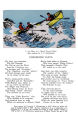
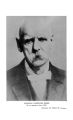
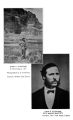
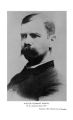
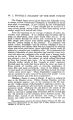
Show w^-'^r^^^t JOHN F. STEWARD In Glen Canyon, 1871 Photographed by E. O. Beaman Courtesy, William Culp Darrah JOHN F. STEWARD As he appeared about 1875 Courtesy, New York Public Library JOHN F. STEWARD 1841-1915 John F. Steward was born June 23, 1841, in Piano, Illinois, the son of Marcus Steward. Following attendance in the common schools and working on the family farm in Piano, he enlisted on August 11, 1862, for a three-year hitch in the Union Army, in Company F, 127th Illinois Volunteer Infantry. Steward participated in the Vicksburg campaign, and in the movements towards Atlanta. However, he sustained a chest wound and back injury which forced his transfer, in January, 1864, to the Reserve Corps. It was during the siege of Vicksburg that Steward made the acquaintance of Major Powell. Steward was an amateur geologist of considerable attainments, and the two chanced to meet while collecting fossil shells in the earthworks thrown up during the fortification and sapping of the approaches to the beleaguered city. After Steward returned to civilian life, he entered the employ of the Marsh Harvester Company in Piano, at a wage of a dollar and a half per day. A few years later he invented a small device that greatly simplified construction of the harvesting machine then manufactured by the Marsh Company, and for this service was awarded $6,000. The money thus received gave Steward a measure of independence and afforded an opportunity to join Major Powell's 1871 Colorado River expedition as assistant geologist. The labor and exertion demanded by the exploring work wore Steward down rapidly, and the old back injury and a rheumatic affliction so disabled him that he was forced to resign. He left the party when preparations for the winter camp at Kanab were being made. Steward's journal describes how he had to be carried on a litter during the closing weeks of the river work. Very understandably, this incapacity and anxiety contributed to his discontent. After a brief period of convalescence and rest, Steward returned to work with the Marsh Harvester Company. Later, when it merged with the International Harvester Company, Steward was placed in the legal department at the home office in Chicago, where he advanced rapidly until his income reached $7,000 per year. He was offered higher remuneration on several occasions but refused, insisting that he was receiving ample pay and suggesting that the price of the equipment sold to farmers should be reduced instead. Steward, though achieving a successful career in business and industry, never lost his serious interest in geology, the 176 UTAH HISTORICAL QUARTERLY Indians, and local history. In 1903 he published Lost Maramech and Earliest Chicago, which bears the sub-title, "A History of the Foxes and Their Downfall Near the Great Village of Maramech." Much of the material in this book was obtained through original research, but Steward engaged the assistance of Professor Marcel Andrist of Paris to search some of the libraries in France, to check sources not then available in the United States. The nature of Steward's active scholarly interests is suggested by the memberships he maintained in professional societies: the Chicago Academy of Sciences, the Illinois Historical Society, and the Maramech Historical Society (of which he was president for many years). He died in Chicago in 1915, at the age of 75. A son, John F. Steward, Jr., died some years ago. Steward, in the prime of life, was a handsome fellow, just under six feet in height, of dark complexion and manly bearing. He was independent, forceful, and energetic. His likes were many, his friendships sincere; his dislikes were intense, his enmities outspoken. Dellenbaugh characterized him as "of the most independent sort imaginable." All of the men of the 1871 party spoke well of Steward, the only serious criticism (by the religiously inclined Jones and Bishop) being Steward's indulgence in profanity and coarse language-a lapse possibly less horrendous than these, his companions, would have us believe. Concerning his journal, Steward himself wrote in 1903: This Journal was written in shorthand in 1871, and at this late date I have seen fit to copy it and place it in the library of the Chicago Historical Society for any possible use or interest that it may be in the future. In my eager studies of the early explorations of this country, I have grasped at every one of the early narratives that have come within sight, and feel that others may some time be glad to get bits of information from this. Carbon copies will be made for the use of those I leave behind me. I cannot say that I am pleased that in Major Powell's reports all credit is given to the miners and trappers who took the preliminary trip with him, and almost none to our party for the geological, topographical, and photographic work accomplished. Why such a course was taken I will not explain, but merely say for myself, that no business motive should lead a man to be unjust, and besides, refer the reader to The Romance of the Colorado by Fred S. Dellenbaugh, one of our party. JOHN F. STEWARD 177 These remarks at once reveal the defects of the journal as a historical document, the account that is preserved being an annotated and amplified copy rather than the original document. The transcription shows evidence of considerable editing before 1903. For instance, Steward had dated several notations "Note, 1890." Conceivably there are additions to the original diary; the selections he "had written home during the expedition" may or may not have been copied into the diary at the time. Some of these alterations in the journal may have been unavoidable, the original being in shorthand, but the accuracy is thereby impaired. Many of the observations and opinions expressed have been tempered or colored by later events. Nevertheless, Steward's journal is full of suggestive and meaningful notes which contribute substantially to an understanding of the more intimate side of the expedition. Steward has some caustic comments about the Major, and a few left over for Hattan. Yet withal he exhibits a benevolence towards his companions. Each of the diarists (except the Major) indulged in personalities when the going was rough and tempers were ruffled. The technical notes are particularly important. Steward describes in much greater detail than Major Powell many points of geological interest, and records the finding of a great number of fossils. Yet, despite the care and detail, Powell's sketchy geological notes cover many points which Steward either overlooked or considered unworthy of mention. Steward, in the brief preface given above and in the journal, expresses resentment against the Major's use of his observations and opinions without giving due credit. The feeling is one of disappointment and injury, rather than rancor. In this criticism, Steward is unfair to the Major. Powell gives what appears to be generous acknowledgment, not only in the introduction to the monograph on the geology of the Uinta Mountains, 1 but also in scattered places in the body of the report. He wrote (Introduction: p. VI): Nor must I fail to mention the valuable services of Mr. Steward; as he was with me in one of the earlier years of die work, and only in a portion of the region, his studies were but fragmentary and the results have not been directly incorporated in my general account of the geology of the country. I feel that I have not done him full justice in this matter, but the plan of publication would not permit the incorporation of his notes bodily, nor would such a course have done him '•Report on the Geology of the Eastern Portion of the Uinta Mountains. U. S. Survey of the Territories, Second Division, Washington, 1876. 178 UTAH HISTORICAL QUARTERLY justice, from the fact that a more extended study has greatly modified opinions entertained by both Mr. Steward and myself at that time. The geological sections measured by Steward are given in full in the report: the Uinta Mountain section on pages 57-58 (measured in Red Canyon), and the Cataract Canyon section on pages 58-61. Steward was aware of this acknowledgment but he believed it to be inadequate. The "notes" of Mr. Steward, to which Major Powell referred in the acknowledgment, are preserved in Powell's "Notebook No. 3." This little manuscript volume, now in the possession of the Bureau of American Ethnology of the Smithsonian Institution, bears the title: "Steward's Notes and Sections." The field notes are neatly recorded and the two columnar sections, sketching the succession of strata in Red and Cataract canyons, are beautifully done. Inasmuch as it is the usual practice to consider all of the field notes, technical data, and collections gathered by an expedition or project, the property of the project, and, by federal statute in this case, the property of the United States government, Steward had no personal claim to the material. Certainly the credit the Major published cannot be called niggard. One other comment by Steward deserves notice, because it is suggestive of a feeling that the personnel of the second party were superior to the men of the pioneer trip. He speaks of "the miners and trappers who took the preliminary trip." George Bradley, Walter Powell, Jack Sumner, O. G. Howland, Seneca Howland, Andy Hall, and Billy Hawkins were hardly miners and trappers. Only Bill Dunn could be called a trapper, yet he was a man of many skills, including the rudiments of surveying. The word "preliminary" is also suggestive. Major Powell never considered the 1869 exploration preliminary, rather he considered the T871-72 trip supplementary. These criticisms are not intended to discredit Steward in any manner. He was a skilled observer. Steward, Bishop, and Jones were worthy assistants to Major Powell and Professor Thompson but, as in all great expeditions, the credit and glory are lavished by the public upon the leaders. The "great map" vvas platted by Thompson, and detailed by Bishop, Dellenbaugh, r>nd DeMotte. In later years each one of these men considered it his map! Pride of accomplishment is a most human emotion, easily nourished, easily injured. The journal must be read, therefore, with an unprejudiced mind. Its frank, honest, and informative approach makes it one of the more appealing records of the second Powell Colorado River expedition. JOHN F. STEWARD 179 The narrative reproduced here is taken from the copy in the New York Public Library. Steward had given the copy to Fred Dellenbaugh, who annotated the typescript and made numerous minor corrections and comments. Some of these have been included in the text and are credited by the initials "F.S.D." I have followed the copy faithfully except to correct a few obvious typographical errors. I have retained the inconsistent spelling of proper names, such as "Paria." Apparently Steward was not certain as to the preferred form. WILLIAM CULP DARRAH. |