| OCR Text |
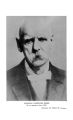
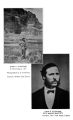
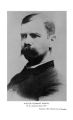
Show WALTER CLEMENT POWELL As he appeared about 1875 Courtesy, Mrs. Mabel Powell Bradley WALTER CLEMENT POWELL 1850-1883 Walter Clement (Clem) Powell was born January 31, 1850, perhaps in northern Kentucky, though the exact place of his birth is not known. His father was Walter Scott Powell, a brother of Reverend Joseph Powell, who was the father of Major J. W . Powell, hence Clem was a first cousin to the Major. Both of his parents appear to have died before Clem reached the age of 6, but he had four sisters, Minnie, Belle, Lily, and Ada, and one brother, Morris. The children were given a home by Reverend Joseph and Mary Powell, most of whose children had grown up, some having already married. Most of Clem's brothers and sisters, like himself, attended school in the elementary division of Illinois Institute, which later became known as Wheaton College. There is record of his attendance there during the years 1855-1861, his name appearing in the school records as "Walter" rather than "William," as it has sometimes been given. The eldest of the children, Morris, upon his graduation from the collegiate department of Illinois Institute in 1856, established a drugstore in Naperville, Illinois. Later he provided a home for Clem, though the sisters lived with friends and relatives until they reached maturity. Unfortunately we have little information concerning this young journalist. The portrait of himself drawn in his journal is that of a boy on the threshold of maturity, bound by close ties to the members of his family, especially to his brother Morris, whose relation to the younger brother had much of the paternal in it. Clem had evidently the normal boy's interest in athletics, particularly baseball, and a boy's picturesque command of the current slang. But also he seems to have had a literary turn of mind, spending his odd moments reading the small library of classics carried by the expedition. On the voyage his closest friend was Captain Francis M. Bishop, formerly a teacher at Normal, Illinois, and these two frequently expressed mild contempt for less cultured members of the party. Almost from the moment of starting, Clem was homesick, often expressing his desire to leave, but fearing to be called a quitter; at the same time he was determined to make the most of his opportunities. While not particularly robust, he never shirked his duties, and appears to have survived hardships of the journey better than some others, most of whom suffered sickness at one time or another. 254 UTAH HISTORICAL QUARTERLY Clem had been selected as assistant to E. O. Beaman, official photographer, who made the first photographs of the Green and Colorado rivers through their canyons. Dry plates and film had not yet been perfected; photographs were made by the wet plate process, which necessitated carrying chemicals, developing trays, water, and a dark tent in which glass plates could be sensitized and developed on the spot. This equipment was packed in a box which Clem was required to carry wherever Beaman went with his camera. He frequently calls this box "that infernal mountain howitzer," and since the Major often wanted pictures taken from great heights above the river, carrying the "howitzer" became one of the most strenuous tasks required of any man in the party. It was understood that Clem was to learn photography and would then become a permanent member of the Major's staff, accompanying his various expeditions to survey and map the unknown West. While the young man seems to have applied himself to this task, he never quite mastered the art, due perhaps in part to Beaman's opposition. When the expedition went through the Grand Canyon in 1872, he was still an assistant, Jack Hillers having replaced Beaman. Hillers, originally enlisted as a boatman, had earlier dabbled in photography; he learned something from Beaman, more from James Fennemore, who was attached to the party for a few months during 1872, but most from experimentation. While Clem's inferior position must have been a great disappointment, in his journal there is no hint of resentment toward Hillers, who then and later made the finest photographs ever obtained in the Grand Canyon. Many of the plates which Clem polished so industriously now repose in the archives of the U. S. Geological Survey. After returning home late in 1872, Clem learned the drug business from his brother Morris, and shordy before his marriage in 1875 opened an establishment of his own. Later he moved to Omaha where he developed a wholesale drug and tobacco business and obtained local prominence, becoming a member of the Board of Trade about 1880. He died suddenly in 1883, the exact date of his death not being known, survived by his wife, May Breasted (sister of the celebrated historian and orientalist, James Henry Breasted), and one daughter, Mabel (Mrs. Lester W. Bradley), who is still living in San Diego, California. Unfortunately his daughter was too young to remember much about her father, but to her were entrusted Clem Powell's journals, and to her we are indebted for permission to publish them and for the accompanying photograph of the journalist. These diaries she has now deposited in the museum at Grand Canyon National Park. WALTER C. POWELL 255 The diaries consisted originally of four closely written pocket notebooks, but only the first, second, and fourth of these survive. Fortunately the three volumes here reproduced cover all the river journey, to many of us the most interesting and certainly the most exciting part of Powell's work. Fortunately, too, a series of letters by Clem, as rewritten by his brother Morris, were published by the Chicago Tribune, and four of these letters serve in a fashion to bridge in Clem's own words the gap in his diaries. As an appropriate appendix to his journal, the last and best of his letters gives a fascinating account of the Hopis. The particular charm of this record lies in the fact that Clem Powell, an impressionable young man, was more interested in personalities than in geology, topography, or photography. Recording his thoughts exclusively for the eye of his brother, Morris, he wrote with unbounded spontaneity and no thought of future publicity. One may find more of the scientific side of the expedition's labors in other journals, that of Jones, for instance. But the human side, giving us our fullest understanding of the day-to-day joys and sorrows, achievements and frustrations, is nowhere so richly developed as in Clem's words. Although he was the Major's cousin, he received no preferential treatment on that account, and frequently expresses his opinion of Major Powell, sometimes with approval but often with severe criticism, depending upon his mood at the moment. Always his journal is picturesque and lively, and perhaps it will be reaa with greater enjoyment than any of its companion records. CHARLES KELLY. |