| OCR Text |
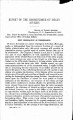
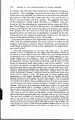
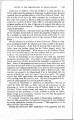
Show 428 REPORT OF THE SUPERINTENDENT OF INDIAN 8CHOOLS. 1 taken. There-~ a re onnartunities for character building in the regular routine ~ of daily life. ~ n u c t ~ ~ l inteyat,n ess, accuracy, and ind>stry form a good group for a fouudatio~~T. he employee must hold in mind the necessity of guiding the child to acquire self-control, detemined purpose, perseverance, and courage t-n- r.r-ir.p nno-n .th-e .ri~-sh- t and hold to i t even in the face of oooosition. We should also instil in them a feeling of honest shame in s h a d i n g of haif- I bearted work. Many of our boys and girls are prone to depend upon others, aud right here is the time to direct them in self-reliance and decision, so that 7 they may learn to work independent of others. Ours is a work that requires something more than a perfunctory perform-ance of certain "rescribed duties and the teaching of certain branches. The I saiaiv bs devoting so manv hours-of eich day to the prescribed-routine work. 1 unless there is iu the heart and mind of t6e workef something of the mis- . sionary spirit-a real desire to educate not only by teaching, but by precept end exnnml*. n desire to do eood remrdless of the amount of salary re-i ~ ~- . , .. -~ 1 ~~ cetvd-the work will bring forth little fruit. NECESSfPY FOR PMCTICAL INSTRUCTION. Miss Estelle Reel, snflerintmdent of Isdian schools.-Thruout this conven-tion we wish to emphasize the essentials in educating the Iudian. We must not forget that the value of education to any child lies in its usefulness to him, and that we must model our instlvction to meet the Indian's immediate and practical needs, never forgetting that chararter is the foundation upon which to build. The Government, at much time and expense, has brought to you out-lines of methods to be used in Indian schools, and it is the desire of the Indian Office that you study cnrefully the methods of instruction used at such noted schools as the Hampton Institute, Virginia, and the Tuskegee Institute, Ala-hama, where the literary and industrial work is so correlated that the results secured haae attracted the attention of educators thruout the country. I further wish to impress upon all who hare not done so that you should read the "Outlines of an Indian policy" and "Improvement, not transformation." whirh "v o~u -w ill find in th~e- annual renort of the Commissioner of Indian Affairs ~~ for 1905. As many of sou are awar'elthe omm missioner has been studsing the Indians and theirinterests for mxnyyears; we therefore appeal to every em-ployee in the Service to strive faithfully and loyally to carry out the policies which he has outlined. DEVELOPING IN THE YOUNG INDIAN A STRONG SENSE OF INDIVIDUAL REBPONS~BILITY. E. L. Chaloraft, superintendent, Balem school, Oregon.-The term "ednca-tion" has never been considered in a brooder sense, nor has it covered so much of vital importance to child life as at the present time. Both the mind and hand must be trained to do things. One standard is used to measure all who xttemnt to i-each a common plane of civilizetlon, and it is but just that all should have the same chance to reach this standard. No exception should be made to the Indian. His skill in drawing the bow, trailing the enemy, and ill woodcraft was acquired by long training under skilful tutors. The method to be pursued in creating self-dependence in the Indian, making him capnble of citizenship, has been outlined in the report of the Commissioner of Indian Affairs for 1905, and we have had a practical demonstration by able instructors of the methods to be used in the class room. THE IMPORTANCE OF STUDYING THE PUPIL AND ACQUIRING AN IITTIMATE KNOWL-EDGE OF HIS HOME LIFE AND ENVIBONMENT. W. P. Campbell, assistant supertntendent, Balem school, 0rega.-I would urge teachers to study the Indian and his home surroundingi. For this we can not apply a cast-iron rule; but the underlying principle in the Indian's civilization must be industrial work, whether in day, reservation, or nonreser-vation schools. On account of the Farying conditions existing on the reserva-tions, the work must not be along literary but rather along industrial lines, if we want the greatest success. The pupil's individual capabitities must be directed to that work which is best adapted to his home surroundings. |