| OCR Text |
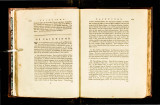
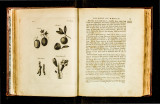
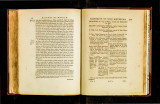
Show 434 H I S T 0 R Y 0 F M ,E X I C 0. nooK vn. Into the remainder they put a handful of pafie of boiled maize, and. ~ boiled it for a certain time, after which th(;)y mixed it vyith the oily part, and took it when it :vas cool.. This is the ·origin of ,th~ f~m?ns chocolate, which the cultivated nat10ns of Eul'Ope have ufed tn trnttation of them, as well as the name and inftruments for making it; al thouah the name is a little corrupted, and the drink altered according to th~ language and tafte of each nation. The Mexicans ufed to put in their chocolate, and other drinks which they 1?-1ade of the cacao, the ':flilxochitl, or vaniglia, the flower of the Xochinacaztli (k ), and the fruit of the Mecaxochitl (1), and fometimes alfo honey, as the Europeans put fugar, both to render it palatable and more wholefome .. Of the feed of the chia they made ·a moft refreihing drink, which is frill verv common in that kingdom ; and of this feed alfo, with maize, J they made the chianzotzoolatelli, which was an exquifite drink much l!lfed by the ancients, particularly in time of war. The foldier, whe carried with him a little bag of flour of maize and chia, thought himfelf amply provided. When neceiE1ry, he boiled the quantity he wifhed for, mixing a little honey of the maguei with it; and by means of this delicious and nourilhing beverage (as Hernandez calls it), endured the ardour of the fun and the fatigues of war. The Mexicans did not eat fo much · ftelh as the Europeans ; neverthelcfs, upon occafion of any banquet, and daily at the tables of the lords, difFerent kinds of animals were ferved up; fuch as deer, rabbets, Mexican boars, 'I'uze, 'I'ecbic/.;/, which they fattened as the Europeans do hogs, and other animals of the land, the Water, and the air, but the moft common were turkeys and quails. The fruits mofl: ufed by them were the mamei, the tlilzapotl, the· cochitzapoti, the chietzapotl, the ananas, the chirionoja, the abuacati, a anona, the pitahaja, the capo/in, or Mexican cherry, and differen~ (k) The tree of the Xocbinacaztli has long, flrait, narrow leaves, of a dark green colour. Its flower conflfis of fix petals, which :1rc purple within, green without, and plca lingly odor· ous. From the refcmblance of their figure to an rar, they were called by this name among the Mcxicnns, and by the Spaniards Ol'fj11cln, or lillie rar. The fruit is angular, and of a bloody colou r, and grows within a pod of fix inches in lcn"'th, and ahout one inch thick. It is pcct\liar to hot countries. The tlowc•; was greatly valued~ and never w:tnting in the markets. (I) The Jl{ear,\·ochitl is a fmi\11 flexible plant, whofe leaves arc large and thick7 and the fruit Jefcmblcs long pcppt'r. · -fpe- H 1 S T .0 R Y 0 F M E X I C 0~ 4-35 fpecies of 'rune; or. Indian fig$, which f,\"uits well fupplied the want of BOOK. vu. pears, apples, and peaches. Amongfi all their plenty of foods the Mexicans were deftitute of ~ miljc, and fat, as they had neither co~s, fheep, goats, nor hogs. With refpetl. to eggs, we do ,not know that they eat ~ny, except thofe of turkeys and iguanas, th~ fleih of which they likeV?ife did and !l:iq , eat. The ·ufual feafoning to their food, befides fait, was great pepper and tomate, which have become equally common among the Spaniards of, , that col.ilntry. They drank alfo feveral forts of wine, or beverages fimilar to them, SEcT. LXV" of ·1: he maguei, t he palm, of the fl:ems of maize, and ofth e grain alfo, Wine. of which laft, called chich a, almoft all the hifiorians of America make mention, as it is the kind· moil: generally ufed in that new world. The mofl: common with the Mexicans, and alfo, the b.eft was that of the ma-guei, called ollli by them, and by the Spaniards pulque (m). The me-thod of making. it i's this. When the maguei, or Mexican aloe, arrives at a certain height and maturity, they cut the item, or rath~r the,leaves whi]e tender,. of which the fl:em is formed, fituated in the centre of the plant, afteP which there remains a certain cavity. They fhave the if.lternal furface . of the large leaves which furround the cavity, and col-leCt the fweet juice which d:ifrils from them in fuch abundance, that on'e fingle plant generally yields, it) the fpace of fix mont.hs, fix hun-dred, and in the .whole time of its fruitfulnefs more than two thou- .fand pounds of juice (n). They gather the juice from the cavity with a long narrow gourd, which ferves inftead of a more artificial contrivance, and pour it into ·a vefiel until .it ferm6nts, which .it ufually does in lefs than twenty- {m·) Pulque is not a Spanifh nor Mexican word, but is tal-en from the Armm:n la_ngu~ge which is fipoke in Chili' in which the Pulm is the general name for the beverages thef.c In- dians ufe to intoxicate thcmfel ves ; it is ditficu It to fay how the term has paffed to Mex1co. · (n) BetanCOl!rt fii)'S, that a maguei mak~s in fi~ months twc!ltY arrobm .of pulque, which are ~nore than fix hundred It~lian pounds. He •mght know th1s well, havmg been for many years a reCtor among the Indians. Hernandez affirms, that from one lingle p~~nt are cx~ra.'lcd fifty m!forl'. The Cafiilian mifora, which is fmaller thaa the Ro1~1:111, contam~, nccorJ111g to the calculation of Mariana, five hundred and twelve ounces of w111e, or common water. ~ uppofing that the pulque docs not weigh more than water, fift,y lllljo 1·c will be more than two thoufand pounds. Kkk z four |