| OCR Text |
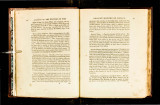
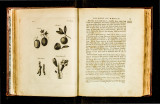
Show • EOOK f. ~ I H I S 4f' 0 R Y 0 F M E X I C 0. Ximencs, Ulloa, and many other naturalifts; we {hall therefbre on1y · take notice of thofc which are the lcafi known iu Europe. All the fruits comprehended by the Mcxican·s under the generic name of Tzapotl, are round or approach to roundnefs; and all have a hard ftone (b). The black Zapote, has a green, light, frno~th, tender bark; a black, foft, and moil: e:xceeding favoury pulp, wh1ch at fidl: fight looks like .the Cafiia(c). Within th~ pulp: it has flat, blac~\.ifh ftoncs, not longer than a finger. It 1s perfeCtly round, and 1ts diameter from one and a half, to four or five inches. The tree is of a moderate fize and thicknefs, with fmall leaves. Ice of the pulp of this fruit, feafoned with fugar and cinnamon, is of a moll: delicate tafie. The white Zapote, whi h from its n:ucotic virtue, was called by the Mexicans ochitzapotl, is fomething fimilar to the black, in fize, figure, and colour of the bark; although in the white the green is more clear; .bnt in other r 'fpeCl:s they arc greatly different. Its ftonc, which is believed to be poifonous, ic; large, round, hard, and white. The tree. is thick, and larger than the black; and its leaves alfo are larger. Beiides, the black is peculiar to a warm cJimate; but the white, on the contrary, belongs to the cold and temperate eli mates. The Chicozapote, (in Mexican, CbiClzapotl) is of a fpherical {hape, or approaching thereto; and is one and a half, or two inches jn diameter. Its fkin is gre(., the pulp white, and the ftones black, hard, and pointr.d. Fron this fruit, when it is fiill green, they draw a glutinous milk, which eafily condenfes, called by the Mcxi-· ·cans, CI.Jllf!i; and by the Spaniards, Chicle: the boys and girls chew· it; and in Colima they form it into fmall fiatucs, and other fanciful little figures (d) . ~b) _ Th fruits compt:cl~e~d~d by tlie Mexicans under the nnme of Tzapotl, arc the Mam~ nct 'Trtzontzapotl, the Chmmoya 111atzaf'otl, the A nona ~ttwbtz.npotl, the Llack Zapotl Tlilt· zapotl, &c. (c) G_cmclli f.1ys, ~he black Zapotl has alfo the taUc of the Cnffia: but this is very far from bc.tng ~rue, whtch all ~h~ ha,·c tafbl it mutl know. He fays alfo, 1hat rhis fruit when crude, ts p01fon to fifi1, but It ts wonderful that fuch a fa c1 iholl'ld be known only to Gemelli who was not more than ten months in Mexico. ' _(d) Grm711~ is pc1:uaded that chicle was a compofition made on purpofe ; but he is de· cetvcd, f~>r ~~.t s nothtng elfc than the lliCl"e milk of the unri1>c fruit condenfed by the air.' I'c>n)O 6. hb. 11. cap. 1c. The .. ' H I S T 0 R Y 0 F M E X I C 0. The Chicozapote, fully ripe, is one of the moO: delicious fruits; nnd by many Europeans reckoned fuperior to any fruit in Europe. The tree is moderately large, its wood fi t for bein r wrought, and its leaves are round, in colour and con.fiil:ence like thofe of tl e orange. It fprin gs without culture in hot countries ; and in Mixtcca, Huaxteca, and Michuacan, the re are woods of fuch trc s wtlve and fifteen miles long(e). The Capollino or Capulin, as the Spaniards call it, is the cherry of Mexico. The tree is little different fro n the cherry tree of Europe; and the fruit is like it in fize, colour, and ftone, bc:t not in tail:c. The Nance is a fmall, round fruit; yellow, aromatic, and favoury, with extremely fmall feeds, which grow into trees peculiar to warm climates. The Chayoti is a round fruit, Gmilar in the hulk, Vi'ith which it is covered, to the chefnut, but four or five times larger, and of a much deeper green colour. Its kernel is of a greeniil1 white, and has a large ftone in the middle, which is white, and like it in fubftance. It is boiled, and the il:one eat with it. This frui~ is produced by a twining perennial plant,. the root of which is alfo good to eat. The imprifoncd nut, commonly fo called,. becaufe its kernel is clofe]y il1ut up within an exceeding hard il:one. It is fi11aller than the common nut; and its figure r~femblcs the nutmeg. Its il:one is fmooth, and its kernel lefs, and not fo well taO:ed as the common one. This (j) tranfported from Europe, has multiplied and become as· common as in Europe itfelf. · The Tlalcacahuatl, or Cacahuate as the Spaniards call it, is one of the moft fcarce plants which grow there. It is an herb, but very thi ·k, and il:rongly fupplied with roots. Its leaves are fomcthing ('~) A_m~ngtl the .riclieul_ous lies told by _T_homas Gage, is. rhe following, rhat in the garden• of ": CJ:lCtnto, (th~ hofp1tal of the Domm1cans of the Mtflion from the Philippine itles, in. the lubllrhs of Mcx1co where he lodged fcveralmonths,) there were Chicozapoti. This fruit., Lild never be raifcd eith er i11 the vale of Mexico or any other country fuhjel to white frolt. (.() \"~e only fpcak of the imprifoncd nut of the Mexican empire, as the one of Nc~t Mex1 o 1s larJ;Cr and better tailed than the common one of Europe, as I have bern inform ed from rcl"pcCbtblc authority. Probably this of New Mexico is the fume with that of Lonifiana, called P acana, or P acar.ia. like • 2j BOOK. I. . "-v--J • |