| OCR Text |
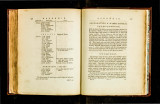
Show 104 ll OOK I. ..... .. H I S 1' 0 R Y 0 F M E X I C 0 · from ·the'nce by the Teochechemecas, or Tlafcalans, they tranfporte~ themfelves to the ·coaft of ,the gulf of Mexico (x). . The Otomies, who iormed one of the mofi numerous nations,_ were ·probably one of the mofl: ancient in that c~untry; but they contmued for many ages in barbarifm, living fcattered 111 t?e ca~erns of the moun- 1:ains, and fupporting themfe1ves by the chace, m whtch they wer~ moil: dextrous. They occupied a traCt of more than three hundred mtles of land, from the mountains of Izmiquilpan towards the north-wel1, bordering in the eal1 and wefl: on other nations equally _favagc. In the fifteenth century, either being compelled by force, or fl:tmulated by_ the examp'le of other nations, they began to live in fociety, uader fub~ection to the crown of Acolhuacan. In the country of Anahuac, and likewife in the vale of Mexico, they fettled an infinite number of places ; the greater, and efpeciall.Y the moll: confiderable of them, fuch as th?fe of Xilotepec and Huitzapan, were in the vicinage of the country wh~ch they occupied before; the others were fcattered among the Matlatzmcas and Tlafcalans, and in other provinces of the kingdom, preferving even down to our times, their primitive language in the infular colonies, though furrounded by other nations. We are not, however, to conclude, that rhe 'JVhoic nation was then brought to a ftate of civil life, as a great part, aml poilibly the mol1 numerous, were ftill left .together with the Chechemecas in the condition of favages. The barbarians of both nations, which were confounded together by the Spaniards, under the name of Chechemecas, made themfelves famous l)y thcir invafions, and were not finally fubdued by the Spaniards until the fcvcntcenth century. The Otomics have always been reputed the mort rude nation of Anahuac, not more from the difficulty every body finds in undcrl1anding their bngunge th<\ll their fcrvilc fl:ate of life; as even in the time of the Mexican kings they were treated as flaves. 'Their language is very difficult and full of afpirations, which they make partly in the throat, partly in the noft!; but otherwife it is fufficiently copious and expreffivc. Anciently they were renowned for their dexterity in the chace; at prefent they traffick in coarfc cloths for the drefs of the other Indians. (x) Buturini conjectures, that the Olmccas, when driven from their country1 went t_o t)lc hntillcs, or C11ribbec lllaudu, and &Puth America. This is no more th~m conjcc ure. The H I S T 0 R Y 0 F M E X I C 0. lOS The natio~ of the Tarafcas occupied the vafl:, rich, and pleafant BooK Jt, country. ~f M1chuac~n, ~here they multiplied confiderably, ancl fettlcd '--v--J many Clttes and .an mfintte number of villages. Their kings were ri- ~~~Ti~!~!· vals of the Mextcans, and had frequent wars with them. Their ar- ca s. tifl:s excelled, or. vied with thofe of other nations; at leafl: after the conquefl: of Mextco: the befl: Mofaic works were made in Michuacan and there only this valuable art was preferved unto our time. Th~ Tarafcas were idolatrous, but not fo cruel as the Mexicans in their woril1ip. Their language is copious, fweet, and {onerous. They make frequent ufe of the foft R; their fyllables, for the mofl: part, confifl: of a finglc confonant, and a fingle vowel. Bcfides the na~ural advantage o~ thei.r country, the Tarafcas had the good fortune to have D. Vafca dt Q!.uroga for their fidl: bilhop, one of the mofl: diil:in-guiil1ed .prelates Spain has pr0duced, worthy of being compared with the anctent fathe~s of the c~urch, and whofe memory was preferved freil1 unto our tu~e, and w11l .laft perpetually among thefe people. The country of Mtchuacan, wh1ch is one of the finefl: of the New \Vorld, was . annexed to the_ crown of Spain by the fi·ee and fponta-neous aCt of 1ts law~ul_ fovere1gn, without cofiing the Spaniards a drop of blood, although 1t 1s probable that the recent example of the ruin of the Mexican empire, intimidated and impelled that monarch to fuch a conceflion (y) . The Mazahu.as were once a part of the nation of the Otonu'ea" , as SecT. A~-~t V, the languages of both nations are but different dialeCts of the fame The Maza. t b t tl · d' r: b huas,Matl:tt• . ongue ~ .u. 11s tvemty etween two nations fo jealous of preferv· zincas, and Hlg thetr 1d10ms t~ncorrupted, is a clear argument of the. great anti- ~~~~~r nati· (y) Boturini f,tys.' that. th~ Mexicans finding themf.:lves befiegrd by the Sp :u~iar~s , fr.nt :m embaff'r to the k1ng of M,ichuacan, to procure his alliance ; that he alfcmblcd an hun-bd re· d th· ou·l ~t· ndd Tarafcas, aod as mu;1y Teoc;hes:l.cmecn• in the p;ovince of A ) . b 1 1 b . . 'J ., ... va os , ut t Jat, .e111g u~tul\1 ilt~c Y ccrt:un nfions which his fi{}cr had, who ,was once dead but returned to hfc agmn, he.d1f~harge tl the army, a~d abandonc:<~ the undertaking of fHccouriog the Mexieam, It& he h.td lntcmd r.d . But all this account u n .fir~ng ,of fllblos. As far as we know no author of ~hat age makes mention of fu h nn cvctu. Whc11ce c;une thefc hundred .thoufand ~eochech e m.ccas, who were fo q uick.ly a trembled? Why wa9 the army colleCted 11~ the provmcc mofi dafia.nt f~om Mexico? Who hils ever feen the king of France order hi9 ttoop~. to b~ affcmblcd m F lander~, to fuccour fomc city of Spain? The refurrc :lion of <the pnncefs ~~ n fnbk foundr;d 110 the menwmqle occurrence, refpcCtiug the fiOrr 9f Mome~ urna, of wh1ch we !hall fpe ·Ak. hc,n;aft~r. V.oL . I. · p qui ty |