| OCR Text |
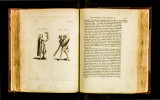
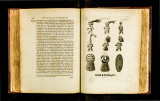
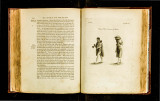
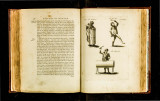
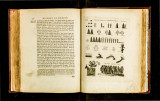
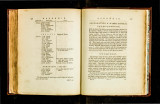
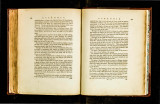
Show w HISTORY OF M EX I C 0. of war. It was this elevated notion of the glory of arms, which formed thofe heroes, whofe illufidous aCtions we have already related : which made them {hake off the yoke of the Tepanecas, and ereCl: on fo humble a foundation, fo famous and celebrated a monarchy : and laftly, which produced the extenfion of their dominions from the banks of the lake to the lhores of the two oppofite feas. The highe!l: militat·y dignity was that of gener~l of the army; but there were four different ranks of generals, of wh1ch the moO: refpetl:able was that of 'tlacochcalcatl ( z), and each rank had its particular badges of difiinCl:ion. We are uncertain in what degree the oth~r three ranks were fubordinate to the firfi; nor can we even tell thetr names, on account of the different opinions of authors on this head (a). Next to the generals were the captains, each of whom commanded a certain number of foldiers. · In order to reward the fervices of warriors, and give them every kind of encouragement, the Mexicans devifed three military orders, called .Achcauhtin, ffl.!jauhttn, and Oocelo, or Princes, Eagles, and Tygers. The perfons belonging to the order of princes, who were c~lled ' ~achiclt'n, were the mofi honoured. They wore their hair tied on the top of their heads with a red firing, from which hung as many rocks of cotton as ·they had p'erformed meritorious att:ions. This honour was fo much efi:eemed among them, that the kings thcmfdves, as well as the generals, were proud of having it conferred upon them . . Montezuma II. belonged to this order, as Acofi:a affirms, and al(o king Ti:zoc, as appears in the paintings of him. The Tygers were dif.tinguilhed by a particular armour whi h they wore, it being fpottcd like the £kim of thefe wild animals; but fuch inflgni;1 were only made ufe of in war : at court all the officers of the army wore a drefs of mixed colours, which was called 'I'lachquauhjo. No perfons on the firO: time of their going to war, were allowed to wear any badge of dif- (lll) Some authon fay that Tlaroclxalcatl. flgn ifies princ~ of the dans;. but \lnquellionably it means only, inhnhitnnt of the arfcnal, or ltoufc of the darts. (n~ T~ intct•p~~tter of Mendoza'11 CoUc,'.l i n fays, that the names nf the four rnnks of generals, w.erc 1'/arocbcnkatl, .At1mpanxat/1 Erdntamtemtl, and T'lillmtcnlqui. Acoila, inlleaa of Attmpa11ccntl, fays 'rlncnlL'catl, and in·llead of Ezbtlnratrcatl, Ezlmnburmttl; nnd adds, that thefc were the numes of the four cleGl:ors. Tor'l'temada ndopts the name of Cf'l11rntt''WI! but fomc· time& he makes his r;ulk inferio~ to the Tlacochcalcntl, :md at other times he coutounda them togLtbcr. ' trnction 1 H l S T 0 R Y 0 F M E X I C 0. tincHon ; they were dre[ed in a coarfe white habit, of cloth made from the aloe; and this rule was fo firictly obferved, that it was even neceffitry for the princes of the royal blood to give fome proofs of their cou• ·age before they could be entitled to change that plain drefs for another more cofl:ly, called 'l'eucalittbqui. The memb rs of thofe military orders, befides the exterior marks of difiind:ion which they wore, were allotted particular apartments in the roy::tl pcrlace, whenev.er they waited upon the ldug as guards. They were allowed to have furniture in their hou.fes made of .gold, to wear the finefi cotton drefs, and finer ihoes than thofe of the common people ; but no foldier had permiffion to do thi~ until he. ha.:i gained, by his bravery, fome advancement in the avmy. A particular dr.e(s called 'IIacatziuhqut· was given. as a reward to the foldier, who, by his example, encouraged: a difpirited army to renew battle with vigour. When the king went to war, he wore beG.des his armour, particular. badges of diilintt:ion; on his legs, half boots made of thin plates of gold; on his arms, plates of the fame metal, and bracelets of gems ;. at his under lip lmng an emerald fet in gold; at his ears~ ear-rings of the fame fi:one; about his neck a necklace, or chain of gold and g~n1s.,.. and a- pl'ume of beautiful feathers on his head; but the badge moll: expreffive of majeO:y, was a work of great labour made of beautiful feathers, which reached from the head all down the back ~b). The Mexicans were v~ry attentive to difiinguilh perfons, particularly in war~ by diffc:rent badges .. The. defenfive and offenfive arms which were made ufe of by the Mexicans,, and the other nations of Anahuac, were of variou ~ forts. The defenfive arl)ls. common to the nobles and plebeians, to the officers and folcliers, were fhields,. which they called Chimalli (c), and were made of different forms and materials. Some of them were perfet\ ly round, and others were r.ou-nded onl:Y in. the under part. Some (h) All thefe royal inlignia had, their p:micular name•. The boots were called ctJot.tb1111tl, the brach inlll matrrmcntl, the bracelets matztJpcot.tli, the emrrald at the lip ttnwl, the ear· rings ?Jnrorbtli, tl1e ncckla e ,·ozcaprtlntl, and the principal badge of feathers fjtHIChiflli. (c) Solis protcncls, that the lliield was ufed only by lords; but the anonymous conqueror, who frequonrly faw tho Mexicnns in arms, and was engaged' in many battles azainll: them, nf. ft·ru exprcily, that this armour was common to all ranks •. No author has informed us more ru:curntely than hl! of the Mexican nrmouri. were • • BOOK Vll. '--v---1 SecT. xxu_ The military cl!·cfs of the king. S I! C T XXJli. The nnm of the Mcxi<" alls. |