| OCR Text |
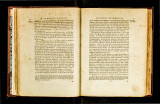
Show ' IOS BOOK U. '--'r--' SecT. XVI, T .1e Th1fca· la1s. H I S T 0 R Y 0 F M E X I C 0. their name from a place called Tepan (b), where they had been before they fettled their famous city Azcapozalco. . It is beyond a doubt that thefe tribes did not arive together ~n that country, but at diJJcrcnt times, and i.n t~e ordet w~ have mcm~10n~d; but there is a great difft:rcnce among h1ftor1ans refpechng the prec1fe t1me of their arrival in Anahuac. We are perfuaded, for the reafons fet forth in our diffcrtations, that the firft fix tribes arrived. under conduct of the fix lords who made their appearance immediately after the Chechemecas, and there was not fo great an interval as Acofta fuppofes ,. between their arrival and that of the Mexicans. The Colh.uas, whom in general the Spanifh hifiorians confound with the Acolhuas, from the affinity of their names, founded the fmall monarchy of Colht1acan, which was annexed afterwards to the crown of Mexico, by the marriage of a princefs, heirefs of that fiate, with a king of Mexico. The Tepanecas had alfo their petty kings, among whom the fidl: was prince Acolhuatzin, after having married the da~1ghter of Xolotl. His defcendants ufurped, as we {hall relate, the kmgdom of Acolhuacan, and governed all that country, until the arms of the Mexicans, joined with thofc of the true heir of Acolhuacan, deftroyed both the tyrant and monarchy of Tepaneca. The Tlafcalans, whom Torquemada and other authors call Teochcchemecas, and confider as a tribe of the (n) Chechemecan nation, efta blin1ed (e) Several authors call them Cf'rcpan(NIJ; both are Mexican. Cfr<Jtiii~G'at/means_ tht i11ba• hitant of the palace; 'Trpamratl, ;,,/;abitmlt of a jlo11y place. Others gwe It a very ViOlent ety· mology. (•) Torqucmada, not only fay s that the Tlafcalans we1·e Teochechemecas, but li kcwife ~ffirms, ill lib. iii. cap. tc. tbat thefe 'f'eochet'hemecm, •were Otomics. If the Tlafcalans were Otomies, why did they not fpeak the language of the Otomics ? And if they ever did fpeak ir, why did they give it up for the Mexican ! Where is there an infiancc of a free nntion ~bandoni ng its own native language, to adopt that of its enemies ? Nor is it lcfs i ncrcdiblc that the Chechemecas were Otomies, as the above author fuppofes, althot•gh in lib. i• u p. :z. he affirms the contrary. Who forced the Chechemccas to give up th eir primitive language? He only who was unacquainted with the charaC\er of thefe nations, and knew not how conOant they were in retaining th eir nlltional language, could be capable of per· fua<.ling us that the C..'bcc!temecns, by their communication and alliance with the Acolhuas, abandrmcd the lungungc of the Otomies for the Mexican. If the true Otomies ha,·e not, during fo many ngcs, altered their idiom, neither under the dominion of the Mexicans, nor ~111c\e r that of the Spani:mla, how is it credible that the Chechcmecns fhould entirely ch:'mg·e tlwir I ·' H I S T 0 R Y 0 F M E X I C 0. .efiablilhed themfelves, originally, in Poyauhtlan, a place fituated on the eafiern fhore of the lake, of Tezcuco, between the court and the village of Chemalhuacan. There they lived for fome time in great mifery, fupporting themfelves folely by the chace, on account of the want of arable foil; but being niultiplied in their numbers, and defirous of extending the boundaries of their territory, they drew upon themfelves the hatred of the furrounding nations. The Sochimilcas, the Colhuas, the Tepanecas, and probably alfo the Chalchefe, who, by being borderers on them, were moft expofed to injury, made a league together, and equipped a confiderable army to drive fuch dangerous~fettlers from the vale of Mexico. The Tlafcalans, whom the confcioufnefs I of their ufurpations, kept always vigilant, came well al'rayed for an ~n-counter. The battle was one of the moft bloody and memorable which appears in the hifiory of Mexico. The Tlafcalans, though inferior in number, made fuch a flaughter of the enemy, that they left the field covered with carca[es, and a part of the lake on the border of which they had engaged, tinged with blood. Notwithftanding they came off fo glorioufly in this battle, they determined to abandon that quarter, being well perfuaded that while they remained there they would be daily harra!red by their neighbours; for which reafon having reviewe~ the whole country by means of their emifraries, and finding no . fituation where they could jointly efi:ablifh themfelvcs, they agreed to feparate, one part of them going towards the South, the other to the North. The latter, after a fhort journey, fcttled themfelves, with the permiffion of the Chechemecan king, in Tolhntzinco, and in Q.!_auh- ' their language, bei ng maflcrs of that country, and occupying the throne of Acolhuacan from the time of Xolotl the founder of t hat kingdom, umil the conqucfl: of Mexico. I do not doubt, howeve r, that the proper language of the llncient Chcchemccas was the f:une with that of the Acolhuas and Nahuailacaa, that is, the Mexican. I am of the fame opinion refpeCting the Toltccas, whatever other authors may fay; nor can I, after the moll diligent .fiudy of hifl:ory , niter my fcntimr:nts. · We know that the names of the places from whence the Toltecas and Chechcmccns came, and of tho ~·e which they fcttl d in Anahuac, of the perfons of both nat ions, nnd of the years which thry ufed, were Mexican. \Ve know thO\t the T oltecas and Chcchcmecas, the Chcchcmeeas and Acolhuas, fron the fidl had communication with each other, nnd underfiood each other reciprocally without an interpreter. The Mexican language having fprcad as far as Nic:m1 g u~, is not to be afcrihed to nny thing die than the difpedio11 of the Toltecas who fpokc it; na it is known th :tt the Nahuntl:tcas ever went beyond Chiapan. In fh ort, we find nothinE; to fup pon the contrary opinion, al· though it is fo common amon~ our hii\ori :m~ . chinanco BOOK U· ~ |