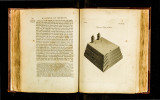
| OCR Text |
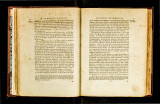
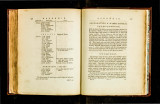
Show H I S T 0 R Y 0 F M E X I C 0. BOOK IV. Bm·en women ofiered up theit· prayers to him in order to become ~ fruitful. Hi ft::ftivals \\'ere great and extraordinary, efpecially in Cholula, in the CJ'eoxilmitl, or divine year; and were preceded by a fcverc f~dl: of eighty d:tys, and by dreadful aufi:erities prattifed by the priefis confecrated to his wodhip. ~etzalcoatl, they faid, cleared the way · for the god of W;\ter; becaufe in thefe countries rain is generally pre·- ceded by wind. Dr. Sigucnza imagined that the ~etza/coat!, deified by-thofe people, was no other than the apo!l:le St. Thomas, who announced to them the Gofpel. He fupportcd that opinion with great learning, in a work (b), which, with many other of his inefl:imablc writings, has been unfortunately loft by the negleCt of his heirs. In that work he infl:ituted a comparifon betwixt the names of Didymos and f{uetzalcoatl (i), their drefs, their doCtrine, and their prophecies ,; and examined the places through which they went, the traces which they. left, and the miracles which their refpettive difciples related. As we have never feen the manufcript above mentioned, we !hall avoid criticiiing an opinion to which we cannot fubfcribe, notwithfl:anding the refpea: which we bear for the great genius and extenfive learning of the author. Some Mexican writers are perfuaded that the Gofpel had bee11 preached in Ametica fome centuries before the arrival of the Spaniards. The grounds of that opinion are fome crofies (k) which have been found (b) This work of Siguenz:\ is mentioned by Bet:incourt, in his Mt.·~.:icmt 'Theatre; and by Dr. Eguiera1 in his Mell ican Bibliotheca, , ( i) Betancourt obfervcs, whc11 he is comparing together the names of D idymos ' and ~ICIxalcoat/ 1 that the latter is compofed of Coat/a twin, and ~/Cizalli a gem ; and that it fignifics n Precious Twin. But Torqucmnda, who perfeCtly undcr!lood the Mexican language, and had thofe names interpreted to him by the ancient people, fays that ~ctzalcoatl means, fer· pent furnithccl with feathers. In faCt, Coati does perfeCtly lignify ji:rprnt, and ~etzalli, grt'CII" ftatbtr, and have been applied to twin andgtm, only met:tphorically. (i) The croffes the moft celebrated are thofe of Yucaun, of Miz.teca, ~eretaro, Tepiquc, and Tianquiz.tepcc. Thofc of Yucatan are mentioned by Father Cogolludo, a Francifcan, in his Hi!lory, book ii. chap 1 z, The crofs of Mizteca is taken notice of by Boturini in his work, at1d in the chronicle of Father Burgoa, n Dominican. There is an nccount of the cro r.~ o( <lltc.retnro, written by a Fra~1ci~c~n of the collrge of Propagmula in that city ; and of that of ~cp1qlle by the learned Jefutt Slglfmltnd Tarabnl, whofc manufcripts are prefervcd in tbe !efu1t c_ollege. of ?uudalaJOra. That of Tianqui7.tcpec was difcovcrcd by Boturini, nnd .11 m~ntloued m hu work. The croffes of Yucatan were wor01ipped by the Yucatancfe, in obcdtence, as they faid, to the in!\ ructions of their great prophet Chilam ·CambaJ, who dcfircd that when a cew1in race of men with• beard a fhould arrive in that country from the Ea~, and (hould I H I S T 0 R Y 0 F M E X I C 0. found at different times, which [cern to have been made before the arrival of the Spaniards: the ~a.fl: of forty days obferved by the people of the ne': world (1), the trad1t~on of the future arrival of a fl:range people, w1th .~eards, and the prmts of hum:ln feet imprelfed upon fame fl:ones, whtch are fuppofed to be the footfl:cps of the apoftle St. Thomas (n) ·. We never could reconcile ourfelves to this .opinion; but the exanuna~10n of f~ch monuments and 'remains, would require a work of a very d1fferent kmd from that which we have undertaken. 7'/a/oc, otherwife TlalocateuCili (mafl:er of paradife), was the god of water. They called him fertilizer of the earth, and proteCtor of their te~p01·al goods. They believed he refided upon the highefi mountams, where the douds nre generally formed, fuch as thofe of Tlaloc, Tla~cala, and Toluca; whither they often went to implore his proteCtiOn. The native hiftorians relate, that the Acolhuas having arrived in that country in the time ofXolotl, the firft Chechemecan king, found at the top of the mountain of Tlaloc, an image of that god, made ofa white and very light fl:one, in the D1ape of a man fitt-ing upon a fquare fron'e, with a veffel before him, in which was fome elaftic gum, and a variety of feeds. This was. their yearly offering, by way of rendering up thelr thanks after havmg had a £wourable harvefl:. That image was r~ckoned the ol~efl: in that country; for it had been placed upon that l11ll by the anc1ent Toltecas, and remained till the end of the XVth or beginning of the XVIth century, when "Nezahualpilli, king of Acolhuacan, in order to gain the favour of his fuhjetts, carried it away, and placed another in its fl:ead, of a very hard black ftone. The new image, however, being defaced by lightning, and the priefl:s declaring it to be a puni:lhment from he::~ven, the ancient fl:atuc was refl:ored, and there lhould be fecn to adore . that fign, ~hey n10uld embrace the doCtrine of thofe {h·angcrs, We !hall have nn opportuJwy of fpcak1ng more particularly concerning th efc monuments in the Ecclrjinjlirnl Hijlory ~( Mo:ico, if Heaven vouchf.,lf'c to favour our dc!ig·n. 1 (l) The fail of forty days proves nothing, us thofe nations likewife obfcrvcd fafls of three four, five, twenty, eighty, a hundred and ftxty days, and even of four yc11rs; nor was that of forty days, by any means the mofl common. (11) N.ot. on!~ the ma.rks of human fe et have bc.en found printed or ra.ther cut out in !tones, hut thole hk:cwJfe of nmmals haYc been found, Without om being able to form any conjcoturo of the J>Urpofe hnd in view by thote who oovc tuken the trOllb1e to cut tl1cm. Kk2 con tinued 251 BOOK V~. w • Seer. V. The gods of mountains, water, fire, earth, night, and hell. •• .. |