| OCR Text |
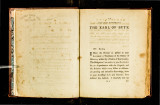
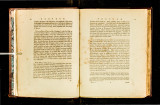
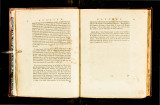
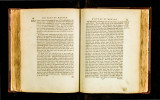
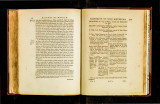
Show . . 362 BOOK VII. • • H I S T 0 R Y 0 F M E X I· C 0. them to adopt all their Jaws. The legi~ature of. Acolh_uacan was tl~e moil: fimilar to that of Mexico ; but ihll they d1ffercd m many particulars, and the former was far more fevere than the latter. The laws publHhcd by the celebrated king Nezahu.alcojotl ordained, that a thief ihould be dragged through the !l:reets, and afterw4rtis hanged. Murderers were beheaded. The agent. in the cri~ne of fodomy was fuffocated in a heap of atbes; th_e pat1ent had h1s bowels torn out, after which his belly was fill:!d w1th atbes, and then he was burned. He who malicioufly contrived to fow difcord between two {h1tes, was tied to a tree and burned alive. He who drank till he loft his fenfes, if a nobleman, was immediately hanged, m~d his body was thrown into the lake, or into fame river; if a plebeian, for the firft offence, he lo!l: his liberty, and for the fecond his life. And when the legiflator was afk.ed, why the law was rpore fevere upon nobles, he anfwered, that the crime of drunkem1efs was lefs pardonable in them, as they were rr.ore bound in duty to fet a good example. The fame king prefcribed the punilhment of death to hifiorians. who publilhed any fal01ood in their paintings (y). He condemned robbers of the fields to the fame punilhment, and declared that the !l:ealiRg (even ears of maize was fufficient to incur the penalty. The Tlafcalans adopted the greater part of the laws of Acolhuacan •. Among them, fans, who were wanting in refpeCl: and duty to their. parent~, were put to death by order of th.e fcnate. Thofe perfons who were authors of any public misfortune, and yet did not deferve to. be punitbed with death, were baniihed. Generally fpeaking, amQng. all the politbed nations of Anahuac, murder, .theft,. lying, adultery,, and other fimilar crimes of incontinence,. were rigoroufly puni!hed,. and. that which we have already obferved, when [peaking of their character, appears to be verified in every thing, nameJ.r, tb.at they wet-e (as they ftill ate) naturally inclined t<:>. feverity and rig~ur, and more vigilant to punifh vice than to reward virtue. (y) This law again!Hnlfe hilloriana is attoOed by D. Ferdimmdo d' Alba Ixtlilxo.ch'itl. (who. waa a dcfccndant of th;u lc&illatot) 1 in his valuable mauufcripts. Among , H I S T 0 R Y' 0 F M E X I C 0. Among the punilhments prefcribed by the legifiators of Mexico againil: ~lefacrors, that of t.he fork or gallows was reckoned the moil: ~nomimous .. That ofbam~ment was alfo thought infamous, as it fuppofed the gudty pcrfon pofl~ifed of an infeCl:ious vice. That of whipping is not found among thetr laws; nor do we know that it was ever made ufe of except by parents to their children, or mafters to their pupils. They had two forts of prifons ; one fimilar to modern prifons, called Tei'!ilojan, which was appropriated for debtors who refufed to pay the1r debts, and for fuch perfons as were guilty of crimes not deferving death; the other called ff<J.,.tauht·alli, refembling a cage, was ufed to confine prifoners who were to be facrificed, and perfons guilty of capital offences. Both of them were well watched and ftrongly guarded. Thofe who were to be capitally punia1ed were fed very fparingly, in order that they might tafie by anticipation the bittemefs of death. The prifoners on the contrary were well nouriihed, in order that they might appear in good flea1 at the facrifice. If through the negligence of the guard, any prifoner efcaped from the cage, the community of the diftriCl:, whofe duty it was to fupply the prifons with guards, was obliged to pay to the owner of the fugitive, a female ilave, a load of cotton garments, and a ihield. Having treated thus far of the civil, it is now become necelfary to BOOK VII. '---v--1 S! c ·r. XX. l'u ni lhrncntt and prifons. Sac·r . XXI. fay fomething of the military government of the Mexicans. No pro- Officers ot:. 1r e ffit on was he J d m• more elale em among11L1 t he m t ha n t he pro1t:.e fl'1 011 of twaaryr aonrdd enrlsll.t • arms. The deity of war was the moil: revered by them, and regarded as the chief. proteCl:or of the nation. No prince was eleCted king, un-til he had, in feveral battles, difplayed proofs of his courage and mili-tary fkill, and meriwd the fplendid poft of general of the army; and no king was crowned, until he had taken, with his own hands, the viCtims which were to be facri.fi ced at the fe!l:ival of his coronation. All the Mexican kings, from I tzcoatl the fir!l:, .down to ~autemotzin, who was their laft, role from the command of the army to the government of the kinJJdom. Thofe who died for the tlke of their country, with the>r arms in their hands, were imagined to be the happie!l: fouls in another life. From the great ell:eem in which the profeflion of arms was held among!l: them, they were at much pains to make their children courageous, and to enure them from the earlidl: infancy to the hardlhips A a a 2 · of |