| OCR Text |
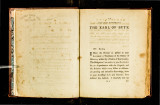
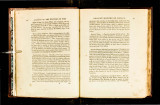
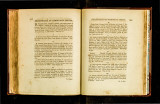
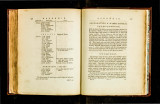
Show 8o BOOK I. '--v--' • H I S T 0 R Y 0 F M E X I C 0. to correCt fuch an error of man's mind, if it had not be~n the intere~ of the inhuman avarice of fome ruffians to encourage 1t (o) . Thetr underftandings are fitted for every kind of fcience, as experience ~as actually {hewn (p). Of the Mexicans who have had an opportumty of engaging in the purfuits of learning, which is but a ~nall munbcr, as the greate!l: part of the people are always employed 1~1 .the public or private works, we have known fome good mathematiCians, ex-cellent architeCts, and learned divines. . Many perfons allow the Mexicans to polYefs a great talent of it~itatiou, but deny them the praife of invention: a vulgar error, w h1ch is contradiCted by the ancient hiftory of that people. Their minds are affeCted by the fame variety of paffions with thofe of other nations, but not to an equal degree. ·The Mexicans feldom exhibit thofe tranfports of anger, or thofe frenzies of love which are [o common in other countries. They are flow in their motions, and !hew a wonderful tenacity and ftcadincfs in thofe works which requii·e time and long continued atten tion. They are moft patient of injury and hardiliip; and where they fufpeCl: no evil intention, are moO: grateful for any ~indnefs {hewn ; but fome Spaniards, who cannot difi:ingui{h patience from infcnflbility, nor diftrufi: from ingratitude, fay proverbially, that the Indians are alike infenfible to injuries and to benefits (q). That habitual difi:rufi: which they entertain of all who are not of their own nation, prompts them oft n to lie and betray; fo that good faith certainly has not been fo much refpeCted among them <1s it deferves. :j.l"ts fo much impro,·cd, nor, as far as we can judge, had they made fo much progrcfs in the knowledge of nature, as the Mexicans at the beginning of the fixtecnth cen tury. to) Upon this fubj eCl: I mufl: refer the reader to the bitter complaints llladc by the bifiwp Garces, in his letter to pope Paul III. and by the bi!hop of las Cafas, in his Memorials to the Catholic kings Charles V. and l'hilip II. but efpcc i ~ lly to the very humane laws made by thofe mon ChriOian monarch>, in favour of the Indians, \~) Vl'e fi1all, in the Diff~r~atio ns, produce th~ opinions of D. Giuli~n Garces, firfl: bifhop of I lafcalll}; of D. John d1 Zumarmga, firfl: b1fhop of Mexico, ami of D. Bartholomew de l.1s ~a.fas, firn bifhop of Chiapa, with rcfpca to the capacities, unc.lerlbndings, and ,other gooc.l qua hues. of the Mexi;ans. Th7 tcOimony of thofc virtuous and learned prelates, who had fo much mtercourfe With the Indmns, weighs much more than that of any hi!lorian whatever. (q) Experir.nce has proved the grateful difpofitions of the Mexicans wherever they were a~u1:cd of the good-witt and finecrity of their bcncfaCl:ors. Their gm;itude has been often rpnm.fe!led by open and loud demonfiratiom of joy, which publidy decla1•e the f<~l0l0Qd of the S,pnn1~1 proverb. ' They H I S 'r 0 R Y 0 F M E X I C 0. St ~ They are by nature taciturn, ferious, and auftere, and .lhew more BOQK r. anxiety to punilh crimes than to reward virtues. ~ Genero.fity and perfect diiintereftednefs arc the principal features of their charaCter. Gold with the Mexicans has not that value which it enjoys elfewhere ( r). They feem to give without reluctance what has coil: them the utmofl: labour to acquire. The negleCt of felfi{h interefts, together with the difiike which they bear to their rulers, and confequently their averfion to the tafics impofed by them, feem to have been the only grounds of that much exaggerated indolence with which the Americans have been charged (s); and after all, there is .t:JO fet of people in that country who labour more, nor whofe labours are more ufeful or more neceilary (.t). The refpet:l:: paid by children to their parents, and by the young to the old, among thdfe people, feem to be feelings that are born with them. Parents are very fond of their children; bqt the affeCtion which huibands bear to their wives, is certainly lefs than that borne by the wives to their huibands; and it is very common for the men to love their neighbours wives better than their own. Courage and cowardice feem alternately fo to affeCt their minds, that it is often diflicult to determine whether the one or the other predominates. They meet dangers with intrepidity when they proceed from · natural caufes, but they are eafily terrified by the ftern look of a Spaniard. That ftupid indifference about death and eternity, which many authors have thought inherent in the character of every American, is peculiar only to thofe who are yet fo ·rude and uninformed as to have no idea of a future il:ate. Their fingular attachment to the external ceremonies of religion is very apt to degenerate into fuper.flition, as happens with the ignorant of all nations of the world; but their pronenefs · to idolatry is nothing ( r ) I do not fpcak of thofc Mex icans, who, by a con ftnnt intercOln-fc with covetous nations, have been infcC.rcJ by their avarice; although, at the f.1me time, even thofe appea1· to be lcfs felfifh th :m the generality of perfons of th at difpofiti nn. ( s ) What we ob!crve upon the fubjeft of Ameri can indolence is not meant to npply to the ii1 vagc nations in othe1· parts of the new world. ( 1) In our Diffcrt ations we fhnll give an account of the works in which the Mexicans arc -employed. Moniign. Palnfnx uf~:d to fay, th at if ever the Indians failed them, the SpDniards would find the Indie~ fail alfo, VoL. I. M more • |