| OCR Text |
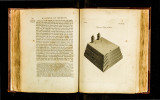
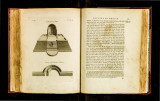
Show 388_ BOOK VII. ~ S E C T. xxxvm. Cullom of the merchants in their journics. • I -- H I S T 0 R Y 0 F M E X I C 0. fincere F. Motolinia relates, that a quarrel having arifen once between two women in the market of Tezcuco, and one of them having gone fo far as to beat the other with her hands, and occafion the lofs of fame blood, to the amaze.nent of the people, who were not accufl:omed to fee fuch an outrage committed there, £he was immediately condemned to death for the offi nee. All the Spaniards who ttw thofc:: markets extolled them with the higheCl: pr~tifes, and were unal.le to exprefs in words the admirable difpo!ition, and the wonderful order which was maintained among fo great a multitude of merchants and merchan di~es; The markets of Tezcuco, Tlafcala, Cholula, .Huexotzinco, and other brge places, were ordered in the fame manner as that of Mexico. .i\ t the market of Tlafcala, Cortes affirms, more than thirty th"uf:md merchants and others afiembled (z ). At that of Tepeyacac, which was not one of the largefl: cities, Motolinia above mentioned fays, he has known twenty-four years after the conquefi:, when the commerce of thofe people was greatly declined, that at the market held every five days, there were not lefs than eight thoufand European hens fold, and that as many were fold at the market of Acapitlayocan. When young merchants were defirous of undertaking a long journey, they gave an entertainment to the old merchants, who were no longer able on account of their age to travd, and alfo to their own relations, and informed them of their defign, and the motive which induced them to travel into difiant countries. Thofe who were invitc.::d praifcd their refolution, encouraged them to follow the fieps of their ancefiors, particularly if it was their firfi: journey which they were going to perform, and gave feve ral advices to them how they were to conduct themfelves. In general, many of them travelled together for greater fafcty. Each of them carried in his h:.md a frnooth black fi:ick, which, as th ey faid, was the image of their god Jacateutl:li, with which they imagined themfelves fecure againtl: all the dangers of the journey. As foon as they arrived at any houfe where they made a halt, they affembled and tied all the il:i ks together and wodhipped them; and twice ·or thrice, during the night, they drew (z) Thilt which Cortes has faid refpe'Jing the nnmb('r of merchants nnd dealers which a(. fcmblcd at the n~ nrkct of Tlafcn ln, ought moll probably to be undcrOood of the market of every five days, ,m the fame manner as we have obferved aliovc rcfpceting that of Mexico. bl0od . ' H I S T 0 R Y 0 F M E X I C 0. blood from tlu:mfelves in honour of that god. All the time that a merchant was abfent from home, his wife and children did not walh their heads, although they bathed, excepting once every eighty days, not only to te!l: ify tht:ir regret of his ::J.bfencc, but alfo by that fpecies of mortification to procure the proteCl:ion of their gods. When any of the merchants died on their journey, advice of his death wc1s imme·diately fi.:nt to the oldefi: merchants of his native country, and they c.:ommnnicatcd it to his relations and kindred, who immediately formed an imperfect ibtue of wood to rcprefent the deceafcJ, to which they paid all the· funeral honours which they would have done to the re1l de.1d body. For the convenience of merchants, and other travellers, there were public roads, which were repaired every year after the rainy feafon. They had likewifc in the mountains and uninhabited places, hou ics erected for the reception of trav ellers, and bridges, ancf other veffcls for pafli ng rivers. Their veffels were oLiong and fbt-bottomecl, with .. out keel, mafrs, or fails, or any oth er th ing to guide them bnt oars~ They were of various fiz es. The fmallefr could harclly hold two or three people, the largeCl: coul.d carry upwar·ds of thirty. Many of them were made of one fingle trunk of a tree. The number of thofe which were continu::tlly traverfing the Mexican lake, exceeded, accord ing to the acc.:ount of ancient hiO:orians fifty thoufand. Befides the vefE:ls, or Rat~, they made ufe of a particular machine to pafs rivers, which was called valfa, by the Spaniards of America. This is a fqu.1re platform, of about five fee t, compofcd of o:ntli, or fol id canes, tied firmly upon large, hard, empty gourJs. Four, or fix pafi~ngers feated thcmfelves upon this machine, and were conducted from one iide of a rjvcr to the other by two or four fwimmers, who laid hold of one corner of the machine with one of their hands, and fwam with the other. This fort of machine is .A:ill ufed on fome rivers dd1:ant from the c. tpi tal, and we our(clves pafied a large river on one of them in 1739· lt is perfetl:ly f:lfe where the current of the water is equal and finooth, but dangerous in rapid and impetuous rivers. Their bridacs were built eith er of fi:onc or wood, but thofc of fi:one 0 we are of opmiou were ex tremcly few in n urn her. The moll fi ngulnr kind of bridge ~as · that to which the Spaniards gave the name of Finmaca. This v1as a number of the ropes, or mtural ligatures of a tree, more .. BOOK VII. '--v--J S E C T • XXXIX. Roads, houfcs for the reception of t ravctlcrs, " cficls, rand bl'idgcs. - |