| OCR Text |
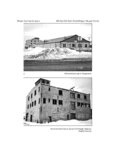
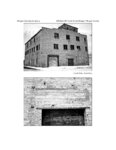
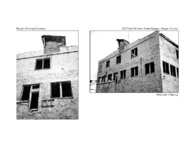
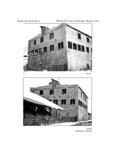
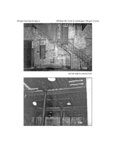
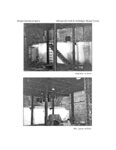
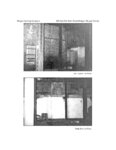
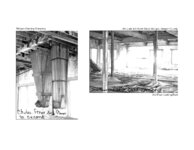
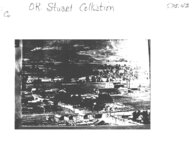
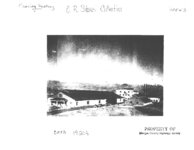
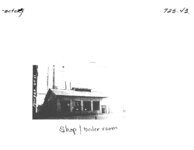
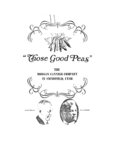
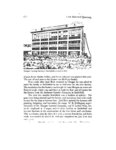
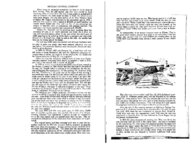
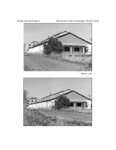
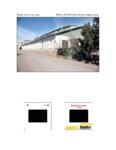
Show MORGAN CANNING COMPANY Wh.:n Jam~s A. And~l1'On work~ for the John A. Guild Srore in Rock Springs, Wyo., he sold canned peas that were packed in Long Mountain, Colo. It occurred to him that if peas could be pack~ profitably in Colorad.:>, the same could be done in Umh. He talked it over witn James Pingree, who was then cashier of the First National Bank of Ogden. Mr. Pingree was interested in the proposition and in 1904 a company was organized with a capital of $10,000. A small building was erected which housed one \;ner and one line of pea processing machinery. It was very crude in comparison with modem methods. The equipment and factory together cost approximately $12,000. Neither Mr. Anderson nor his associates knew anything about the processing of peas, so an expert processor was hired. As ·is often the case with so-called experts, about 25 per cent of the first year', pack of 4,000 cases had to be culled as swells, leaks or springers and discarded. Instead of a dividend with which to r~uce the debt-the profits had been on the wrong side of the ledger. The next year 6,000 cases were packed and although the losses were too great to make any profit, they were reduced solll$what over the year before. The Anderson Brothers were learning the details and technicalities of the business. In 1905 the Morgan Mill and Elevator Co., a local flour mill was sold under a forced foreclosure sale and Mr. Anderson's associates au. thorized him to bid for the properry. It was sold to him for S6,ooo and the Pingree-Anderson Milling Co. was organized. About this time Mr. Anderson induced some of these same Ogden capitalists together with some local people to establish a bank at Mor· gan-and it was starred with a capital of $25,000. In 1908 no money was made from the 8,000 cases of peas canned at the Morgan Canning Co. The market was very dull and at the close of the year, Mr. Pingree called a meeting of the stockholders for the purpose of changing the management. At this meeting Mr. And~rson arose and said, "Gentlemen, I am quite sure of the object of this meeting. I persuaded you to go into this business venture and I am quite sure your stocks could be bought today for 50 cents on the dollar. I am sorry that under my management the business has seemingly failed-but I got you in and I will ger you out. I have made some money in the produce business and my brother and I have sold our Pererson farm. \Ve will give you 100 cents on the dollar for your stoc\c." Everyone sold except Mr. ScO\·ilIe of Ogden who said, "I will stick to Jimmie to the end." Three years later the Andersons bought him out ar $3.50 per share. This made James A. and Joseph Anderson the sole owners. The following year (1909) produced a bounteous han'cst and the business would ~ a success if they could only get the money to pay for the cans. Most of the f:lrmers were willing to wair for their pay until the pack was sold but there came a day when a carload of cans was stand· ing on the tracks and there was no money to release the bill of lading. LC'~:ls ,,( peas were waiting to l:-e threshed and it 1" .,kd ~> ;( ~·:~n·t !'in~ :;'. ~::: ~c..' ~:1li: "tl ..W;il. Ji!1l -wt!nt (0 ~1r. J,,-"l~~ph \\·ii ii.1:~b ~~ .• : .. ' J;'1pc;ll for help. Mr. Williams loaned him the money on his word of honor and the cans were released. The years 1910 and 1911 were good years. In 1910 alone, 30,000 cases of excellent Quality peas were packed. Up to this time Morgan Canning Comp:lny had experienced a serious strug~le ("r existencebut as the years pass~ each one seem~ better than the lasr. This necessitated an enlargement of the plant and better organi.ati,'n of its per· sonnel. The original factory had been enlarg~ each year to meet the immediate needs but by 1916 the company had so outgrown ils capacity that a new plant was necessary. A large modern factory was built about one-fourth mile from the old site. The latest and best equipment p0ssible was installed, making use of Mr. Anderson's experience and pow. ers of observation as he had visited other similar plants. They were now able to produce 12,000 cases per day. This factory packed in a half day what the first one packed in an entire season. From the time the new plant was built "Those Good Peas" had attained such a favorable reputation that even this new factory could not meet the demand, so the owners began a search for other good locations. Several w~re tried ~ut but finally Cache Valley was chosen and a new factory bUilt at Smllh· field. "0 . A correspondent of an eastern magazin~ wrote as foll.ows: . ut In this great broad western country in a crack In the mou~talns, I fl~d the largest, best equipped and the most modern. pea can~lIng plant In the world; w1th nine complete lines, having a dally capacity of over 20,000 cases." i I' Morgan Canning Company. This plant too, was successful until Nov. 18, 1926, its beloved president James A. Anderson passed away and was followed by his brother Joseph M., three months later. The two widows did their best for the next twO years. The plants were then sold to Utah Packing Corporation, now California Packing Corporation. They will :llwars 10\'e and respect the employes and farmers woo helped make this success possible. After the sale of the canning company to Calii0rnia Packing Cor· poration, E. E. Anderson became plant superintendent. He held the pasi. t:on until 1935 when he was transferred to Sp:lnish Fork. Harold K. Guild then took over the management until 1943 when he also was transferred to Spanish Fork. He was followed by Curtis Rogers who is the present superintenaent. In 1930 the plant discontinu~ canning peas. They now thresh the peas and ship them by truck to the Ogden plant. Pea seed is furnished by the corporation. For many years the canning company has made and processed sour kraut-under the label of "That Good Kraut." This was discontinued in 1956 and the processing plant and warehouses have now become a large distribution and storage center. From here mixed lots or plain carload lots are shipp~ to wherever California Pack needs them. L.. 1I••••jll!I.IA.~~~:~~i~I~~~ttji~~';~~;~~~gJ~~~~~.~!Ii. . . . . . . .... |