| OCR Text |
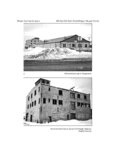
Show Ji6 l'la], Hislorical Quarterly thr welfare of tlwir ('mploy('('s and their famili(~s. Entertaimnent for rmployres and their familit's W;IS prm'icl"t! at opportnne times. Each Christmas employees recciwd a bonns in tlwir pay em'elopes, and they and their wives were occasionally ('ntcrtainl'd at a party at the Joseph Anderson home in Logan. LeRoy Wcst well remembers the many Christmas toys and cedar chests he mack for his children and others in the ~lorgan carpenter shop with the permission of his employers. H. B. Fry was in charge of organizing socials and benevolent assistance for employees. '\Then the new cast warehonse was constructed about 1923, the employees helped lay a hardwood dane(' floor and built an entertainment room on the second floor at the south end of the building. This was equipped with a kitchen, tables, dishcs: and the necessary items for the parties, dances, and dinners that wcre held there during the winter months. Fo]]owing each pea campaign the employers would entertain the employees and their families. During the winter months, steady employees of the company labeled cans, made packing boxes for shipping. and performed other needed repairs. Seed peas were shipped in from Idaho and these were cleaned and sorted during the winter and provided emplo)ment for °many people, At the early plant in :Morgan, women earned the tremendous amount of $.12 an hour, with floor ladies earning the fabulous wage of $.22 per hour. Mary Howard remembers when women threatened to strike for higher wages at the Morgan plant and management's reply was to go ahead and strike, the women would be replaced with ~1exican labor. Steadily employed men earned $140.00 per month, with an average work day of ten to twelve hours. During an emergency, George Phillips worked seventy-two hours without leaving the factory in Smithfield. One man said he worked twenty-five hours in one day because he did not take a noon hour. The factory at Smithfield used only one shift of workers who would often start a shift at 5: 00 or 6: 00 A.l\f. and work through until after JlIidllight. \\'omcn sometimcs \\'orkt:d J1il1l~tceJl hours, .Illd during a campaign it was not uncommon to work all night. There wa~ no cafeteria so everyone carried a lunch or wives or family members of the employees brought the workers a hot meal to the factory. Joseph Anderson often brought J10t rons and drinks in to re"ive the cmployc~ at work; and after . .1 • 1. .• 1 • 1 |