| OCR Text |
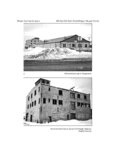
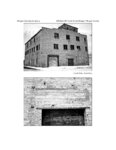
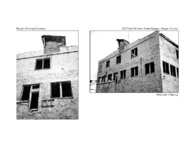
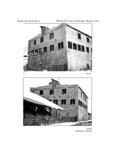
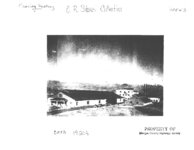
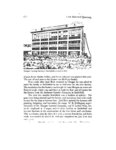
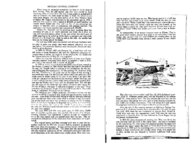
Show 175 Smithfidd City w"s unable to furnish enough water to operate tIlt: plant so a w(')) was dug in the northwest comer of the warchouse. This we)) was not succt'.ssful and caved in. The second well was dug at the north end of the warehouse in the spring of 1920. It was constructcd by c1i~~in~ four-foot depths at a time, pouring ccment into forms, and a))owin~ the cement to harden. Then four more fcet of dirt were removed below the cement ring and this was left to settle. After settling, four more feet of ct'mt'nt were poured and this mcthod continued until an cightyti"e-foot well was completed, which supplied most of the water for the factory until ]928. Several ,·iner sheds were built in different areas of Cache Valley to help in the threshing of the peas. During the construction of these sheds, workers were trallSp0l1ed by railroad and accommodated with !'Iccping cars, work cars, and a cook car. One day while working on the viner shed at "~ellsville, an employee placed some tar on the stove in the cook car to melt. "'hen LeRoy \Vest went to see if the tar was melted he found it ready to boil O\'er. He grabbed the bucket handle to throw the hot tar outside, but he could not get the door opened fast enough. The bucket of hot tar dropped on the floor setting fire to the sleeping car. The car was completely destroyed with the men's clothing, tools, and personal belongings. The burning car was hurriedly unhooked and pushed away from the cook car. After that incident, the men lived in tents. Viner sheds were built at Hyde Park, Greenville_(North Logan), Providcnce, Millville, Hyrum, and Wellsville from thc fall of 1919 to the spring of ] 920. Peas from these outlying districts werc threshed, boxed, loaded onto flat cars, and hauled to the factory in Smithfield by the Utah-Idaho Central Railroad. This was a slow process, and the peas wcrc on the road so long many of them soured and had to be discardcd. Some time latcr peas wcre hauled into the factory by trucks. In 1924 the Anderson brothers branched out again in their building probrram and constmctcd a bean processing plant at Hyrum, Utah. This f.\ctory employcd 77 mcn and 153 women on doublc shift during the bcan run, with an annual payroll of $24,000 a year. The AndersOllS also purchascd a milk factory at Franklin, Idaho. Sometime later this building was converted into a canning factory. Th(: cmp)oy(~r ;\11(1 employee rclatiomhip (If 1111' \forgan r.anning ,..."'n·..."\·.1·"~ " .'''' \" ,"\ . },."... 'r"l:r' '\l'lrff'l':('\t1 l"'-f\fh''''-l' ".... ~.,. ""nnr.rr!l~",,:,l i,l",,,,,! |