| OCR Text |
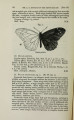
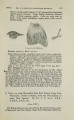
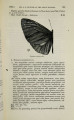
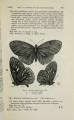
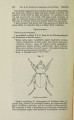
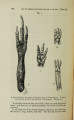
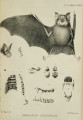
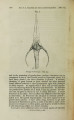
Show 1866.] MR. F. P. PASCOE ON THE COLEOPTERA OF PENANG. 505 is allied to Leptura, but is distinguished by several important such as the elongate-ovate, not truncate, terminal joints of the palpi, the large facets of the eyes, the long basal joint of the antennae and its insertion considerably anterior to the eye-thus making a very important step towards the curculionid type, and a very marked departure from its own. The anterior coxae are scarcely conical or elongate, but are inserted into their largely angulated cotyloid cavities something after the manner of the Prionidar. AsiLARIS. Caput ante oculos angustatum, productum. Antennae basi approximator, apicem versus lateraliter dilatator, scapo breviusculo. Palpi maxillares articulo ultimo elongato-ovato. Femora in medio incrassata. Head constricted directly behind the eyes, narrowed and produced anteriorly. Eyes nearly entire, very prominent, the facets very minute. Antennae shorter than the body, inserted between the eyes, the scape rather short and slender; third joint longest; fifth at the apex and succeeding joints gradually unilaterally dilated from the base; the last notched and simulating an additional joint. Maxillary palpi slender, lengthened, the last joint elongate-ovate; labial palpi short, truncate. Prothorax subobconical, its posterior angles produced, the base bisinuate. Elytra gradually attenuated. Legs unequal, the posterior longest; femora thickened in the middle; tarsi of the anterior and intermediate pair with the basal joint dilated in the male, of the anterior only in the female; basal joint of the posterior tarsi long and compressed in both sexes. Anterior coxae stout, subcorneal or subcylindrical. Abdomen slender, imperfectly covered by the elytra. ^k Nearly allied to Ocalemia; but in that genus the maxillary palpi are truncate, the posterior femora elongate and linear, and the antennae have the joints longer and only partially dilated towards their apices. Both genera, owing to the structure of the prothorax, are nearer Strangalia than Leptura. ASILARIS ZONATUS. (PI. XLI. fig. 1.) A. ater; elytris quadrifasciatis, fascia postica flavescente, alteris albis; antennis articulis ultimis sex ochraceis. Deep black, very slightly pubescent, except the four coloured bands on the elytra, and exceedingly closely and minutely punctured ; muzzle rather glossy about the mouth; palpi and maxillary lobes dull testaceous; prothorax rather longer than broad, considerably narrowed at the apex; scutellum exactly triangular, and having the white basal band of the elytra continuous across its whole surface; elytra obliquely truncate at the apex, the outer angle very acute, the basal and two median bands white, the praeapical yellowish ; body beneath with a scanty silvery white pubescence ; antennae with the last six joints ochraceous. Length 7 lines. PROC. ZOOL. Soc-1866, No. XXXIII. |