| OCR Text |
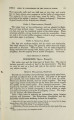
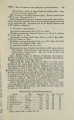
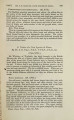
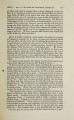
Show 224 MR. F. P. PASCOE ON THE COLEOPTERA OF PENANG. [May 8, dary, is taken by them as a fatal proof of the weakness of the position. As neither genus nor species has any absolute existence, and these terms can only be used to express " categories of thought," it cannot be expected that they should be defined with absolute certainty ; and as there must necessarily be varying degrees of precision, some of these definitions might be so slight as to leave it doubtful if any distinction at all could be maintained. It is true that, owing to the more or less exceptional isolation of many genera, a very cle \r and decisive description may be given of them ; but then it can never be said how soon the discovery of another form or species may upset the characters we have drawn from our limited number of examples, or whether the new genus or species may not be the other sex of some other species. These are questions which, when they occur, can only be solved by the possession of data suited to each. In the meantime our best efforts can only be tentative. Moreover there are many natural assemblages of species, whether we choose to call them genera or not, for which no technical characters can be found, their connexion depending partly on peculiarities which it is scarcely possible to convey an adequate idea of in words, partly on such gradual modifications of characters that no satisfactory line can be drawn between them, but which are, notwithstanding, not-less real or striking. Those who only select a few prominent forms for description may demur to this ; but anyone who has gone conscientiously through a large collection will acknowledge how difficult it is, in many instances, to say if genera really exist even as a collective term for any limitable number of species, and how unsatisfactory is any attempt to combine species into genera, or individuals into species, or to distinguish hybrids* from what we conventionally call " true species." It will therefore be readily understood that many genera can only be vaguely defined, either from the absence of salient characters, or from their gradual modifications"; and some of the most natural groups among the Coleoptera might be cited as examples of these classes. To argue that genera ought to be ignored when not strictly defined, would, in entomology, be to make classification impossible ; to say that recognized genera should be enlarged from time to time to admit aberrant forms would be merely to create repertories of incongruous species. These remarks, which may be considered almost out of place when discussing a collection so distinctive in all its aspects as the one before us, are rather directed to a class of critics who, looking on from afar, are troubled lest they should be overwhelmed by the excessive multiplication of genera. M y object has been to show that genera may be not the less natural because founded on secondary characters, and that they must be so formed if we would avoid a greater evil than any multiplication of them would be, namely, putting species into genera where no one would think of looking for them. It is quite true that genera have been excessively multiplied * N o doubt many of our so-called species are hybrids ; but a majority of these obscurer species do not appear to possess the intermediate characters we should expect to find if their ex'stence were due to hybridity. |