| OCR Text |
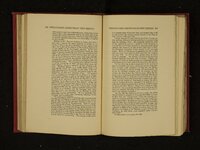
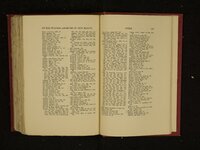
Show THE SPANISH ARCHIVES OF NEW MEXICO Ps te atk ao a ae Pa ee EB eal ee ee pe DeGF ee Be oe 2 eS) Mr. Hackett states that ‘‘the revolt began at about the same time as the other pueblos. When the Maestre de Campo, Francisco Gomez, who was despatched by Otermin with a squad of soldiers to reconnoitre the Tewa pueblos, returned to the Villa on August 12, he reported among the dead at Nambé, Fray Tomas de Torres, Sebastian de Torres and his wife, and others whose names he did not give. At the same time he found that in the pueblo of Pojoaque the Indians had killed Captain Francisco Ximenes and his family, and also Don Joseph de Goitia; while among others, Dofia Petronila de Salas and her eight or ten children were missmg,’ The pueblos of Santa Clara and San Juan, Mr. Hackett says, both “‘took a leading part, it being at the latter pueblo that the first plans were formulated by Popé and the other northern chiefs, before Popé was driven from there to Taos by the persecutions of Francisco Xavier. But, notwithstanding the active part played by these pueblos both before the revolt and afterward, the story of the outbreak as it actually occurred in them is very incomplete, and the Cs few facts that are recorded must not be taken as a complete eee » eer oe oh apni yptet wipe telete cok a woet et ys narrative of the events in those places, It is merely the best possible with the sources available. ‘The only recorded incidents of the uprising in Santa Clara took place about dawn on the morning of Saturday, the 10th of August, when the Indians of that pueblo attacked two soldiers, Marcos Ramos and Felipe Lopez, who were in an escort with six other men led by Captain Francisco de Anaya. The two soldiers in question were slain in the pueblo, while the others, who were guarding a herd of horses on the outside, were able to escape, though the wife and children of Anaya were carried oft by the Indians, ee ee aoeee AF Griego was later reported Judge that the scene there wag of the same character as that ee ee at Santa Clara. oe eee ‘*Bnough has already been said to show that it was the a ee aim of the Indians to utterly destroy all, and at San Juan and the other Tewa pueblos there was practically nothing to obstruct the vengeance of the natives as it ran its full course. In the whole nation more than thirty Spaniards were known to have been killed, while a number of others were carried off and never heard of again; and there as _— Pa > — ee = ae ee +- # eeof ee ee Py — Bartolome as having been killed. “Of the outbreak at San Juan no specific details are given, and the only martyr priest mentioned as having met his fate there was Father Juan de Morales; yet we may ee cee pte ee ee while a youth named J Fi iad ei s Oe on bd SES FUSE ee: tes IC ICSE IE Yr Se VERT 5 Be soe iene ht SE ee be an oe LEITCH Bt ys ak ot ee ee H Se Ey A PL FLZE . BLM a FEW EL ALZE RL Uae re reoe eae a Se FS 3 el eT 2 Ley ses et ee TT eee eS CP Le Ole Pee ee BLED te * re pe Se WE Lab OS SEEE 2S i FE e479Loe BC2 2 8 eh ad ale of att 25 He eer te tC Sea | dhe LeG TABel : we oea ered eee eae”yi THE SPANISH ARCHIVES OF NEW MEXICO 9 elsewhere the churches were profaned, the houses and haciendas robbed, and many other devastations committed.’’ At the time of the uprising of the pueblos, the archbishop, Fr. Payo de Rivera, was viceroy of New Spain. He was succeeded, just four months after the Spaniards had been driven out, by Don Antonio de la Cerda y Aragon, conde de Paredes y Marqués de la Laguna, who promptly took steps looking to the re-conquest of the abandoned Province. This viceroy ruled until November 16, 1688, and was succeeded by Don Melchor Portocarrero de la Vega, cénde de la Monclova, who held office for two years and was succeeded by Don Gaspar de la Cerda Sandoval Silva y Mendoza, cénde de Galve. It was during the rule of this viceroy that an expedition against the French was undertaken by the governor of Coahuila, Don Alonzo Leon, who purchased the freedom of five French captives, who had been members of the expedition under Robert Cavalier de La Salle, one of whom was the notorious Jean L’Archeveque. An account of the expedition under Governor Leon is found in Cavo, Los Tres Siglos de Mexico. Mr. Hackett has given us the most reliable account of the events occurring at the City of Santa Fe during the siege, taking as his authority the auto of Governor Otermin dated August 13th and concluding with August 20th. Mr. Hackett says: ‘Completely cut off from the outside world, with the last hope of reinforcements from the nearby jurisdictions gone, and surrounded on all sides by an overwhelming force of hostile Indians, the Spaniards in Santa Fe resigned themselves to the siege. It began on Thursday, August 15. Karly that morning the enemy was discovered in the plain of Las Milpas de San Miguel, south of Santa Fe, sacking the houses as they approached the Villa.’ It may be said in passing that there is no plain known as ‘‘Las Milpas de San Miguel.’’ These ‘‘milpas’’ referred to in the auto y dilijencia were the cultivated fields immediately adjacent to the chapel of San Miguel, in the Barrio de Analco. The acequia madre supplying the lands on the south side of the Rio de Santa Fe lies about four hundred yards south of the chapel and between this acequia and the river itself were located the milpas mentioned. The chapel of San Miguel was practically within the limits of the villa, as there never were any houses or settlements any consider- able distance south of the acequia madre. ‘‘Otermin at once sent out a troop to reconnoitre the advancing enemy, when Juan, the leader of the Indians, was |