| OCR Text |
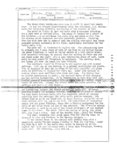
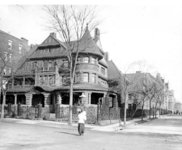
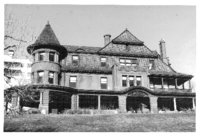
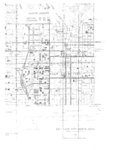
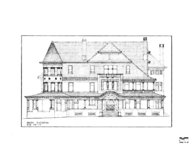
Show The West End What a great work it is that has been undertaken and is now accomplishing between the Park and the Hudson. It is an attempt made, not at all upon philanthrophic and benevolent grounds, but as a mere matter of commercial sUPPly and demand, to do a work of the greatest possible philanthropy and benevolence. ... [The West End] is a new city, to all intents and purposes, and not an extension of the old. "The Architecture of the West Side," Real Estate Record and Guide 40 (September 10, 1887): 1150. In the 1880s the area between Central Park and the Hudson River, from 59th to 110th streets (except for the streets west of Broadway and south of 70th Street), became known as the West End. Born at the Centennial, it underwent numerous periods of growth and prosperity before attaining its present form in the early 1930s. These cycles of growth and rebuilding left it with a heterogeneous collection of buildings which formed the best record of the diverse architectural and social history of the Metropolitan Era, most representative of the urbanism of the period. The transformation of the West End into a distinct and fashionable residential quarter was slow. As late as 1877 the Real Estate Record and Guide bemoaned that it was not yet established as a desirable neighborhood, despite natural advantages and man-made improvements such as the Boulevard and Columbus Circle, the latter "laid out on a far more magnificent scale than the Fifth Avenue Plaza." Hampered by its isolation from the main line of city development northward along Fifth Avenue, and cut off from the East Side by Central Park, the West End seemed destined to become "the cheap side of the city."268 The deveiopment of the West End began in earnest on December 20, 1879, when Edward S. Clark (who would shortly build the Dakota apartments and numerous rowhouses on Seventy-third Street) read a paper entitled "The City of the Future" before a group of real estate investors known as the West Side Association. Clark painted a verbal panorama of a new section of the city that would combine apartment houses with single-family dwellings suitable for housing different economic classes: "Some splendidly, many elegantly, and all comfortably ... the architecture should be ornate, solid and permanent, and . .. the principle of economic combination should be employed to the greatest possible extent. "269 The architectural and sociological diversity of the west side of Manhattan from 72nd to HOth streets was a compelling fulfillment of Clark's vision. Not an extension of an older section of the city,like the Billionaire District, the West End was a new enclave that could almost be regarded as a suburb of the existing city. Great hopes were held for the West End from the first, even though its progress was halted time and again by the quixotic economic conditions of the post-Centennial years. Initially there was hope that the West End would become, like West Philadelphia, a city of cottages. 270 Here was to have been, as Schuyler observed in 1899, "an opportunity for a quarter of small houses. So much land was thrown open to settlement by the completion of the elevated railroad" that it was possible to develop houses for people for whom "no provision had been made during the brownstone period," people whom circumstances had "driven to New Jersey, to the uttermost parts of Brooklyn, and [who] toward the close of the brownstone period began to take refuge in flats. The social philosopher and the Philadelphian a that it is good for a citizen to live in his own house, and&rtit West Side seemed to offer the New Yorker his chance'~ Yet the cozy neighborhood of cottages never developed opening of the Ninth Avenue EI in 1880 brought a~Ut more diverse neighborhood of houses, apartment ho a and family hotels sharing the gardens and drives of Cen~ and Riverside parks.272 The EI (running along ColUmbus Avenue with stops at 66th, 72nd, 86th, 91st and IG-lth streets), the landscaped Boulevard, the transverse road through Central Park at 72nd Street, Manhattan Sqllart (where the Museum of Natural History was under constnJc tion), and the high corniche of Riverside Drive overloo~ lushly planted parklands along the Hudson constituted the . major circumstances of planning which shaped the West End, acting as focal points to which early develoPment gra vi ta ted. 273 As if to crystallize the sense of the West End as a new city, the major avenues above Fifty-ninth Street Wert :, rechristened: in 1880, Eleventh Avenue became West End Avenue and Bloomingd~le Road bec~me the ~oulevard (it 1 was renamed Broadway In 1898) and m 1883 EIghth Avenue ; .~ was renamed Central Park West. As the neighborhood grew '\ 1 in the late 1880s and early 1890s, its eclecticism (both tilt .~ diver~ity of architectural styles and the juxtap?siti~n U . ~ apartments, rowhouses, tenements and freestandmgvtllas) . ;1 was one of the phenomena that triggered the movement ' ! toward the homogeneous urbanism of the City Beautiful in 1i the mid-1890s. 274 The West End's eclecticism was itself a .i reaction to the uniformity of the brownstone era. Edith ' :i Wharton's well known characterization in A BackUl(lrd Glance of New York in the 1870s perhaps went too far in its condemnation of brownstone as a building materialWharton lambasted it as "the most hideous stone ever i quarried"-but her sense of the older city as a "cramped 11 horizontal gridiron of a town without towers, porticoes. .· ~ fountains or perspectives, hidebound with deadly unifor- ; mity of mean ugliness"275 was partially answered by tbt shorter blocks and varied silhouettes of the West End district. In 1885 the Real Estate Record and Guide observed that "Everything seems stilJ to be in a state of architectural flux .. . the old brownstone front, repeated through SO many dreary miles below Central Park has fallen at last into hopeless discredit." 276 But "it was the development of tbt West Side that struck the first blow at the tyranny of tbt brownstone front," Schuyler noted. "The immigrants totbt new quarter insisted on the confession in their house fron~ that they were individuals and that their houses were their own."277 The mansions and rowhouses built in the W~ End during the Cosmopolitan Era spoke of a plu:alisUC society, the rowhouses in particular reflecting a dlalogut between the uniformity of the row and the need f~r an individual expression for each house. Their compact, Plsedcturesque massing evoked a suburban ideal and ex pres .J disenchantment with the industrialized city; their ecl~ syntheses of historical styles recalled the Old World. the newness of the locale. 278 These associations. an .ted confident individualism of the rowhouses. perfectly SU~1t the aspirations of the city's burgeoning. upwardly mO professional classes. In Schuyler's words, the W~~t.End provided "the expression of a 'comfortable bourg~lsle ~ often heightened into the expression of somethtng m artistic. "279 360 1nt bet: |