| OCR Text |
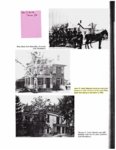
Show 210 1851, the farmers had irrigated their lands to grow cereals, but modern agricultural science had now brought a new method to light-the production of grain without irrigation. The land west of the Jordan River was found especially adaptable to this kind of farming, so what had once been nothing but a sage brush tract was now covered with arid wheat. The lands around the Point of the Mountain, and on the bench north and west of Lehi, which had long been unused, were now also made to produce bounteous crops of golden grain. But the development had not stopped here. Both the bench land on the north and the land west of the Jordan was now brought under canals by the Provo Reservoir Company, and the Utah Lake Irrigation Company, respectively, making it possible to irrigate most of it. Thus the pioneer spirit of old, which "made the desert blossom as the rose," was continued in modern times. THIRTY-FIRST MUNICIPAL ELECTION. The thirty-first election for city officers, which was held on November 7, 1911, returned the Republicans to office, the hold-over councilor being the only Democratic member; Mayor, William E. Racker; Councilors, (hold over) William F. Gurney (four-year term), W. Karl Hopkins (two year term), Thomas Webb, Parley Austin and George G. Robinson; Recorder, James F. Fyffe; Treasurer, Thomas F. Kirkham; Justice, George Webb. The appointments made by the council included William Asher, Attorney; Geo. Wing, Marshall; Dr. Horace Holbrook, Quarantine Physician; John E. Jones, Night Po~iceman; G. L. Comer, Road Supervisor; and Geo. Hammer, Fire Chief. Only WILLIAM E. RACKER Twentieth Mayor of Lehi a few changes occurred during 1911-1913 the administration. John Evans succeeded George Wing as Marshal, John Zimmerman took Policeman Jones' place, and John Cooper filled the vacancy caused by George Hammer's resignation as Fire Chief. .I I j j |