| OCR Text |
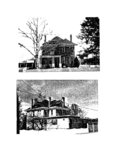
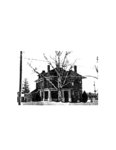
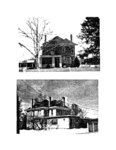
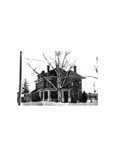
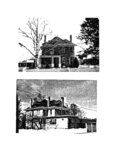
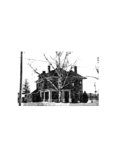
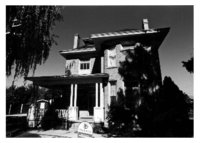
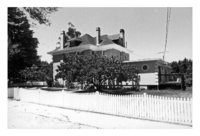
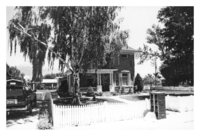
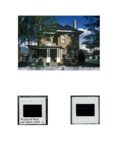
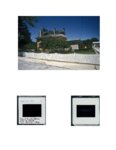
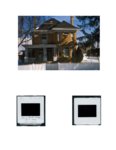
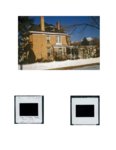
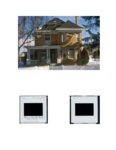
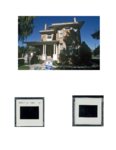
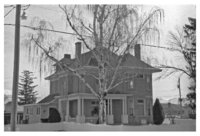
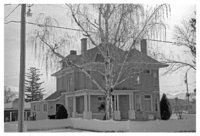
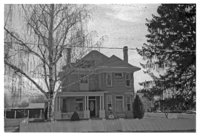
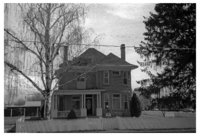
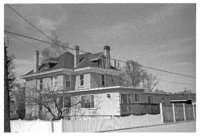
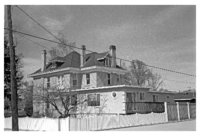
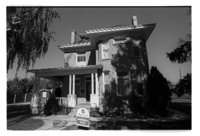
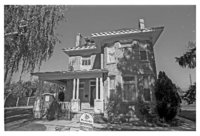
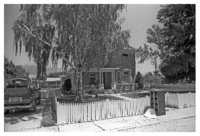
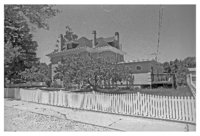
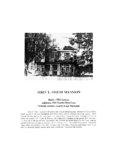
Show NPS Form l O- 900 - a OMB No. 10024-0018 Utah WordPerfect 5.1 Fonnat (Revised Feb. 1993) United States Department of the Interior National Park Service National Register of Historic Places Continuation Sheet Section No . .L. Page-1.. John Y. and Emerette C. Smith House, Lehi , Utah County, UT Narrative Description The Smith House, constructed in 1903 at 518 North 100 East in Lehi , is a sizable two-story, centralblock-with-projecting-bays type building. A mixture of late nineteenth and early twentieth century stylistic elements adorn the building; like many buildings of the time , the unknown designer freely combined popular styles of the period . While the form is Victorian , there are Colonial Revival elements. Supported by a grey, rock-faced sandstone foundation, the buff-colored (a color common in Utah Valley) brick walls are laid up in a running bond, indicating wood framing behind the brick veneer. The primary facade, facing west, is the most elaborate, and adorned with the most decoration . A west facing, bow-fronted projecting bay is given more prominence by the addition of rock-faced brick, again in the buff color common to the area. This bay is pierced with two narrow double-hung sash windows flanking a fixed sash center window with a leaded glass transom . Similarly, the second floor windows on this bay are spaced in a tripartite pattern, again with two narrow double-hung sashes flanking a fixed sash center light. On this level, however, the center panel is shorter, and mounted high, directly below the roof eaves. A grey sandstone beltcourse separates the two portions of this bay. Perhaps the most prominent decorative feature of the house is the large wraparound porch on the north and west facades of the house. The font portion of the porch is original, the part that wraps to the north side was added after 1931. Wood Tuscan-style columns , paired and mounted on paneled wood boxes, support a dentilled Classical cornice and flat roof. This Colonial Revival element was common on Victorian Eclectic structures. A balustrade of turned wood members runs between each box. The porch roof was once accessible from a second story door on the west facade, although this door now appears to have been fixed closed. Other facades of the house are more simple, with smooth brick walls pierced regularly by one-over-one pane double-hung sash windows . Like the windows on the west facade, the sills of these windows are grey sandstone. Another porch on the south side of the house enters into the kitchen . This porch is far less elaborate than the front porch, though the turned wood balustrade echoes the classical character of the front porch. Another prominent feature of the building is a wide cornice at the roof eaves. Although a simple box cornice with a tongue and groove board soffit, the cornice stands out due to its sheer massiveness in relation to the building. The effect is enhanced by the belcast eaves of the roof. The roof is hipped , with hipped extensions over each projecting bay. Three shingled dormer windows pierce the roof faces. Two seem original to the house; one, on the west side of the house, was added c.1990. The original dormers are topped by hipped roofs with deep eaves, echOing the eaves of the main roof. Besides the dormers, four brick chimneys rise through the roof. The chimneys are accented with corbelling about eighteen inches below the chimney tops. X See continuation sheet |