| OCR Text |
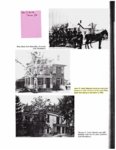
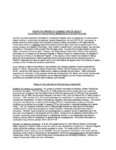
Show BANDS AND ORCHESTRAS On the evening of 4 February 1882 the Brass Band Lehi's first torch-light parade. Despite the weather and cold mouthpieces of the instruments, $'_;~ )arrage of brass and /. : affair was a prelude LC:;,'ll.A:A'~) all for their respected "'V.Uli'.~- one time were in the t, noted that on the :oup provided patriy celebration at the :reet. On 25 Novem1ade the Lehi MIA . 1883 indicate that Sl he Northeast [Ross] ""l,'VV'U",~se - a ouuamg usea tor a variety of commufunctions . Minutes for 15 August 1884 outline the sponsorship of an excursion to Black Rock the south shore of Oreat Salt Lake. The revenue the trip was shared with co-host Utah Central The turnover of the Brass Band was surprisingly low. the twelve 1871 members eight were still tooting horns in 1880. In addition, Prime Evans, Robert James B. Gaddie, George Goates, Hyrum Kirkham, M. Kirkham, Henry Lewis, William Racker, Southwick, S. J. Taylor, Thomas Taylor, and T. Vaughan later joined the organization. John served the band as long-term color bearer Joseph Goates and James Kirkham were the organization's teamsters. 6 Besides the enthusiasm of Brass Band members, regular practice was essential to producing melodious sound. An 1887 reference to the group which reported it was "very much improving both in selections and the execution of their music" leads one to believe that a few sour notes must have been produced on previous occasions. After a record of the band's excursion to Garfield Beach on 11 May 1889 the minutes stopped. It is quite likely that the Lehi Brass Band became history at this point, as the Silver Band seems to be the only group mentioned in public records. 7 Lehi Silver Band In March 1887 the YMMIA Silver Band, under the leadership of Joseph Kirkham, was formed in the Lehi City Hall. Charter members of the group were Andrew B. Anderson, Thomas Clark, Andrew Fjeld, Daniel Fowler, David Jones, Jack Jones, George Goates, William Goates, Samuel I. Goodwin, Charles Gray, James M. Kirkham, Joseph Kirkham , Joseph H. Kirkham, Franz Salzner, George A. Smith, John Y. Smith, Isaac Taylor, Samuel Taylor, Thomas A. Taylor, William T. Taylor, and Walter Webb . Though the band was motivated by a Mormon Church youth group, it was intended initially as a polit- 309 ical organization - to promote the cause of "bimetallism." From 1792 the United States Treasury issued both gold and silver coins. In 1834 silver was fixed at one-sixteenth the value of gold. But from 1834 until 1873 the world prices of silver were higher than this Treasury ratio. Consequently silver bullion had ready commercial value and considerable coinage was melted for resale. To prevent this Congress disallowed the coinage of silver dollars from the beginning of 1873. In the late 1870s huge quantities of silver began to originate from western mines, including Utah's, and the price of the metal dropped well below the old sixteento-one ratio. The silver market plummeted, and brokers howled in anger. Bimetallism became the rallying cry of the inflationists. They argued that if the government coined all U.S. silver at sixteen to one "the amount of money in circulation would be increased, prices would go up, the yoke of debt would be less galling and there would be a sure market at fixed prices for silver." This proposal made good political sense as well, since it would attract votes in mining areas. 8 Besides tooting their horns for bimetallism, during the 1888 "Sagebrush Democracy" fervor the Lehi Silver Band traveled to every city in Utah County drumming up support for ambitious young politicians such as Samuel R. Thurman and J. L. Rawlings who wished to make names for themselves. The band also participated in other politicking. The 7 July 1892 Lehi Banner reported that on the previous Saturday the Democrats were out in full force cheering for U.S. presidential candidate Grover Cleveland. They began to gather at the D.& R. G. depot on Main and Fourth West at sunset. The Silver Band struck up one lively tune after another to attract a crowd. As soon as darkness fell, the largest torch-light procession in Lehi's history paraded about town behind the Silver Bandwagon and its exuberant musicians. The boys in the band originally purchased their own instruments from the William Grant Music Store in American Fork. Practices were held weekly under the leadership of Alfred Fox, director of the Brass Band. Band member A. B. Anderson later recalled that some of the budding musicians were "routed to the cow barns" until they worked out the frightful squeaks, wheezes, and caterwauls of their instruments. 9 It was not long, however, until the band members were marching the streets of Lehi making pleasantsounding music. One of their first chances to perform publicly was when polygamists Jim and George Kirkham came home from a six-month stint in the territorial prison. George wrote in his 22 August 1887 diary that upon arriving at the train depot the Silver Band, led by his younger brother Joseph, "played in honor of our faithfulness." The following month a newspaper reference to the eighteen-piece band noted that it was making rapid strides. "We expect to see them rank |