| OCR Text |
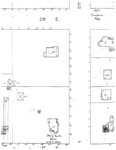
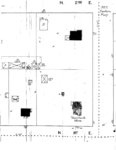
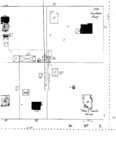
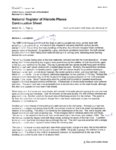
Show 170 COMMERCIAL DEVELOPMENT On occasion - particularly Sundays, holidays, and unusually fine spring days - the demand for horses and rigs taxed every available rental. On the Fourth of July 1892 business was so heavy that in order to save his horses Hammer had to "stop and let them rest.") The Danish liveryman's best-known horse was "Old Ronie" (which he had purchased in 1881) . The animal, according to one account, "had more gray matter between his ears than many a driver to whom he was hired OUt."2 The legendary horse, who lived until 1912, by order of Mayor Thomas Webb was given free reign of the town and allowed to wander the ~treets unmolested. Not only did "Old Ronie" demonstrate considerable horsesense, but his owner also was a shrewd businessman . A 3 March 1904 posting in the Lehi Banner summed up the town's estimation of one of their stalwart citizens: As a liveryman , doing a general livery business -light and heavy hauling as well as a transfer and express business, H[ans] Hammer is before the local and transient people in a conspicuous way. Mr. Hammer is a well posted liveryman, who is always prompt and alert in his dealings, and at his Livery and Feed Stables he has good horses and good vehicles for all uses, and is meeting the demands made upon him in an acceptable manner . While most of the Hammer Livery and Feed Stable ledger is in Danish, some accounts -likely in the handwriting of Hammer's sons or other employees - reflect the rental costs for horses and rigs. The August 1904 account of John Y. Smith is typical of the entries: Aug. Aug. Aug. Aug. Aug. Aug. Aug. Aug. Aug. Aug. I 7 13 17 19 20 21 23 24 28 Horse and Buggy Hack Fare [Danish phrase] Horse and Buggy Team and Surrey Horse and Buggy Sad[d]le Horse Horse and Buggy 1.50 1.00 .25 1.00 1.50 .75 1.50 2.00 .50 2.00 Though the number of Hammer rental horses for the entire duration of the business is not known, thirty were listed in 1913 when Hammer's two sons were the proprietors. The 4 September 1903 Lehi Banner noted that the firm was "running 16 different rigs" and had "one of the finest white hearses in Utah Co ." Hammer also purchased the first buggy in Lehi to have rubber tires. The 2 June 1904 Lehi Banner noted that both he and liveryman Will Wing had several "swell little rubber tired rigs." Hammer Brother's Livery Hans Hammer retired on 10 February 1905. The preceding day he had purchased the livery business of his competitor, the People's Co-op, and turned both concerns over to his sons George, Samuel, and Joseph. In September 1906 the brothers erected a new livery barn on their Main Street property. The large structure was thirty-six by fifty-six feet. Sam Hammer died in 1907, after which George and Joe became the owners. 3 When the Orem Interurban Railroad came through Lehi the livery business was "annihilated," as one account put it. In November 1916 Hammer Brothers ceased operations. The 11 November 1916 American Fork Citizen listed the property that was sold in a public auction: Eight horses brought from $1 to $8 each ; three surries about $15 each; three hacks from $16 to $20 each; fourteen sets of harnesses from $5 to $20 each; the two wagons $5.50 and $6.50 each; four buggies from $5 to $12.50 each; the Overland auto $150 and the Buick $50 . Israel Anderson bought the Overland and Walter Higgs got a team and white top for $19. The large Hammer Brother's barn was leased by the local National Guard unit, Troop E of the 116th Calvary. In the spring of 1924 the group had thirty-two horses stabled on the premises. Later that fall it was announced that the guard would become a motorized field artillery unit and the horses were transferred elsewhere. Ralph Smith afterwards used the old stable to store a school bus. In July 1931, small boys playing with matches set fire to a nearby barn. Water was scarce and before the blaze could be contained, the historic Hammer Brother's Livery Stable had burned to the ground. 4 Hammer Livery After Hammer Brothers went out of business in 1916, Joseph Hammer moved to Bingham, where he worked for a time in the Highland Boy Livery Stable. In 1918 his wife Zerelda bought property from John S. Taylor at approximately 54 South First West. The 5 August 1920 Lehi Sun advertised Joseph Hammer's new livery stable on the site. Auto Service was noted as well as a "hearse and hacks for funerals." Hammer further offered "special rates to Salt Lake (same as railroad) for parties of four or more." Despite the Interurban's competition he was able to maintain a reasonably successful business until his death in March 1931. George and Laura Strasburg bought the property in 1941 and in 1956 Mountain States Telephone built their Lehi switching station on the spot. Co-op Livery Feed and Stable In October 1889 J. Stewart & Co. began construction of a large frame building for the People's Co-op. This structure on the southwest corner of State and Second East (Thomas R. Cutler's property) became the Co-op Livery Stable, managed by Charles H. Barnes. Barnes began the business with twelve horses. A 12 June 1891 ad in the Lehi Banner noted that the firm "Will furnish first class livery rigs, both single and double, at short notice and reasonable prices. Horses |