| OCR Text |
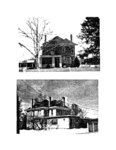
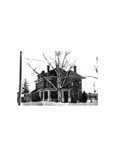
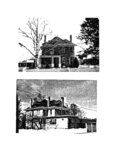
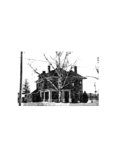
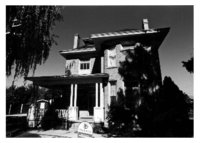
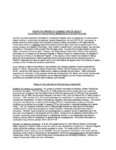
Show 56 THE MUNICIPALITY tah County] court house [157 ked with the irons on his hands 'or him, in which he sat for a to his feet, and read in clear, .pter of Matthew. He made no ;omething with the Sheriff and , who stood nearby, and then )ok the irons off his wrists . .. hen gave the signal. Two bulreast. He raised his right hand which he read falling out of lith him.20 . 'as buried by family and frienas III the Lehi cemetery, young Chauncey Millard's bones did not rest in peace. After his execution it was revealed that he had sold his body to Dr. Roberts for a pound of sweets which he had calmly eaten before the executioner's bullets pierced his heart. Three year's after the Swett tragedy, Lehi was again rocked by a violent killing. On a festive Christmas Eve, 1871, popular Lehi school teacher Billy Thurmond and other teachers and students were decorating a huge yule tree in the Meeting House. Near 5:00 p.m. Jedediah Woodward, described in one account as a "low drunken fellO\y," tried unsuccessfully to gain entrance to the locked building. The angry youth, who had earlier been chastized by Thurmond, kicked a panel of the door in. Thurmond rushed to the entrance where Woodward challenged him to a fight, saying "he could whip the whole family." During the scuffle Thurmond cut the boy's arm with a pocketknife, whereupon Woodward drew a pistol and shot his teacher in the left breast. Thurmond was carried across the street to Israel Evans's home (1989 residence of Sherwin Allred). As night fell the popular educator died, leaving the town shrouded in shock. Woodward was apprehended by Marshal Byron W. Brown and locked in the Tithing Office jail. A vengeful mood quickly seized the town and a heavy guard was assembled to prevent a lynching. Because of mitigating circumstances Woodward was sentenced to just ten years in the territorial prison. But rewarded for good behavior he served less than one year. In an altercation at a dance in southern Utah, where he had moved and started a family, the young bully was later shot to death by a police officer. 21 Woodward was one of the last convicts to be imprisoned in the Tithing Office jail. During the summer of 1871 a new adobe city hall was built near 160 West Main (south of the present location of Smith's Garage and Machine Shop) . In May 1872 a small basement room, with a single grated window, became the new jail. Mayor William H. Winn created a new city position by appointing Andrew A. Peterson to be Lehi's first jailer. This position was recombined with the marshal's duties in 1881. During the administration of Mayor Samuel Taylor, the city purchased a lot to build a new jail on the north- east corner of First East and Fifth North (where the John Y. Smith Mansion was later built). This action incited an 1889 sectional clash between citizens of upper and lower Lehi. James Harwood, whose harness shop was downtown, presented a petition of one hundred names to the city council protesting a "jail so far north." William E. Racker, manager of the People's Co-op, countered with a petition congratulating the council on its choice. During the heat of the debate the city purchased a steel cage to be used in the new jail. Ultimately it was installed in a temporary cell built immediately to the rear of the brick city hall which had been constructed in 1877. This cell and the previous jail in the adobe city hall were eventually demolished in 1923 when the brick city hall was remodeled into a fire station. 22 The jail site controversy was permanently resolved during the administration of Mayor Abel J. Evans. A lot on the southeast corner of Second North and First West had been the city estray pound since 1879. Stray horses, cattle, sheep, pigs, and other animals were held here by the pound keeper until owners either paid the fines or the unclaimed animals could be sold for expenses. The new city jail was built on this spot in 1893 . The steel cage was subsequently moved there from the cell behind city hall. The Second North jail was the site of several colorful scenes. The 18 January 1899 Lehi Banner reported that "as a result of too much booze, Chase Featherstone, local contractor, tried to sing a number of hoboes to sleep in the city jail on Friday night. It cost him $1.50." On another occasion local brickmaker Nephi Slater, filled with Christmas cheer, "went on the war path," was arrested by Marshal Newburn Butt, and locked up for the night. He set fire to his bedding and would likely have died in the flames had not two "jailed tramps" put out the fire. 23 In addition to the jail, a small building was built on the lot in 1895 to house the Silver Bandwagon. In June of that year the city council directed Gay Whipple to erect a ninety-foot high liberty pole of native pine near the jail. When Utah Statehood was granted on 4 January 1896 the liberty pole sported a new thirty-fivefoot American Flag. This two-ton liberty pole came crashing down during a windstorm on 3 October 1906. Just prior to Utah statehood celebrations, a multiple murder near Lehi shocked the entire territory. Cousins Albert Ernstrom (22), Alfred Neilson (18), and Albert Johnson (20) were last seen alive on 14 February 1895. Staying on the Hayes Ranch south of Pelican Point, the young men were shot to death while sleeping in their small cabin. Their bodies were then dragged out onto frozen Utah Lake and stuffed into a hole in the ice. Family members, though concerned about the youth's whereabouts, could find no trace of them. On 16 April a sheepherder walking along the beach three miles south of Pelican Point discovered Ernstrom's |