| OCR Text |
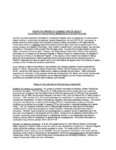
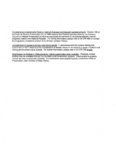
Show MAKING OF A CITY raphy, and the Lehi Post Office - was completed in early 1902. This same year J. A. Robinson opened Corner Grocery in the Yearance Building at 102 West Main, E. A. Beers started a millinery shop, Frank Fagan opened a restaurant, and the People's Co-op constructed their spacious building at lSI East State. Gus Slade opened his new Senate Saloon in the Ball Building, 155 West Main, on 3 December 1903. Two weeks later J. E. Cotter purchased the Corner Grocery at 102 West Main. In June 1904 a group of Lehi investors purchased the Provo Knitting Mill, moved the plant to Lehi, and established the Standard Knitting Factory Company in the Kirkham & Sons . Building on Sixth North at First East. One month later the Lehi Cash Store opened at 86 West Main, and the People's Co-op sold their entire downtown branch to William Racker, who established Racker Mercantile. Roberts and Brems opened a meat market at 217 East State in 1905. Their business quickly failed and was assummed by Peter Larsen. During 1906 druggist T. J. Wadsworth opened his store at 101 West Main, the Bank of Lehi was established in the Ross Building, and Hammer Brother's Livery expanded their business by constructing a new thirtysix-by-fifty-six-foot stable. To promote Lehi interests a group of local men organized the Lehi Commercial Club on 22 May 1905. Charter members of this association were George Austin, Parley Austin, Joseph Broadbent, J. E. Cotter, John F. Cutler, A. J. Evans, Morgan Evans, W . S. Evans, Andrew Fjeld, Charles Friel, James Fyffe, James H. Gardner, S. 1. Goodwin, Mr. Green, George Hammer, Robert Howard, M. W. Ingalls, Edward Karren, Homer Kendall, James M. Kirkham, William Knight, Henry Lewis, J. H. Manderfield, A. C. Pearson, Alex Piper, W. E. Racker, John Roberts, Nate Rockhill, S. W . Ross, O. A. Slade, John Y. Smith, J. E. Standring, Dr. Robert Steele, Dr. W. M. Stookey, S. J. Taylor, T. J. Wadsworth, Dr. Westphal, J. H. Wootton, George Webb, Thomas Webb, and S. G. Wells. As set forth in the organization's preamble, the purpose of the club was to foster the business interests of Lehi, encourage new industry, and furnish social diversion. This active organization first established a fiveroom suite in the Lehi Commercial Bank and Savings Building, meeting there until 1911 when new rooms were established on the second floor of the Ross Building. The group's efforts were beneficial to several Lehi projects, and were directly responsible for initiating the Lehi Mill and Elevator Company (1906), Mount Pickle Factory (1906), the Central Experimental Farm (1906), and the Lehi Waterworks (1907-09). While the Commercial Club was anxious to see Lehi move forward, another group of men were looking backward into the past. In 1905 the last remaining section of the mud wall of Lehi's old fort was demolished. Bishop Andrew Fjeld initiated the formation of a committee to erect a monument commemorating the his- 17 toric structure. "Let it be of the rugged unpolished granite," Fjeld wrote in a 9 April 1908 letter to the Lehi Banner, "with suitable inscriptions, planted on the line of the old wall on the grounds of the Primary School, where it will stand as a memorial and a witness to the patriotism, zeal and courage of the pioneers of Lehi and builders of the old Fort Wall." A mass meeting was called on 21 April 1908 and not a single dissenting voice opposed the plans. The Lehi Pioneer Committee, consisting of Andrew Fjeld, George N. Child, Hamilton Gardner, W . S. Evans, A. B. Anderson, and Martin Bushman, offered a prize for the monument's design . The Elias Morris Company of Salt Lake City submitted the winning proposal, and the contract for the stone work was given to local stonemason Arthur Bradder. The base was made of Utah granite, and the shaft of Vermont granite. The sixteenfoot-high completed work had two polished surfaces, one containing a map of the fort wall and the other inscribing a brief history of the settlement. Dedicatory services for the $650 Pioneer Monument were held on Thanksgiving Day, 26 November 1908. After a program in the Tabernacle, the monument was unveiled by Azubia Cox Hardwick, first baby born in Lehi. The dedicatory prayer was offered by Apostle J. H. Smith. Three days before the dedication, a fifteenby-fifteen-by-six-inch copper box was placed in a cavity in the base of the monument. This time capsule contained the following items: A piece of the old Fort Wall and two coins (Hy Kirkham) Beet sugar made in Utah in 1850 (T . F. Trane) Sugar made by Utah-Idaho Sugar Co. (James Kirkham) Grand Army Badge and five coins (F. G. Hoffmire) Photo of David Evans and wife Rebecca (R. Evans) Two coins (Fred and Millan Kirkham) History of Lehi, a Sunday School badge, Beet Contract of 1906 (M. B. Bushman) Lehi Banner. Xmas 1907 (Andrew Fjeld) Early edition of Deseret News; $1.00 Brigham Young College scrip; Lehi Rustler, 19 Feb. 1897; Try Square used by Thomas Ashton on Nauvoo Temple; two ox shoes used in crossing the plains, two nails made by J. W. Taylor in 1854 (Edison Whipple) Sketch of life of Joseph Dorton (J. E . Dorton) U.S. Calvary belt buckle worn by W . S. Willes (John S. Willes) Views of Lehi (J. C. Cotter) Thousand-dollar check to be paid in 2008 and a ten-cent coin (W. S. Willes) Post Card views of Lehi (James M. Kirkham) Scrip on Provo People's Co-op Store, scrip on S. S. Jones's Store in Provo, two bread tickets and a piece of gingerbread (H. E. Osterloh) One Black Hawk Veterans Badge (Mathias Peterson) English coins dated 1806-17, photos of W. H. Taft and J . S. Sherman, copies of Election Laws of 1908, copy of Inter-mountain Republican, and a dry farm potato (William Asher) Deseret News (T. J . Wadsworth) School books and educational papers (A. B. Anderson) |