| OCR Text |
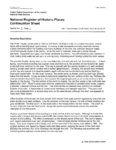
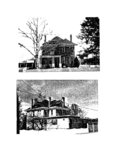
Show CHAPTER 40 ~ Twentieth-Century Industries -a, Jordan Pumping Station West Jordan miller Archibald Gardner, who depended on the Jordan River for water power, was a long-term advocate of pumping Utah Lake water into the Jordan River's channel. Fr9m 1900 to 1901, a period of extreme drought , the river shrank to 25 percent 0 its normal flow. James H. Gardner, superintendent c the Lehi Sugar Factory and son of the West Jordan miller, approached Angus M. Cannon, president of one of the Salt Lake County canal companies, and suggested the development of a large pumping station at the mouth of the Jordan River near Saratoga. During a 26 March 1902 joint meeting of the Salt Lake City Council and the Board of Canal Presidents, the body which regulates irrigation matters in the Salt Lake Valley, Cannon presented the idea. After careful consideration the group voted to proceed with construction of such a plant. Bids were awarded to superintendent Gardner and his chief engineer at the sugar factory, M. W. Ingalls. Construction on the pumps, as the station is known, began on 21 June 1902. By 19 August four forty-eightinch Byron Jackson centrifugal pumps, each capable of delivering four hundred cubic feet of water per second (approximately three thousand gallons), had been installed. During the summer of 1903 the pumps were so successful in increasing the Jordan's flow that a considerable amount of new land was opened for farming in the Salt Lake Valley. In 1905 another pump was added and in 1907 two more were installed. Six years later a sixty-inch pump, with 1,600 gallons per second capacity, was brought on line. When all eight units were in full operation the plant was delivering seven hundred million gallons of water every twenty-four hours. At the time it was considered to be the largest pumping plant in the world. In 1920 a $185,000 construction project doubled the plant's capacity. n expensive proposition. W .., :s compromise point the PUl " S f and gravity flow fills the r"f -86, as part of a $12 million L;, Flood Management Project, - "V est of the pumps were instal.., 10W.l StanClal J Knitting Factory Company The 23 June 1904 Lehi Banner reported that sev' ::1 Lehi men including John Y. Smith, James H. Gard,.- . Thomas Webb , and Edward Karren had purchasea ' e Provo Knitting Factory, intending to move the mac; .~ _ ery to Lehi. The Standard Knitting Factory Compa., as the local firm was first known, occupied the Kirh~ Building at 610 North First East. Initially the compa., under manager James M. Kirkham's supervi~"l' employed forty operators to process the $4,000 W Vh of orders on hand. These goods included knitted ur"n suits (underwear), stockings, sweater coats, knit sL i and LDS garments. ' Despite a capable corps of traveling salesmen, O[<"-s were often insufficient to maintain factory operatl;,~ . For extended periods the plant lay dormant. Man<.er Kirkham moved on to other business ventures "d Andrew Fjeld, local stonemason and bishop of the I ·,t Ward, replaced him in July 1905. After a winte: )f poor sales, the knitting factory reopened in April 1In. New equipment for doubling the plant's hosiery-mal" g capacity was installed, and twenty girls were hirec 0 operate the facility. A 21 April 1907 Lehi Ba (' ~r account of the company s affairs noted that the fac ,"Y had $10,000 worth of business in 1906, $1,500 of w'r: h had been paid to the factory hands. In July 1907 a contest was established to provit. a brand name for the company's knitted goods. Dr. 'Waer Hasler's submission - Standware - was selected, th("~h |