| OCR Text |
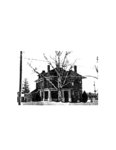
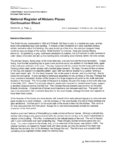
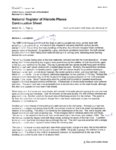
Show FLOUR AND GRIST MILLS a friend John Hansen had been fishing most of the as Mr. Turner herded sheep nearby. Towards evening two boys got into a rowboat without oars and drifted onto the pond. A high wind began to blow and the tried to paddle ashore with their hands. When were unable to make headway, Ted, a strong swimjumped into the water and began to swim to shore. water was too choppy, however, and he quickly disappeared while his friend looked on helplessly. The wind soon blew the boat ashore and young Hansen sought help from a nearby fisherman. A search team was assembled and the body was recovered three bours later. 7 Thirteen-year-old Bobby Wagner met death in the Mill Pond on 15 April 1964. The Pleasant Grove boy and his friend had swam out to 'Grass Island, but on their return to shore young Wagner was stricken with cramps and sank. His companion swam to the shore and ran to the nearby Utah-Idaho Sugar Company warebouse, where he told manager Morris Clark what had happened. Clark quickly summoned his work crew, Gary Clark, Lewis Stewart, Dale Colledge, Guy Edwards, and Val Roberts, and they repeatedly dove into the murky water attempting to find the boy. Their efforts were futile; his body was not recovered until the following day. Lehi Roller Mills For nearly fifteen years after the Spring Creek Flour Mill ceased operation, Lehi farmers had to haul their grain to American Fork for milling. After considerable effort by the Lehi Commercial Club, the 22 June 1905 Lehi Banner announced that Lehi was to have "a new flour mill with modern pattern and equipment." Stockholders of the Lehi Mill & Elevator Company, who invested $20,000 in the new venture, included the People's Co-op, Lehi Mercantile, Racker Mercantile, Thomas R. Cutler. G. N. Child, John Y. Smith, James H. Gardner, Henry Lewis, John Roberts, David Smith, Thomas Webb, Thaddeus Powell, George Webb, and Mathias Knudsen. During a stockholders meeting in early July 1905 Thomas Webb was appointed chairman and S. 1. Goodwin secretary of the new company. Committeemen were Parley Austin, S. 1. Goodwin, Thad Powell (Location); James H. Gardner, G. N. Child, W. E. Racker (Power); Mr. Perry, David Smith, John Y. Smith, Abel J. Evans (Machinery). The site for the mill was selected on East Main Street on the sugar factory spur of the Union Pacific Railroad. The 27 July Banner reported that rock was being hauled for the structure's foundation. The contract for the mill's machinery was let to the Wolf Company of Chambersburg, Pennsylvania, the largest suppliers of mill machinery in the United States. This equipment included four sets of double rollers, one washer, two Purifiers, two reels, one cleaner, one dust roller, one gyrator, one separator, and one bran duster . 8 229 The three-story-high building, with its multitude of cables, belts, and whirring machinery, was initially powered by a fifty-horsepower motor. Under the management of Parry and Franck, the first sack of flour was produced on 2 April 1906. Full daily capacity of sixty to seventy bushels was soon achieved. The immediate success of the mill required that an addition be built in May 1906. And when the directors met later that summer on 30 July they decided to immediately erect an elevator with a capacity of 10,000 bushels. The long-term prosperity of the mill has largely been linked to the success of the dry farm wheat raised in Cedar Valley. The first local interest in dry farming was raised in 1905 when Dr. John A. Widtsoe gave a lecture on the topic. In 1906 Congress passed a bill opening the Fort Crittenden (Camp Floyd) Military Reserve to private ownership. On 30 July 1906 a large number of Lehi men met in the Primary School building to discuss "arid farming." Bishop Andrew Fjeld acted as chairman of the group. After discussing how to obtain land parcels, the price of planting and fencing, a vote was taken to organize a co-op to dry farm on a large scale. A land-selection committee was appointed which consisted of A. J. Evans, G. L. Stookey, Henry Lewis, Peter Schow, and G. N. Child. Their objective was to travel to Cedar Valley and select 5,000-6,000 acres of land for the co-op. The committee for soliciting acreage consisted of Ed Southwick, James M. Kirkham, Dr. E. C. Merrihew, R. John Whipple, and John Roberts. During the 6 August 1906 dry farm meeting the committee reported that while there was ample land in Cedar Valley it could only be registered to homesteaders willing to file on a quarter section. This discouraged most of the group and the idea of forming a co-op was abandoned. Although a land co-op was not formed, many Lehi men filed on Smoot Homesteads, as the land parcels were called. Successful dry farmers in the area have included Albert Sprately, Lyman Losee, Roy Lott, Mendenhall Brothers, John and Harry Stoker, Isaac Hardman, John Beveridge and Sons, John Devey and Sons, C. E. Wade, James H. Gardner, Aaron Allred, Ed Southwick, Arthur Hawkins, Clark and Hall, Hyrum and Earl Smith, A. D. Rhodes, Peter C. Adamson, Lazelle Mulliner, A. W. Davis, John R. and Ernest Hindley, A. A. Johnson, Freeman Brothers, Holbrook Farms (Dr. Horace, Gam, Stephen, and Scott Holbrook), Rodney C. Allred, Douglas Smith, Roosevelt Smith, Grant and Jim Smith, and Howard and Brent Ault. In the earliest days of Lehi Roller Mills operation (name changed in 1907), the plant had to regularly advertize for grain. "WANTED - 5000 bushels of wheat at 75¢ per bushel and any amount of barley at 85¢ per cwt." was a typical ad of the day in the 14 November 1907 Lehi Banner. On 25 August 1909 Giles & Giles |