| OCR Text |
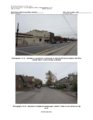
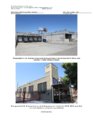
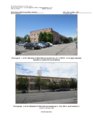
Show United States Department of the Interior National Park Service / National Register of Historic Places Registration Form NPS Form 10-900 OMB No. 1024-0018 Warehouse District (Boundary Increase & Additional Documentation) Salt Lake County, Utah Name of Property County and State south-central Salt Lake City, where working class neighborhoods sprang up away from the gritty environs of the industrial sector. Post-War Era (1946-1966) Under Criterion A during this contextual period, the district is significant under the areas of Transportation, Commerce, and Industry. The area of Transportation during this period is represented by both rail transportation and automobile transportation and the social and economic shift from an economy and culture based in rail transport to one based in automobiles, both private and commercial. That is, as the culture of America shifted toward one more centered around the automobile, the commercial and industrial use of the Warehouse District area adapted to new ways of transporting goods and new ways for consumers to access those goods. Under Criterion C, the district is still significant under the area of Architecture for the building types, particularly among manufacturing, warehouse, and distribution facilities, that were designed specifically to accommodate the automobile (e.g., semi-trailer) freight shipping. These buildings reflect the height of the transition away from freight rail transportation during the historic period. The Post-War Era in Salt Lake City was one of continued economic prosperity and residential and commercial expansion. Although the boom years of the war-time economy had passed, modern manufacturing and building techniques that came out of the war experience combined with thousands of returning soldiers ready to start families in houses of their own. The post-war housing boom did not occur in the Warehouse District Boundary Increase area the way it did in the suburbs surrounding the district. Rather, more residents moved out of the district and into these new suburbs, paving the way for the demolition of many dwellings in favor of commercial structures. The rare new residential construction that did occur appeared as infill projects. Automobile use became widespread during the Post-War Era, altering the form of development in Salt Lake City. The construction of the interstate highway system, beginning in the late 1950s, allowed for increased urban sprawl; I-15 was constructed along the western edge of the district during this time and both physically and socially separated the district from more residential neighborhoods to the west. With the completion of the interstate system and increasing affordability of personal vehicles, those who worked in Salt Lake City were able to move to suburban communities elsewhere and commute to work in the city. The construction of the interstate also affected industrial areas of the Warehouse District Boundary Increase. In addition to rail access, many businesses gained easy access to the new highway. The highway system continued to facilitate access and ease of transportation for businesses near I-15, and the flexibility of long-haul shipping via semi-trucks compared to the rigid routes of rails led to a decline in activity at the D&RGW rail yard in the western part of the district. Among the businesses to construct new facilities in the district during this period was Wycoff Company, which specialized is long-haul truck shipping from its warehouse at 540-560 South 300 West [Photograph 34]. Sections 9-end page 24 |