| OCR Text |
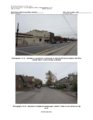
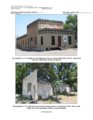
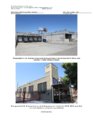
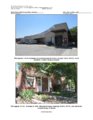
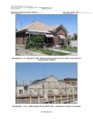
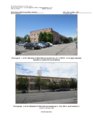
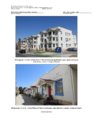
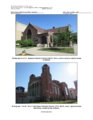
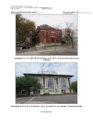
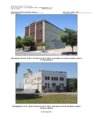
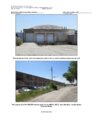
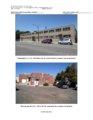
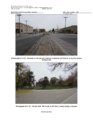
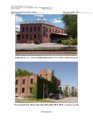
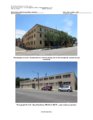
Show United States Department of the Interior National Park Service / National Register of Historic Places Registration Form NPS Form 10-900 OMB No. 1024-0018 Warehouse District (Boundary Increase & Additional Documentation) Salt Lake County, Utah Name of Property County and State During the early twentieth century, Salt Lake City continued to emerge as a major regional center, attracting many new businesses and residents. Different land uses increasingly occurred in distinct zones of the city. Downtown became predominantly commercial. The West Side, with its proximity to the railroads, continued to transform from residential and agricultural uses to industrial and distribution (warehouse) uses. Residential development occurred primarily to the south and east of the Warehouse District Boundary Increase area. During this period, Salt Lake City's modern form emerged: a dense commercial core downtown, industrial uses along the railroads, and residential subdivisions to the south and east. Among the major commercial enterprises that established businesses in the district during this period were the Utah Pickle Company, which took over the Grant Soap Company building around 1908; the Queen of the Valley Rolling Mill at 380 West 800 South [Photograph 30]; International Harvester, which constructed its building at 435 West 400 South around 1918 [Photograph 31]; the Husler Milling and Elevator Company facility at 425 West 500 South [Photograph 32]; and Western Moline Power, which set up shop at 331 South Rio Grande Street [Photograph 33]. As the city's population grew, multiple waves of immigration brought increasingly diverse residents to Salt Lake City. Many immigrants came from southeastern Europe, notably from Italy and Greece, while others came from Japan and Syria.12 As immigrants arrived in Salt Lake City, several distinct ethnic neighborhoods emerged. Most were located the western edge of the downtown area and on the West Side. In addition to residences, these neighborhoods provided goods, services, and institutions for different immigrant groups.13 These distinct ethnic neighborhoods persisted through the end of World War I. After the war, immigration slowed, and the neighborhoods began to break up.14 The Polk Directories for Salt Lake City reflect the diversity of immigrants living in the district during this period. Directories published in 1930, shortly after the end of the Commercialization and Immigration period, show that residents of this area had surnames of predominantly British, Norwegian, Latin American or Spanish, and Syrian origin.15 The directories also indicate that many of the residents of the ethnic neighborhoods worked in the nearby industrial centers, particularly in the railroad yards, while other worked as general laborers, drivers and chauffeurs, and mechanics, among other professions.16 With a handful of exceptions, most residents of the area represented the labor and working class. The Covey Apartments, completed in stages in 1904 and 1905, are an excellent example of the mixing of classes in the area. The 1910 census lists among the tenants several clerks and laborers in the mining industry along with managers and proprietors of retail stores, several engineers, an accountant, a newspaper foreman, a railroad yard master, a baker, a miller, a draftsman, and an inventor, among others.17 12 13 14 15 16 17 Cooper/Roberts. 1992. Ibid. Ibid. R.L. Polk & Company. 1930. Polk's Salt Lake City Directory. Salt Lake City: R.L. Polk of Utah. Ibid. U.S. Census Bureau. 1910. Fourteenth Census, Utah, Salt Lake City, Ward 2, Precinct 26. Sections 9-end page 21 |