| OCR Text |
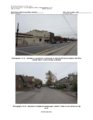
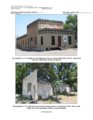
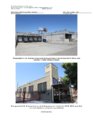
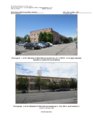
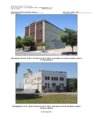
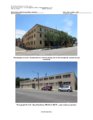
Show United States Department of the Interior National Park Service / National Register of Historic Places Registration Form NPS Form 10-900 OMB No. 1024-0018 Warehouse District (Boundary Increase & Additional Documentation) Salt Lake County, Utah Name of Property County and State By 1898, the southern part of the district had developed enough to be included on the Sanborn maps.11 These maps illustrate the changing character of the area from low-density, agrarian development to higher density single-family and multi-family dwellings on small lots. Commercial and industrial uses were interspersed with residential areas. Notable businesses of the time included ice, beer, and vinegar companies, as well as a brick factory and the Salt Lake Rapid Transit Company's repair shed. The Grant family, including Heber J. Grant, a future president of the LDS Church, opened a soap factory at 741 South 400 West around 1894. The building [Photograph 29], which still stands today, was taken over by the Mount Pickle Company (later the Utah Pickle Company) prior to 1911. Rail sidings were constructed from the rail lines to serve the new commercial uses such as the soap/pickle factory. The alignment of the sidings contrasts with the regular street grid. Sidings curve away from the main lines and penetrate the block interiors, interrupting the regular pattern of streets, blocks, and lots. The street grid was also altered by the addition of streets and mid-block alleys. In addition to illustrating the changing built environment in Salt Lake City at the close of the 1800s, the 1898 Sanborn maps reflect the growing ethnic and religious diversity that occurred as part of the city's industrialization and connection to the rest of the nation through railroads. For example, where for decades the maps had only identified LDS Church (i.e., Mormon) ward houses in the area, by 1898 they depicted religious institutions to serve other faiths, such as the American Methodist Episcopal church. Commercialization and Immigration (1900-1928) Under Criterion A during this contextual period, the significant themes of Transportation, Industry, Commerce, and Social History persist through the expansion of the railroad network and rail yards in and through the district and the associated increase in the number of manufacturing, warehouse, and other distribution facilities that developed along the web of railroad spur lines. Labor brokers specifically contracted by the railroad companies and other industrial entities brought hundreds of southern European, Syrian, Latin American, and other immigrants to the neighborhood, where they established small, ethnic enclaves. Under Criterion C during this contextual period, the area of significance of Architecture is reflected in the first major construction boom to occur in the district and the increase in the variety of building types and styles, including a greater mixture of commercial and residential properties than would be seen in subsequent periods. Also during this period, the unique architecture of warehouses and distribution centers dependent on the rail network for transportation of freight and supplies became fully manifest. 11 Sanborn Fire Insurance Company. 1898. Sanborn, Salt Lake City, 1898. Retrieved March 12, 2013, from J. Willard Marriott Library, University of Utah: http://content.lib.utah.edu/cdm/search/collection/sanbornjp2/searchterm/sanborn%20salt%20lake%20city%201898/ Sections 9-end page 20 |